Tools

More on Shop-made Rebate Planes

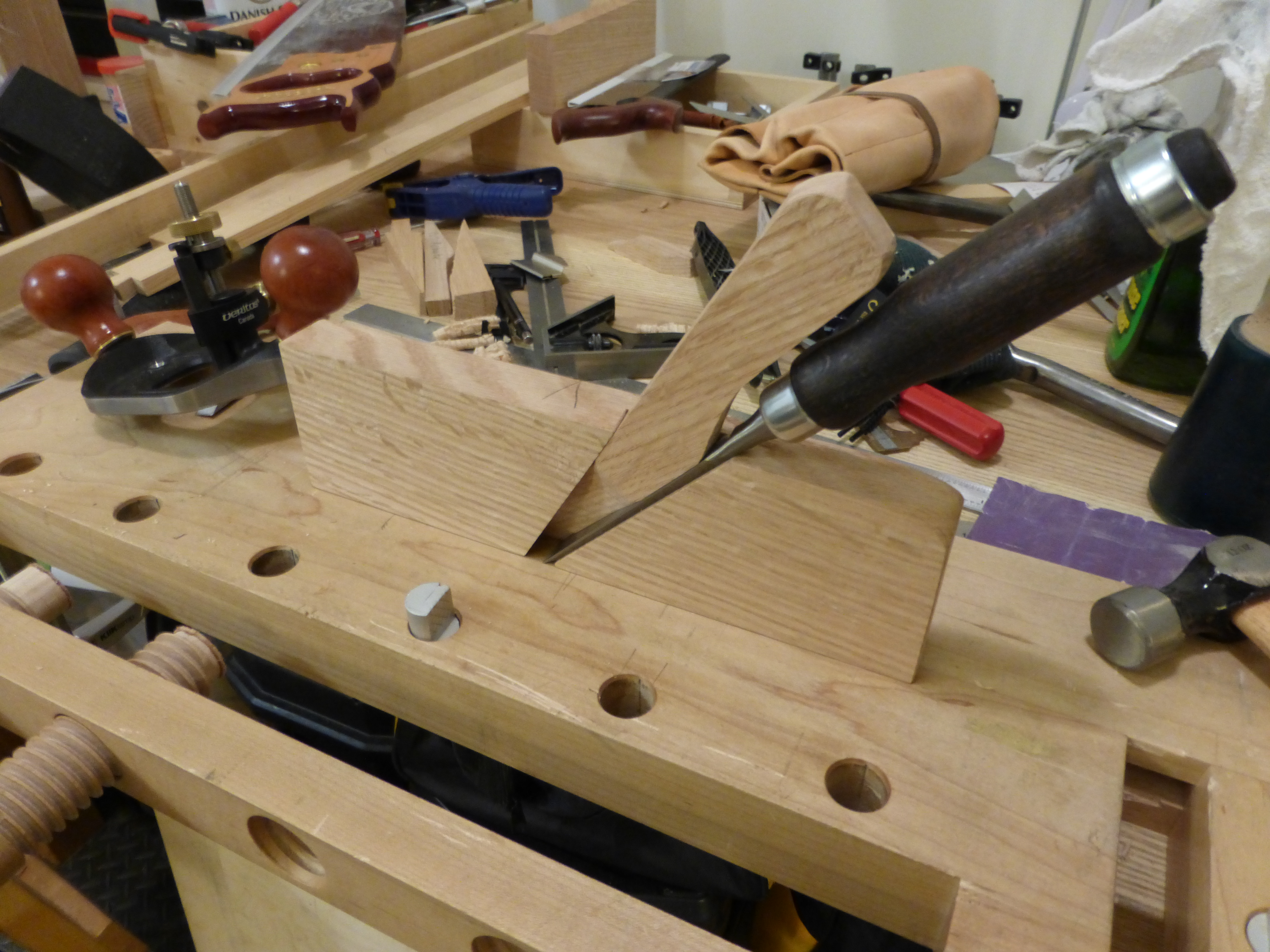
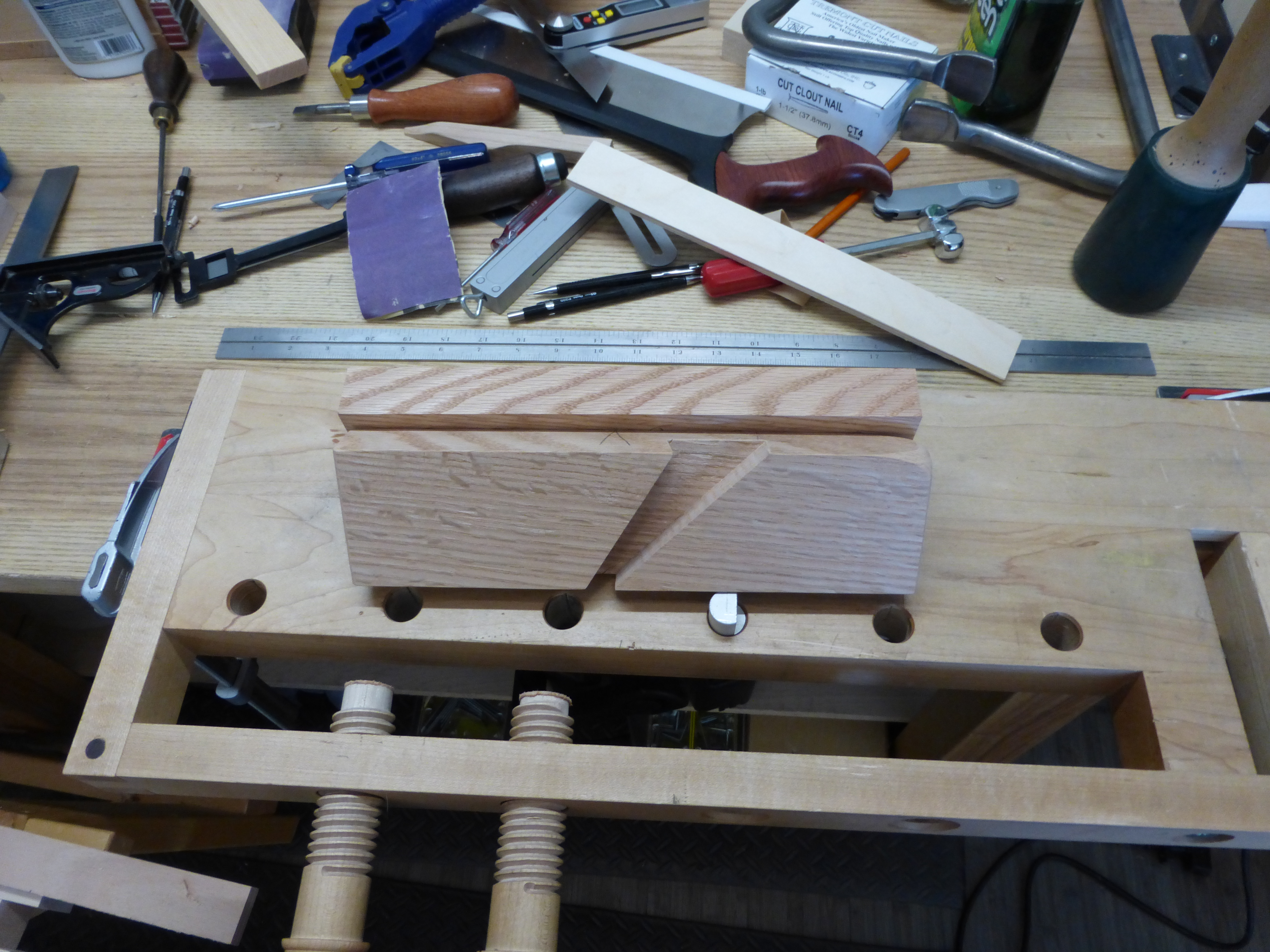
Attaching the fence to the right-hand rebate plane wasn’t nearly as difficult as expected.  I approached it like I would a drawbore, by first drilling the pilot holes in the fence, then using the same brad-point bit to transfer those holes to the body of the plane.  After that, everything came together nicely.

P1000239

I did drill all the way through the backer board into the dining table, but that kind of thing happens once in a while.

The above photo shows the fixed fence at max extension (5/8 inch).  I am yet to elongate those holes to permit the fence to adjust to take a narrower cut, but that is just a question of marking and chopping out two slots in the fence.  After the fence is fitted, I’ll recess the scoring spur and the whole thing will be ready for a coat or two of Tung Oil.

I did take some quick test cuts with the fixed fence and was quite pleased.  I’m assuming the slight slope at the edge of the rabbet is due to my unfamiliarity with proper fillister plane technique.

P1000241

Product placement!

I hope to start work on the left-hand plane this weekend.

JPG

Warrington Pattern Hammer Recommendation

I don’t usually do tool recommendations, but I have been very pleased with my new Warrington Pattern Hammer.  It’s nothing special, just a $25 dollar amazon find, but it’s worked well so far.

I may have lucked out, but the hammer is well handled and straight, and the balance of the 12oz head feels good in my hand.  If you’re looking for a relatively cheap woodworking hammer, you could do worse.

JPG

Making Replacement Wedges

When I deepened the recess on the set of poor man’s rebate planes to accept a 5/8 inch bench chisel, the initial 1/2 inch wedge for the right-hand version became useless.  This presented two issues: (a) the bed angle itself was sized against the old wedge, so the new wedge must be custom fit; and (b) there had to be an easier way to get the correct bevel than just starting from a four square blank and planing down.

In addition, there was the problem of not having any 5/8 stock, but I fortunately had enough remaining quarter-sawn red oak to resaw some wedge blanks.  Plus, the waste from the resaw, at just over 1/2 thick, is probably usable for something else.

Taking my time, as there is little margin for error.

Taking my time, as there is little margin for error.

The initial recess was marked against a 1:4.5 angled wedge (as recommended in the Paul Seller’s video), but after all the trimming and refinement of the bed, I think it’s now closer to 1:4.  Also, I tried marking the actual bevel angle directly on the blank and rip down along that bevel.  This gave me matching right and left wedges (for the matching right-hand and left-hand planes) that need less work overall in refining the fit.

Perfect fit!

Perfect fit!  Now to make the fence.

I’m excited to finish up the fence and put the right-hand plane to work (after I figure out the best way to attach the scoring spur).  I might even buy a second 5/8 inch Narex chisel so I don’t need to swap back and forth once the left-hand plane is done, but we’ll see.  Here’s hoping using quarter-sawn hardwood will increase the longevity of the planes.

All in all, it’s been a good exercise, and very enjoyable learning basic plane-making.  I’m certain the left-hand version will come out even better than the right.

JPG

Home-made Rebate Plane

I, like most woodworkers, have a Lee Valley/Veritas wish list.  For some time now, just sitting in the “Purchase Later” section of my shopping cart, has been a skew rabbet plane.  In fact, it is next on my list of impulse purchases.  Or at least it was, until today.  Because I’ve decided to make my own rebate plane instead.

Well, two, technically.

Well, two, actually.

If you haven’t already, I highly recommend creating a free account at Paul Sellers’ Woodworking Masterclasses.  There are paid project videos, but there are also free-to-watch how-to videos on a wide range of topics.  One installment in the “Poor Man’s” woodworking tools series is a rebate plane that uses a chisel for a plane iron.

I had some lovely quarter-sawn red oak scraps laying around the shop, so I decided to try my hand at planemaking.

Actually quarter-sawn

Actually quarter-sawn.

The first rebate plane came out so well that I decided to make both right and left versions.  The right version originally used a 1/2 inch Narex bevel-edged chisel, but I decided to increase to 5/8 (for both aesthetic and practical reasons), so I need to make a new wedge.

Both versions will have an adjustable fence.  The right version will also have a nicker (or “scoring spur”) made from a re-purposed (read: chipped) wheel marking gauge cutter, for cross-grain rabbeting.

Suffice to say, I now have a Lie-Nielsen wishlist that includes a set of planemaker’s floats.

JPG

The Essential Tool Kit, Redux!

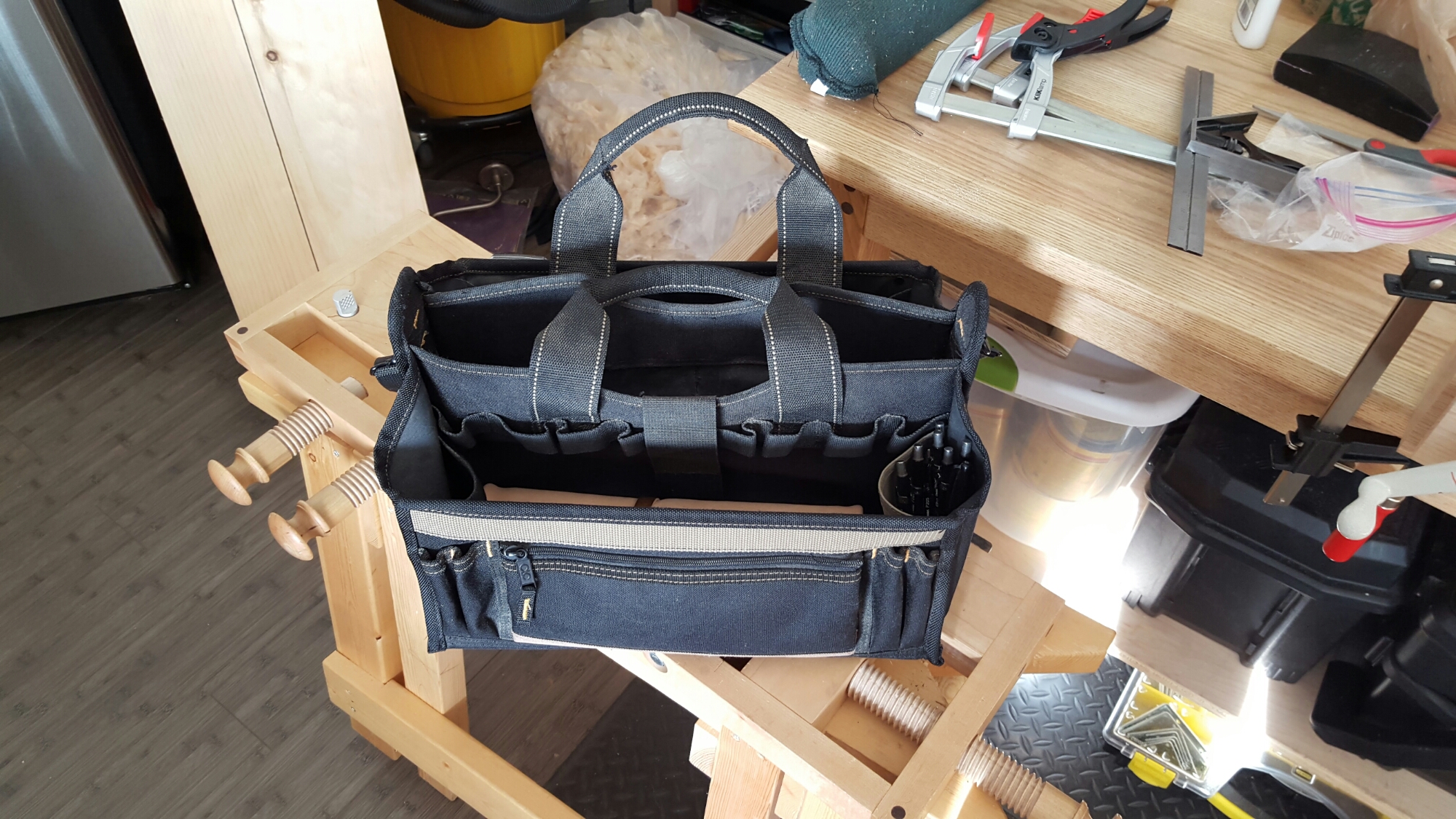
Over the weekend, I was asked by my mother to clean up some poorly-mitered baseboard moulding. Not knowing what the moulding was made of (MDF, by the way), I packed up a small toolbox with enough woodworking handtools to tackle any task. I’ve been down this road before, but I took the chance to think through the essential handtool woodworking kit once again.

More than anything, I was confined by what I could fit in or on the toolbox, which is about 16″ long and has been with me since the beginning.

Seen here

Seen here, mostly empty.

Here is what I came up with:

  • Tool roll, with chisels from 1/4″ to 1″, plus 1/2″ mortise chisel, birdcage awl and 18 oz mallet
  • Tape measure, 12″ combination square, sliding bevel and marking knife
  • 14″ rip cut tenon saw and 22″ rip cut panel saw
  • No. 5 1/2 jack plane and small chisel plane
  • 600 and 1200 grit diamond plates, saw file roll and plane adjustment hammer
  • Some screwdrivers and mechanical pencils

And that’s it.

Looking back, I had room for a small router plane and a couple clamps. Maybe a dovetail saw, spokeshave and Shinto rasp if feeling fancy. A hammer and cut nails too. Plus a 200 grit diamond plate and honing guide for grinding.

And that, along with a small cordless power drill, would be enough to get started making anything, I think.  Just don’t forget the glue and blue tape.

JPG

Doing the Unthinkable

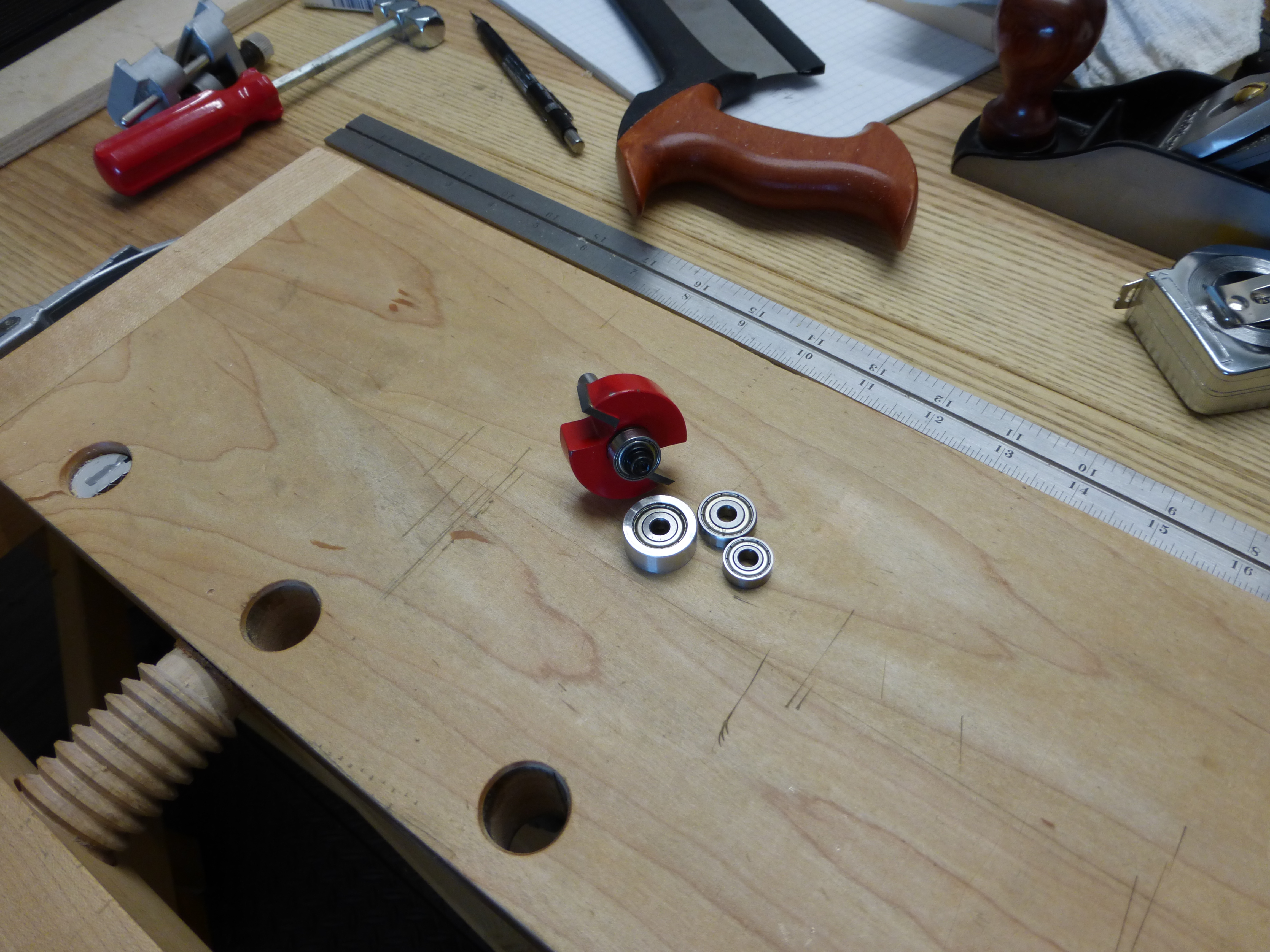
I haven’t used a power router for anything other than chamfers/roundovers and the occasional flush trim in a very long time.  However, for the floor of the medium tool chest, it might be time to bust out the rabbeting bit for cutting some ship-lap joints.  I don’t own a fillister plane and I only need to cut a few rabbets, so why not?

P1000149

Hello, old friend.

I’ve always liked the concept for a rabbeting bit, even after I switched to hand-tools.  Much like the flush trim bit, you still need to joint a square, straight edge on a board to run the bearing along.  Although a bit messy for apartment woodworking, but with only four rabbets to cut (as the tool chest floor will consist of three boards total), I’m pretty sure the cleanup after rabbeting by power router will be manageable.

I’ll put a simple chamfer on the tongues of the ship-laps with a radius plane (a tool I don’t use nearly enough) to finish the joint.

Hello, other old friend.

Hello, other old friend.

JPG

Alignment Cauls for Perfect Glue Up

One of the woodworking tasks with which I struggle mightily is hand-planing the twist entirely out of thinner stock.  I have found, though, that careful alignment during the glue-up is one way to manage (and maybe even eliminate) any remaining twist in a thinner board that is part of a larger panel (like a table top).  This won’t work for boards that are majorly out of wind, but there is a very simple jig you can make from scrap to perfectly align two boards in a glued butt joint.

P1000129

I think they are technically a type of caul.  I don’t know if they have a proper name.

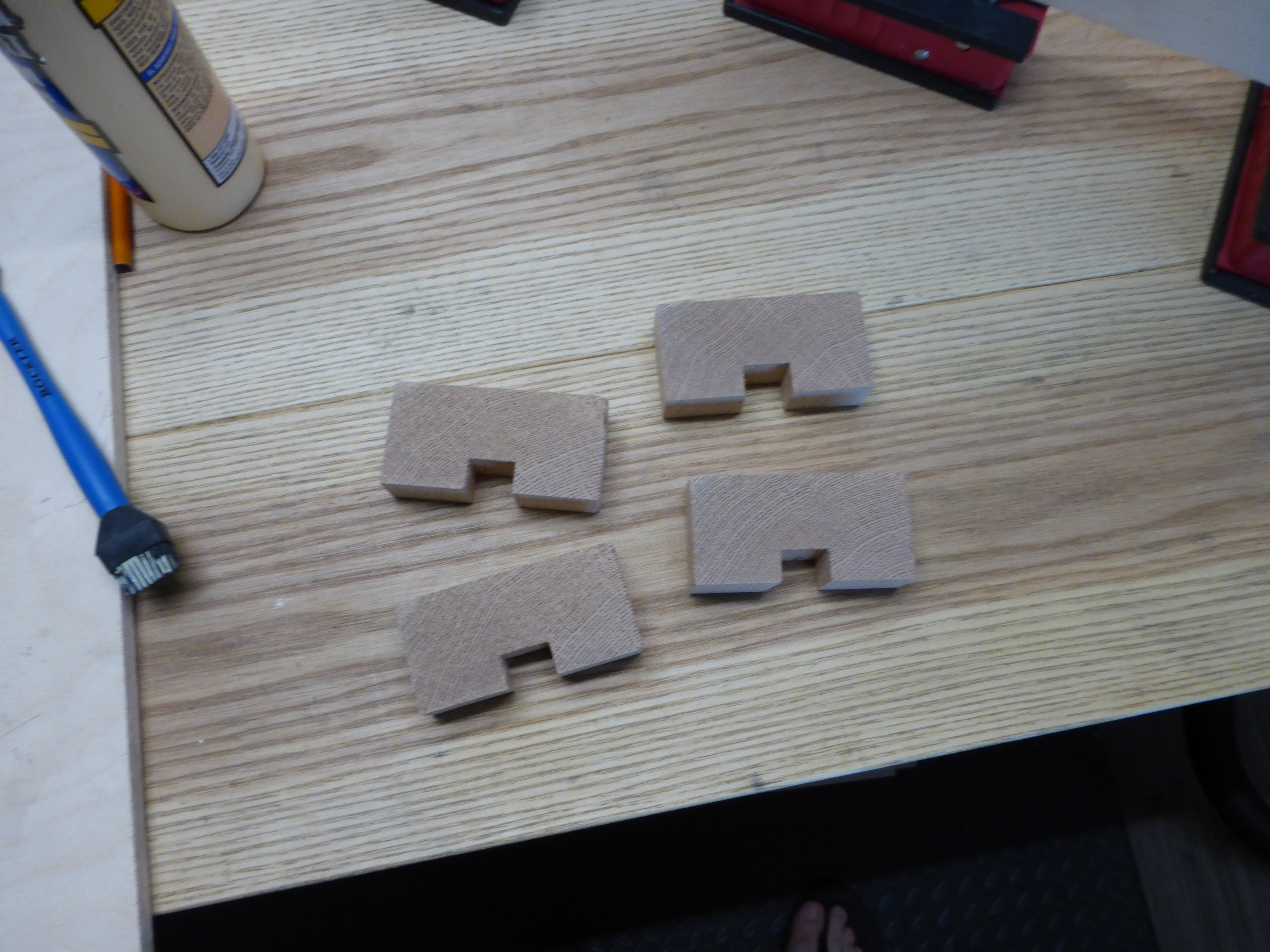
The alignment cauls pictured above are 1″ thick slices of red oak 2×4, with a 1/2″ x 1″ groove routed in them.  The exact size isn’t critical, but you want them to be wide enough for a decent sized groove and thick enough to easily take a clamp.  I recommend routing the groove first, then cutting the slices and truing the faces with the groove over some sandpaper on a flat surface.

The most important part, before any gluing up, is to make sure the two boards are planed as flat as you can get them and thicknessed to the exact same thickness (the thickness is the critical part).  Once that is done, you clamp two cauls, opposite each other, to straddle the glue joint and perfectly align the outside edges of the boards.  You use four cauls per glue joint (two on each end, pictured below).  Once the glue dries, just dress the seams.

Like so.

To avoid marring the work, go easy on the clamping pressure.

When doing the dry run for the angled-leg side table glue up, I noticed there was about 1/32″ twist in each of the boards.  It would have been no problem to skip the cauls and just level the seams after glueup, but I had them handy and the boards are already thin enough (5/8″ after thicknessing) without any more dressing.

P1000128

I will give the panel a couple hours to set and then I’ll attach it to the frame and be done.

You should always try and get as much twist out of the boards as you can, but in a pinch (nailed it!), these alignment cauls will get the job done.

I will post pictures on twitter of the finished table, once I figure out how to attach the top.

JPG

About Damned Time

In a vulnerable and impressionable state the other day, I splurged on a new scrub plane. I’ve mostly gotten my retail therapy habit under control as of late, but in this case, the price point was too good to resist.  I weighed the benefits of merely buying an extra iron for my No. 4, but without a bench grinder in my apartment, this seemed a less attractive option.

This is my favorite part of woodworking.

This is my favorite part of woodworking.

I’ve been managing well without a true scrub plane for a while. Lately, all my traversing is done with an exaggerated camber on a No. 4.  This is perfectly fine for pines and softer hardwoods, but some upcoming hardwood projects (real hardwoods: oak, ash and maple) made it time for an upgrade. I’ll straighten the iron on my No.4 so it can return to general purpose/shooting duties.

What drove me over the edge, though – aside from over-tiredness and crushing existential dread – was taking down the width of several long boards, where the waste was not thick enough for hand-sawing away but was too much for even a heavy-set bench plane. So I splurged.

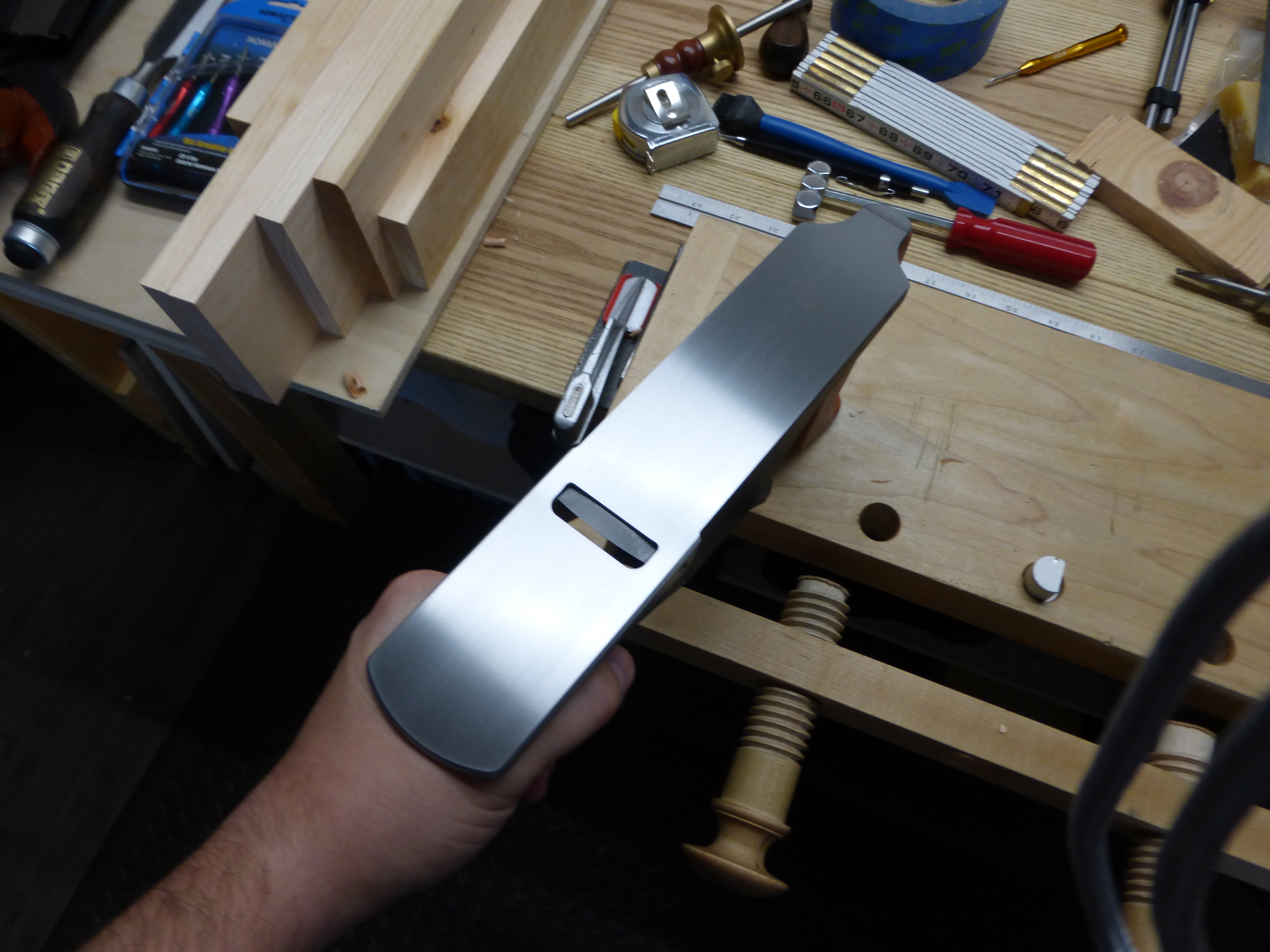
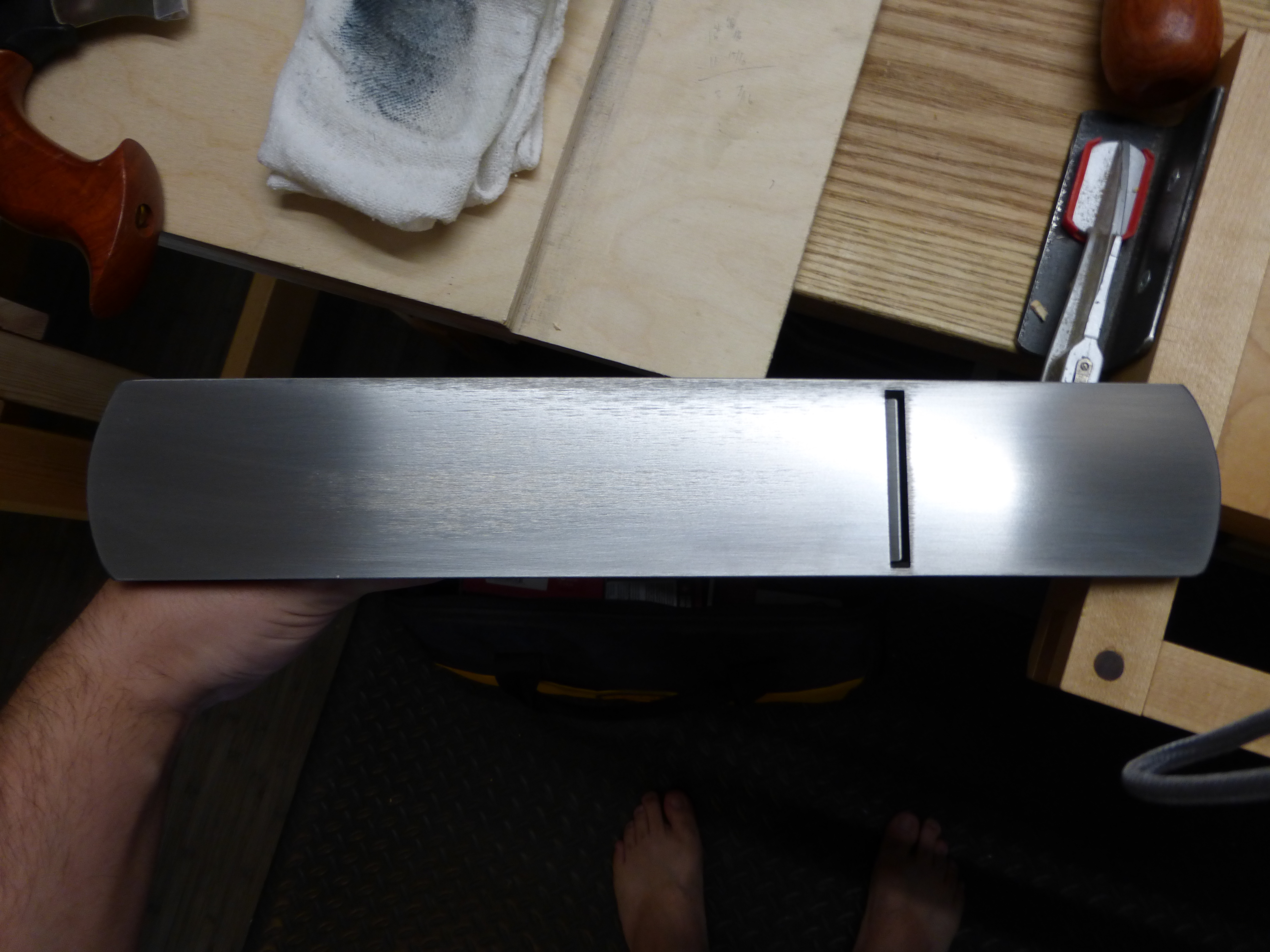
This is my first Lee Valley/Veritas plane.  I own several of their saws (as well as some winding sticks, wheel marking gauges and other miscellany) and am always impressed with their quality and pricing.  I was nonetheless blown away by how little tuning was required.  Right out of the box, the sole was dead flat.  As was the iron, which was already ground to radius (thankfully).  After a mineral spirits wipedown to remove the shipping grease and a quick coat of T-9, I assumed all the plane would need is a secondary bevel on the iron before taking shavings.

The quality of machining is a joy.

The quality of machining is such a joy.

Christopher Schwarz did a great blog post on scrub plane iron sharpening a while back that demystified the process.  I am always grateful for his wisdom.  A quick thumbnail test, though, revealed the iron was already rather sharp.  I could polish it further, but “well enough alone” is the rule of my apartment woodworking shop.  I literally just had to center the blade and tighten down the set screws before the plane was ready for use.

Overall, so far so good.  I will post a follow-up with some pictures once I’ve had a chance to take shavings.

JPG

Cleaning Up a Modern Stanley No. 5

What feels like ages ago, I set out creating a list of the first tools a beginner handtool woodworker should acquire. That list has never been far from mind, as it’s the question I get asked most.

I always felt guilty, though, because one of the tools on the list I did not own: a regular No. 5 jack plane. Well, it turns out I did own one; I had just forgotten about it when I culled my tool chest during the move into my new apartment. The regular No. 5 in question is a “contractor grade” Stanley purchased off Amazon. The one with the molded plastic handles. Everyone makes bad tool purchases, but I recently took the plunge and put in the work to make it serviceable, which was less laborious than expected.

Before anything else, I knew I wanted to replace the plastic handle and tote. I cannot thank Greg Droz at http://www.drozsoldetymestanleytotesandknobs.com/ enough for his excellent work and great price point on a replacement tote and knob. Made of rosewood, they fit the modern plane perfectly and have a great look and finish. I highly recommend you check him out.

Almost looks like a real plane, doesn't it?

Almost looks like a real plane, doesn’t it?

Next on the agenda was flattening the sole a bit. Even just by eye, I could tell it was severely dished. Three sheets of 80 grit adhesive sandpaper on a granite slab brought the sole flat enough for the work I’d require of it. Then a bit of polishing with 120 and 180 grit to a dull shine.  I also cleaned any metal shavings out from under the frog and squared it to the mouth as best I could.

I plan to use this for edge jointing thinner stock, so that remaining hollow along the side doesn't really bother me.

I plan to use this for edge jointing thinner stock, so that remaining hollow along the left side doesn’t really bother me.

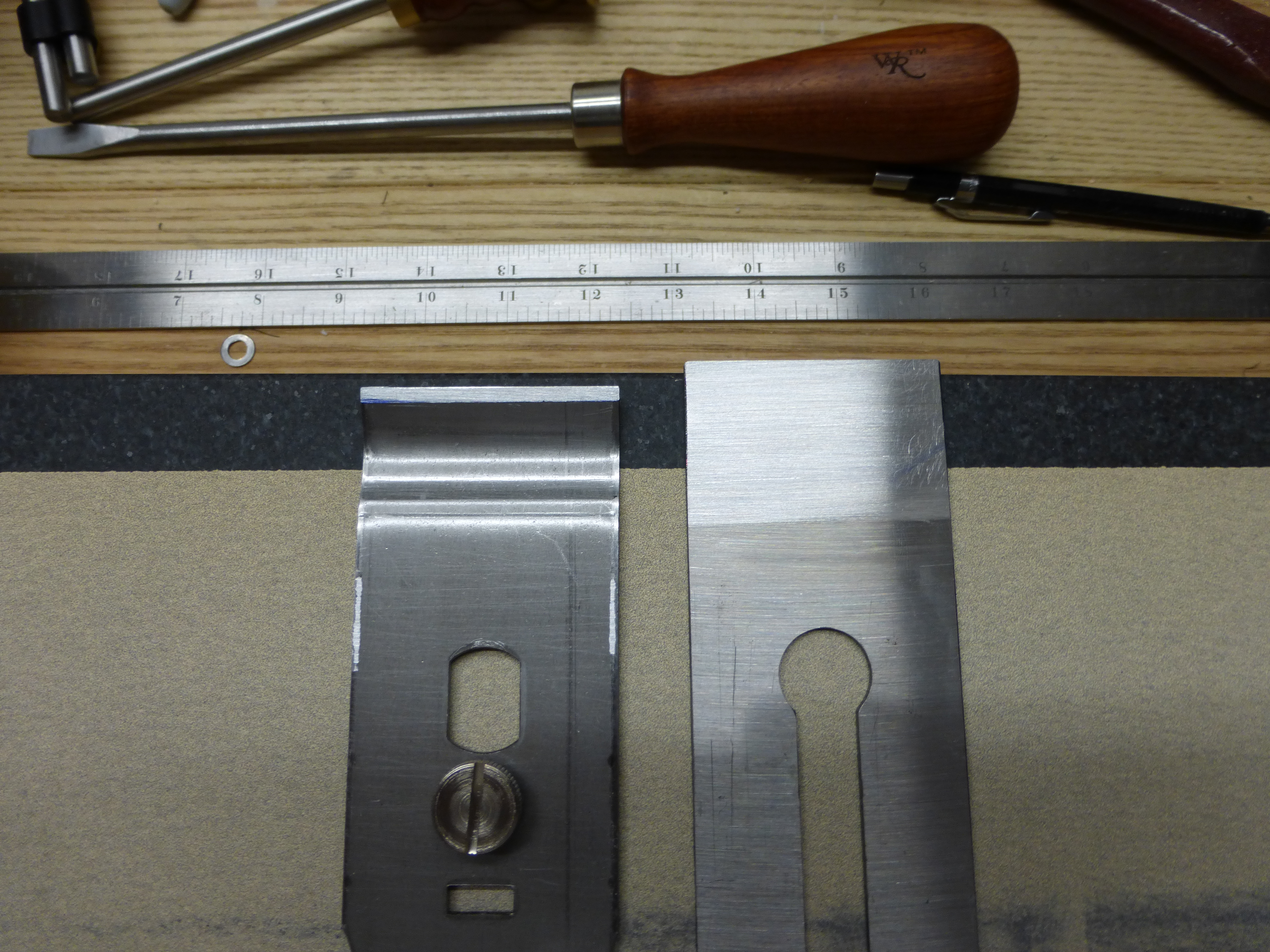
While I had the 80 grit sandpaper on the stone, I also took a moment to flatten the back of the plane iron. Of all the sub-optimal machining in this tool, the iron was surprisingly flat and only took a couple minutes on the 80 grit then the 120 grit to flatten nicely. The chip breaker mates perfectly after only a few strokes as well.

Both were then polished on my diamond plates.

Both were then polished on my diamond plates.

Finally, it came time for iron sharpening.  Flat as the iron may have been, it certainly wasn’t ground square, so the new 30° bevel ended up a bit wider and certainly more skewed than I would have liked. Perhaps I will break out the WorkSharp 3000 to grind it square to reestablish the full 25° bevel in the future. For now, though, it’s fine.

No OCD here.

No OCD here.

And that was it.  There is a bit more slop on the depth adjustment knob than I am used to and the lateral adjustment lever feels cheap, but all in all, not bad for what essentially amounts to a found tool and 90 minutes of work.  I also should move the frog forward a bit and square one side if I ever plan to shoot with it, but for now the plane is functional and comfortable to use.I took some basic shavings on a scrap of hard maple to test it out.

No chatter, but there was some skudding easily solved by beeswax.

No chatter, but there was some skudding – easily solved by beeswax.

I’m not saying this will become an everyday plane.  But it is serviceable now and will be used mostly for edge jointing and flattening thinner stock. The tool is drastically lighter than my modern bedrock-copy No. 5 1/2 (and even my No. 4 of the same brand), which should give me better control on those delicate jobs.

All told, including the purchase of the new knob and tote, the plane came in just over $100. I don’t think I would go this route again, considering I could either pay just a bit more for a solid mid-grade brand or put just a bit more work into a restoration project from a flea market or estate sale. But the tool was on hand, and sunk costs are what they are, so I’m happy with it.

So now I have functioning versions of each of the tools on my list of beginner hand tools.  I plan to build a project using only the tools on that list and see if I can in fact practice what I preach.

JPG

New Block Plane

I finally caved and replaced my box-store block plane with a slightly more upscale version.  It’s not an everyday tool in my shop, so I didn’t splurge for an ultra premium block plane.  But I was frustrated enough with the lateral adjustment capabilities of my old block plane that it was time for a change.

P1000082

I have brand loyalty because I don’t mind a little tuning.

From unboxing to finish, total honing time was about half an hour to clean up the plane (most of which was flattening on the 220 diamond plate).

P1000080

Just about done in this picture.

I’m pretty pleased with the machining on this particular tool.  The sole is pretty flat and the iron was ground square (both rarities for this brand, I will admit).  A couple swipes at 30 degrees left a razor-sharp secondary bevel on the freshly-flattened iron.

P1000081

Fastest sharpening job ever.

There is no lateral adjustment lever, but there is plenty of clearance around the knuckle cap for a hammer tap.  The new block plane is also longer and heavier than my old one (it’s about the size of a No. 1), but the knuckle cap gives it a better feel in the hand.  Overall, I’m happy so far, even if I’ve only taken a few end grain shavings to test blade sharpness.

JPG