small projects

Necessary Supplies

This weekend, I finally made it up to Vermont to grab the remainder of my lumber and I am so glad I did.

In addition to the reclaimed pine (which I left up there for use in a kitchen table for my mother), I apparently had a sizable amount of hard maple and red oak, some dimensional cherry I had forgotten about and (most amazingly)  a couple board feet of 12/4 ash that must have been off-cuts from my dining table project.  Not to mention another 40 board feet or so of pine siding off-cuts (more dovetailing practice!).  I’m fairly confident that I won’t need to buy any new lumber for a while.

One of the more interesting finds was a set of four, shaped pine legs that were set aside from the bulk lumber.

Super random!

Super random!

At approximately 23″ tall, I think they were part of an abandoned side table project (which in all likelihood began as shaping practice).  I’m happy to re-purpose them (and some of the pine siding off-cuts for rails and tabletop) into a little table.  It will be a nice little project for my week off.

JPG

No One is Perfect

I’m not immune to mistakes.  No one is.  Someone once said (I’m drastically paraphrasing) that the sign of an accomplished woodworker is the ability to hide the inevitable mistakes.

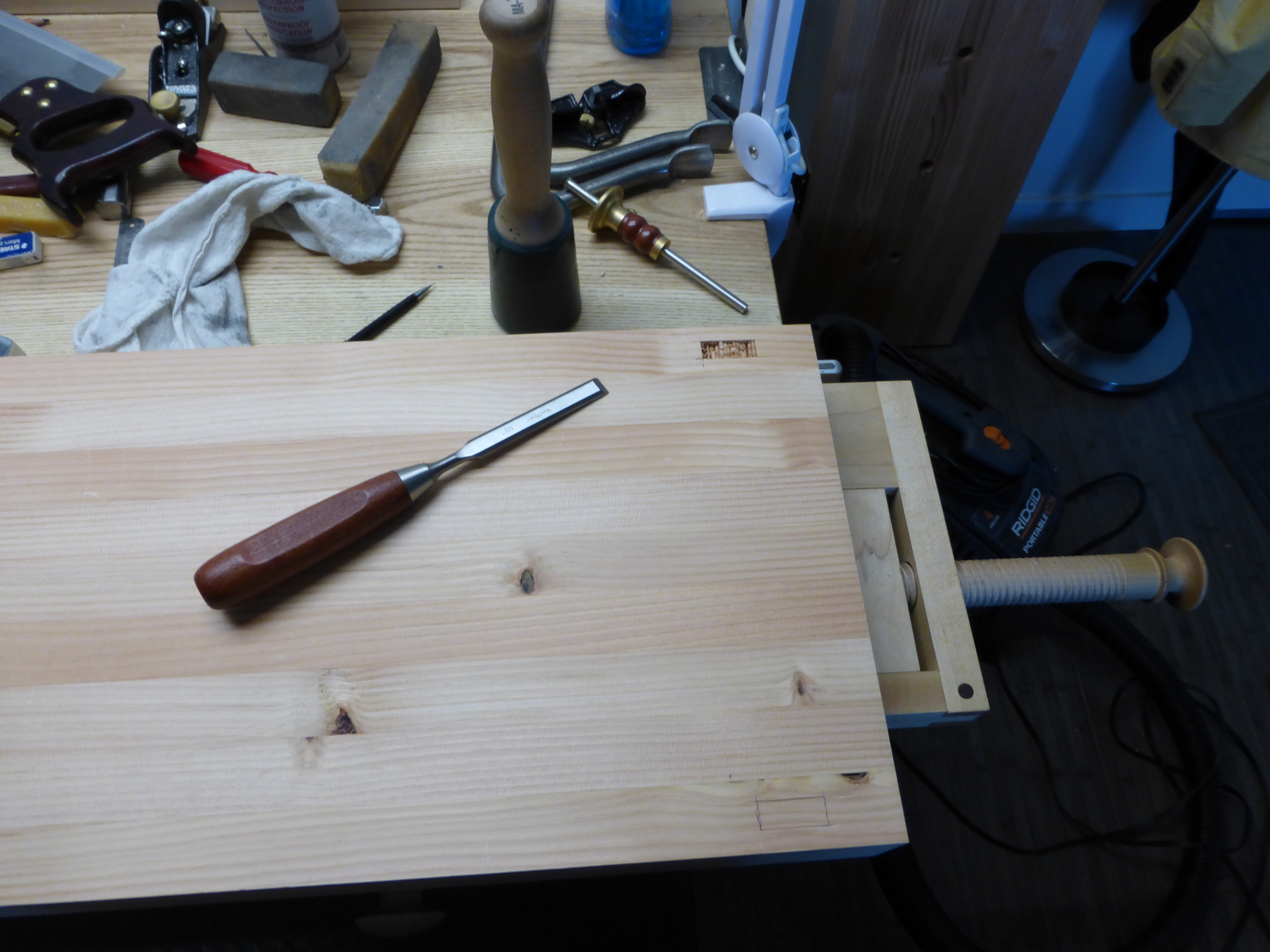
Sometimes, mistakes are minor and can be easily corrected.  Sometimes, you start chopping mortises on the wrong side of the benchtop for the mini workbench you’re making for your niece and nephew.

Like this time.

Like this time.

I’m fortunate to have left the lamination for the mini workbench a bit thick, so I have some leeway to skim 1/8″ off the other side to clean it up.

P1000049

I left it a bit rough because it was supposed to be the underside.

So all in all, no harm no foul.  And, for the record, no one would ever know, had I not mentioned it.

JPG

Weekend Dovetailing

Practicing what I preach, I took a few hours off this weekend and hand-prepared some leftover pine paneling for joinery.

P1000035

Pine paneling off-cuts from my cousin Gary are my main source of casual dovetailing stock.

I forget sometimes what a joy to work generic pine can be.  Fluffy, flat-sawn white pine planes nicely, saws easily, shoots smoothly and produces the tightest dovetails I’m capable of cutting (mostly through fiber compression).  And any slight cup in the boards definitely presses right out when the dovetails close.

Although apparently my pencil marks look like terrible gaps.

Apparently the lighting makes the pencil marks look like terrible gaps.

The above box is about 18″ x 12″ and will probably serve no real purpose.  It’s not the right shape for a bench top chisel case and much too small for any meaningful toolbox, so I will probably just glue and nail it to a base and give it to someone for use as a junk tray (for recent mail and receipts and such).

Like everything else I do, joinery overkill for the purpose.

Even I’m allowed a “look at this thing I made” post once in a while.

I haven’t yet prepared the base, but I’ve got about 24 board feet of select pine for an eventual tool-chest project from which I can borrow when I get some time next weekend. I also need to smoothing plane off the pencil marks and flush the joints, but I’ll get to that next weekend as well.

Come to think of it, I’m going to the Mets game on April 19 (a Matt Harvey start, weather permitting), so maybe it will be the weekend after next.

JPG

Unveiling the “New” Workshop

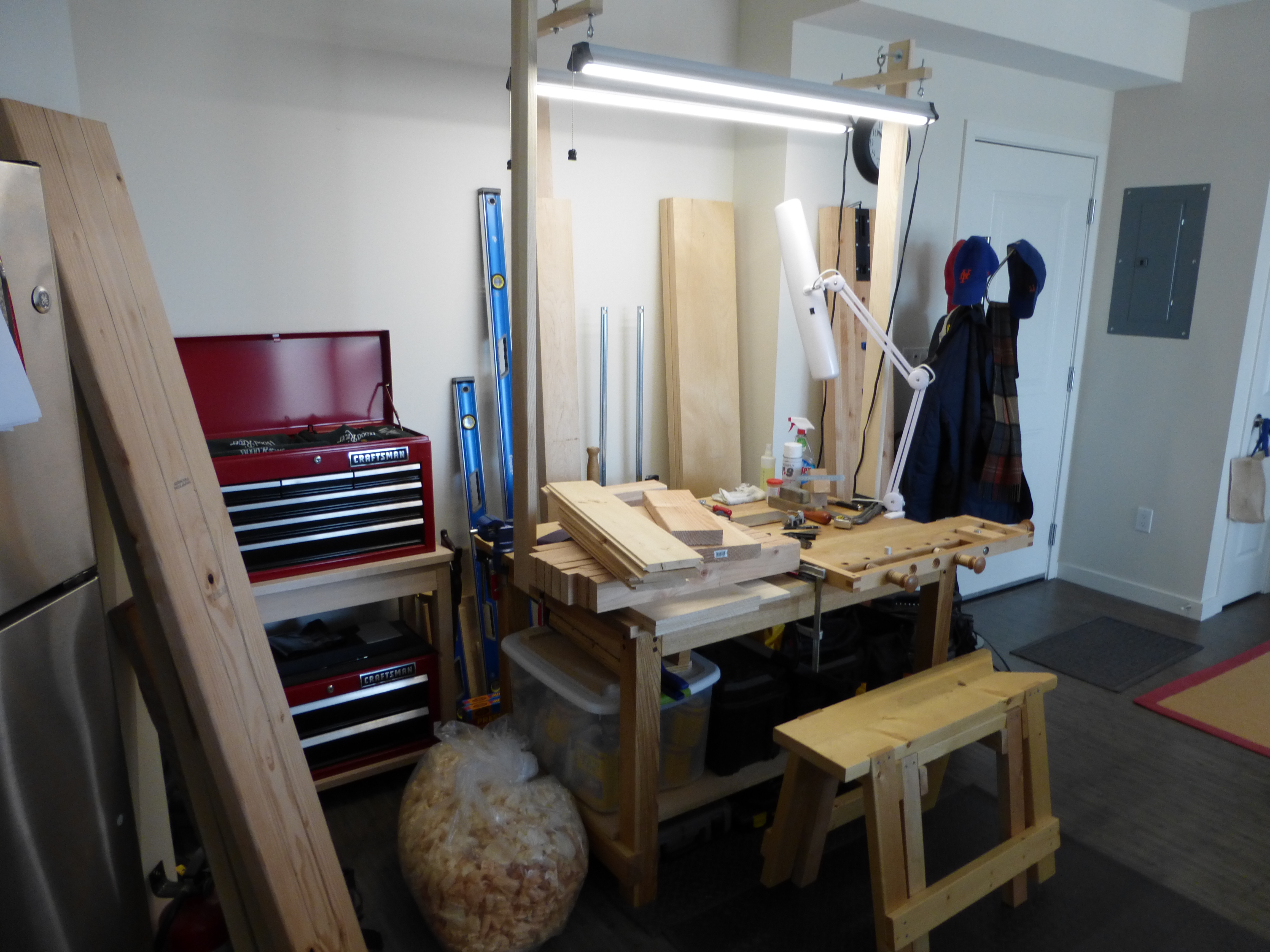
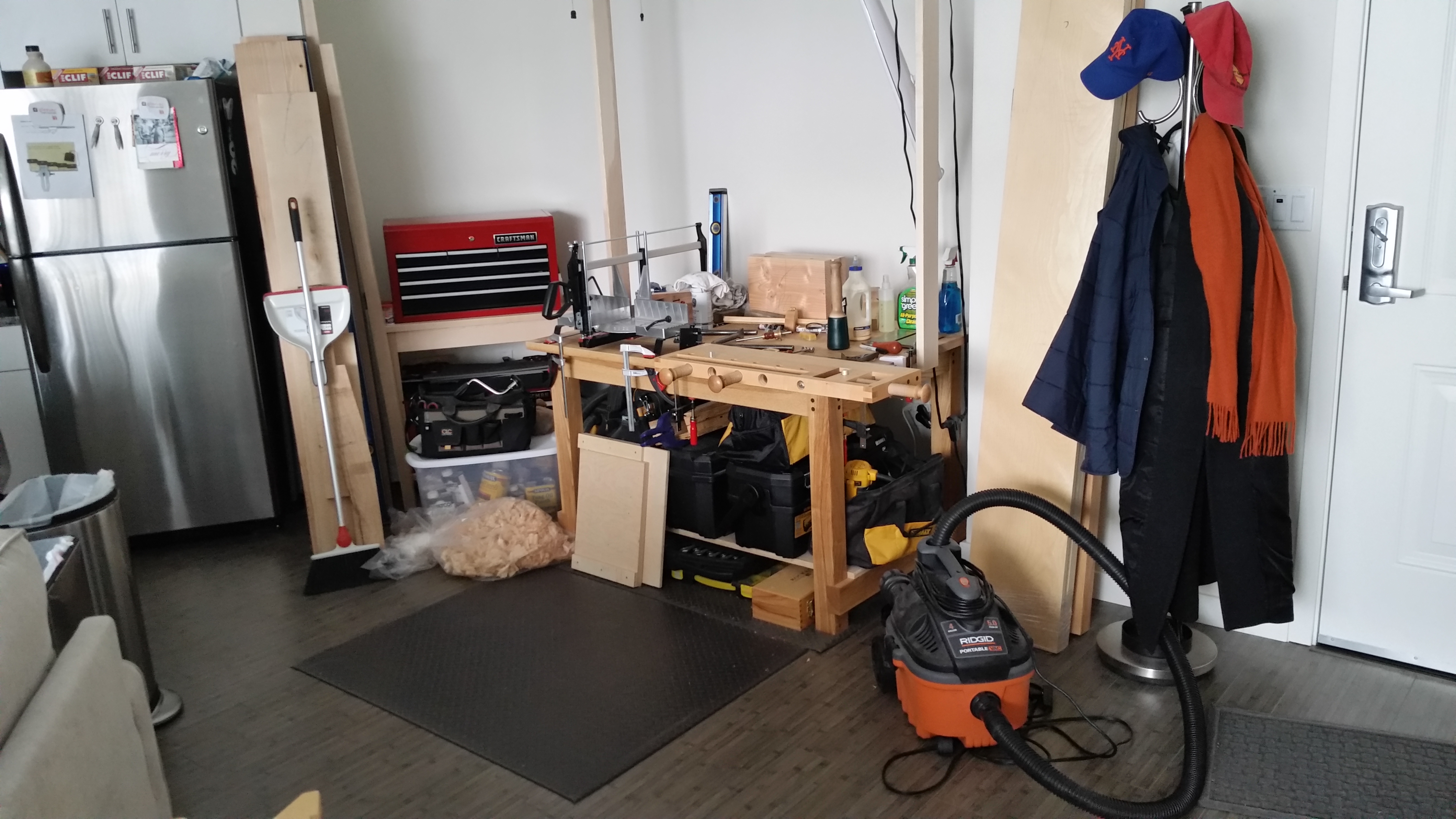
Last week, I was lamenting the spatial constraints of my apartment woodworking shop, and I decided to do something about it.  Behold, the reorganized workshop!

P1000020

It’s like one of those “spot the difference” games in the local newspaper.

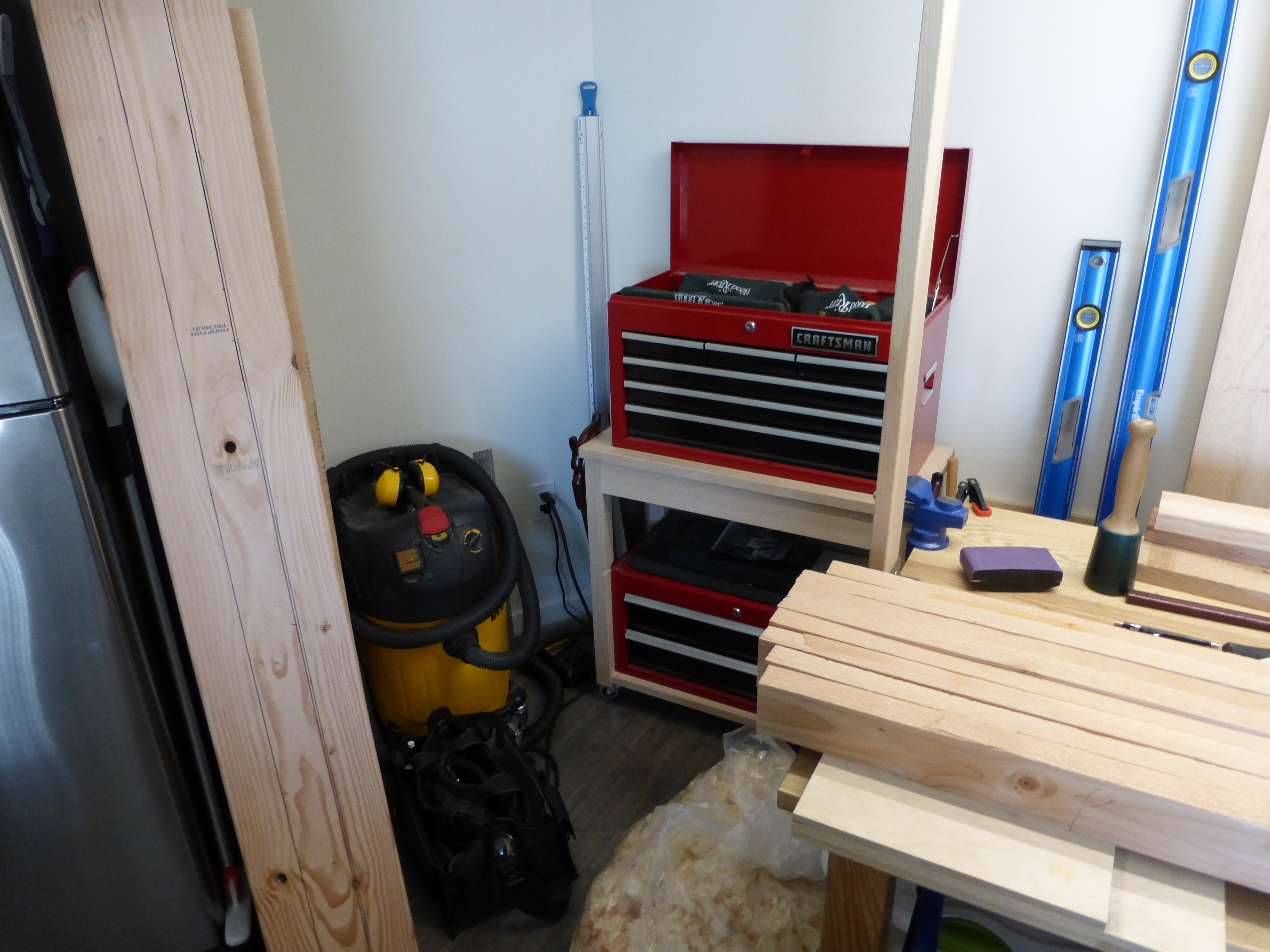
The biggest change was the location of my tool chest.  When I first moved into the apartment, I noticed the corner of the dining nook fit the tool chest pretty well. It did fit, but the angle always felt weird in relation to my normal working location. With the tool chest now adjacent to my work table, I have a better reach angle, plus I was able to hang my panel saws off the sides of the rolling table that holds the tool chest.  I put the dust extractor in the corner where the tool chest use to be.

Ruined as furniture!

Ruined forever as furniture!

The second real change was to move the table another 12 inches or so away from the back wall, which served two functions.  I now have more storage space for clamps and wood behind the workbench area.  I also am no longer tripping over the shop vac when in my normal planing position.

Seen on the right.

Plenty of clearance, seen on the bottom right.

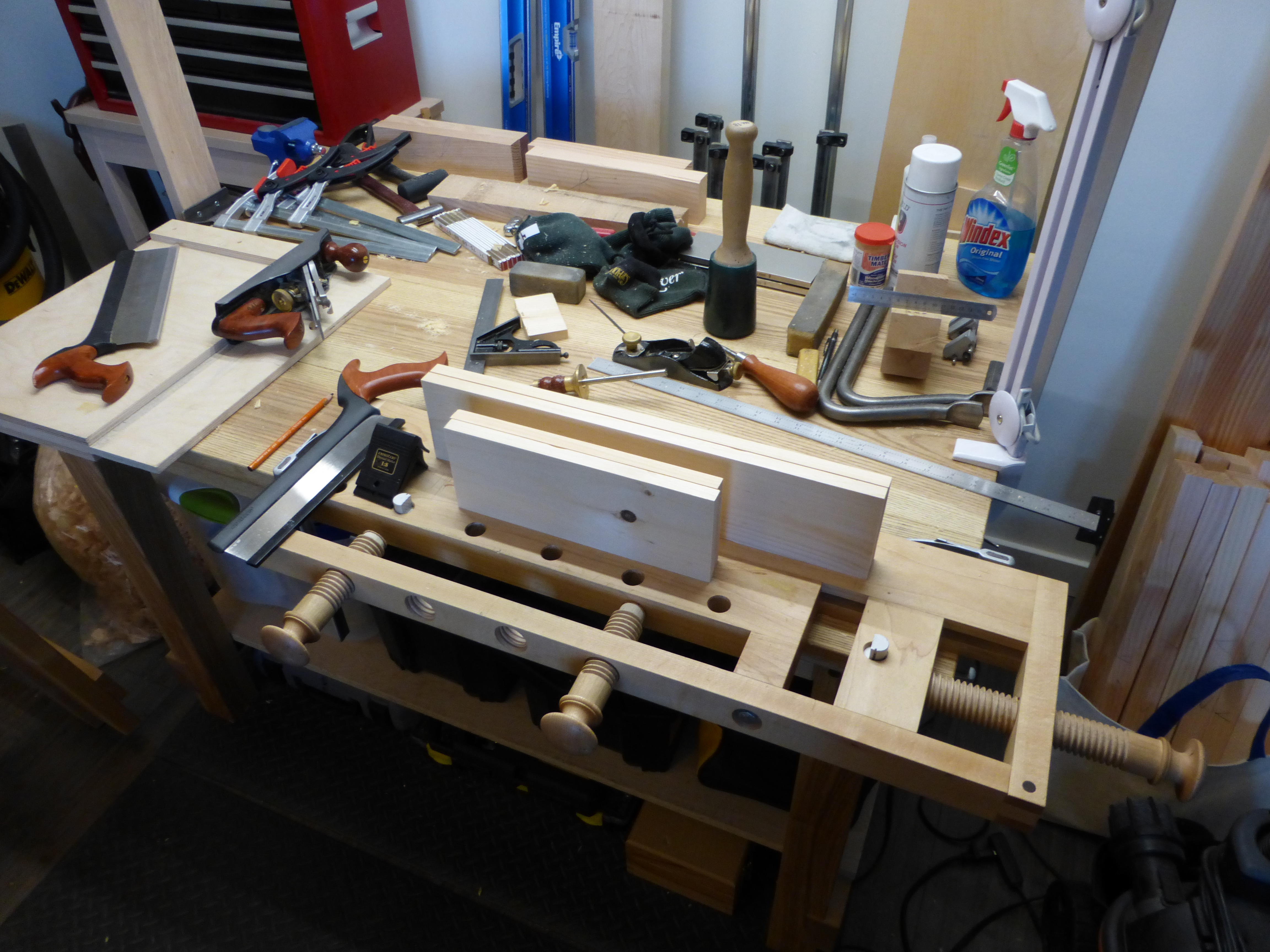
Finally, because I know it’s the only picture anyone would care about anyway, here is the shop, fully unpacked and just before I started moving things around.  I had forgotten that I never made a bottom shelf for the table and there is just a sheet of 3/4 birch plywood under there.

P1000016

Let’s Go Mets!

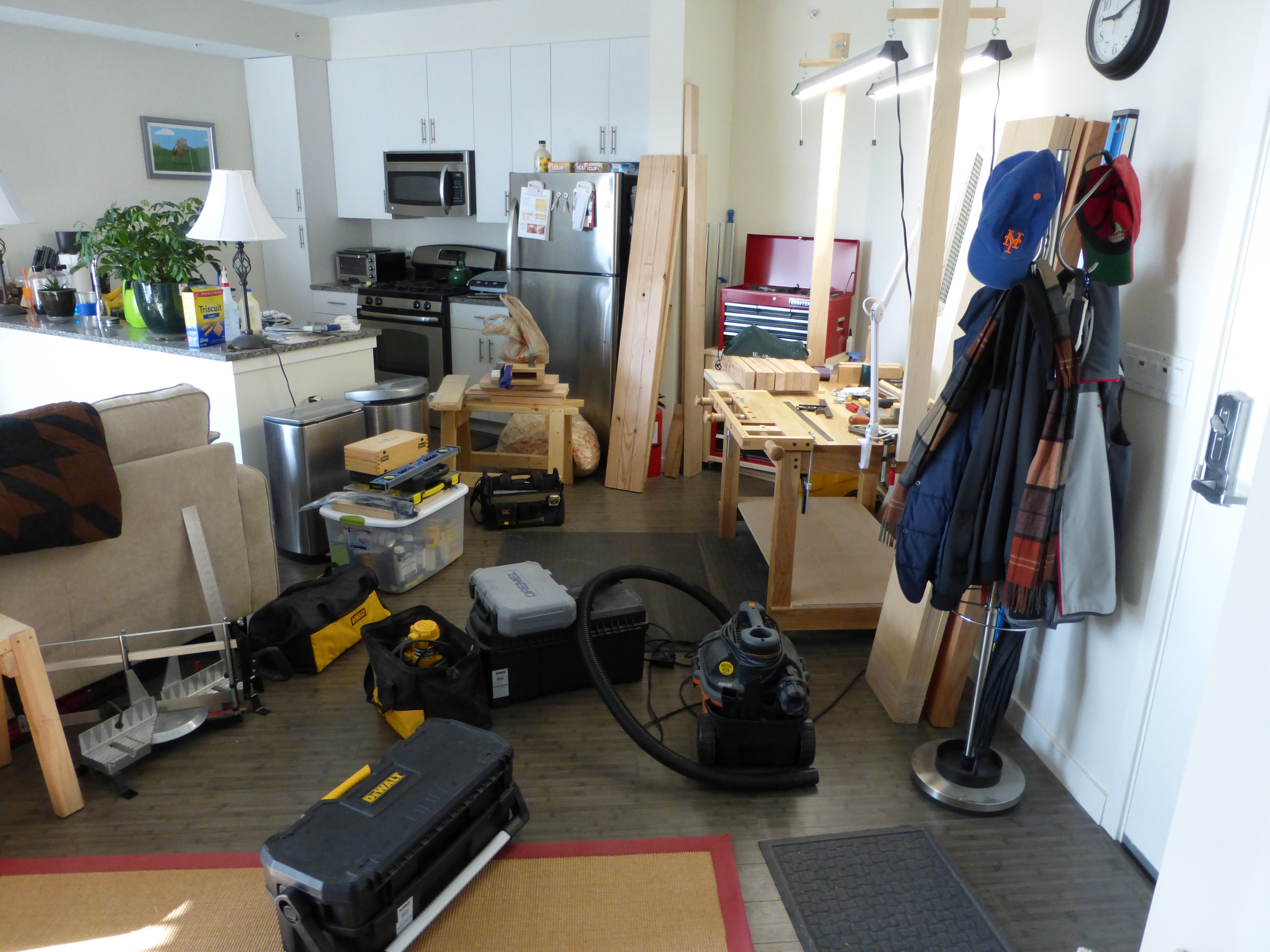
And one more shot of the workshop from the opposite angle, too.

P1000022

Oft unseen.

It’s been working out well so far.  I haven’t noticed any impact on the travel lanes in my apartment, which is the most important part. Now to actually make something…

JPG

Another One Down

I am officially over making footstools.

This is the last one, I swear.

This is the last one, I swear to Glob.

I finally got around to making the third of three footstools for my brother’s new house.  The first two footstools were for my niece and nephew.  This third one is for use in the kitchen.

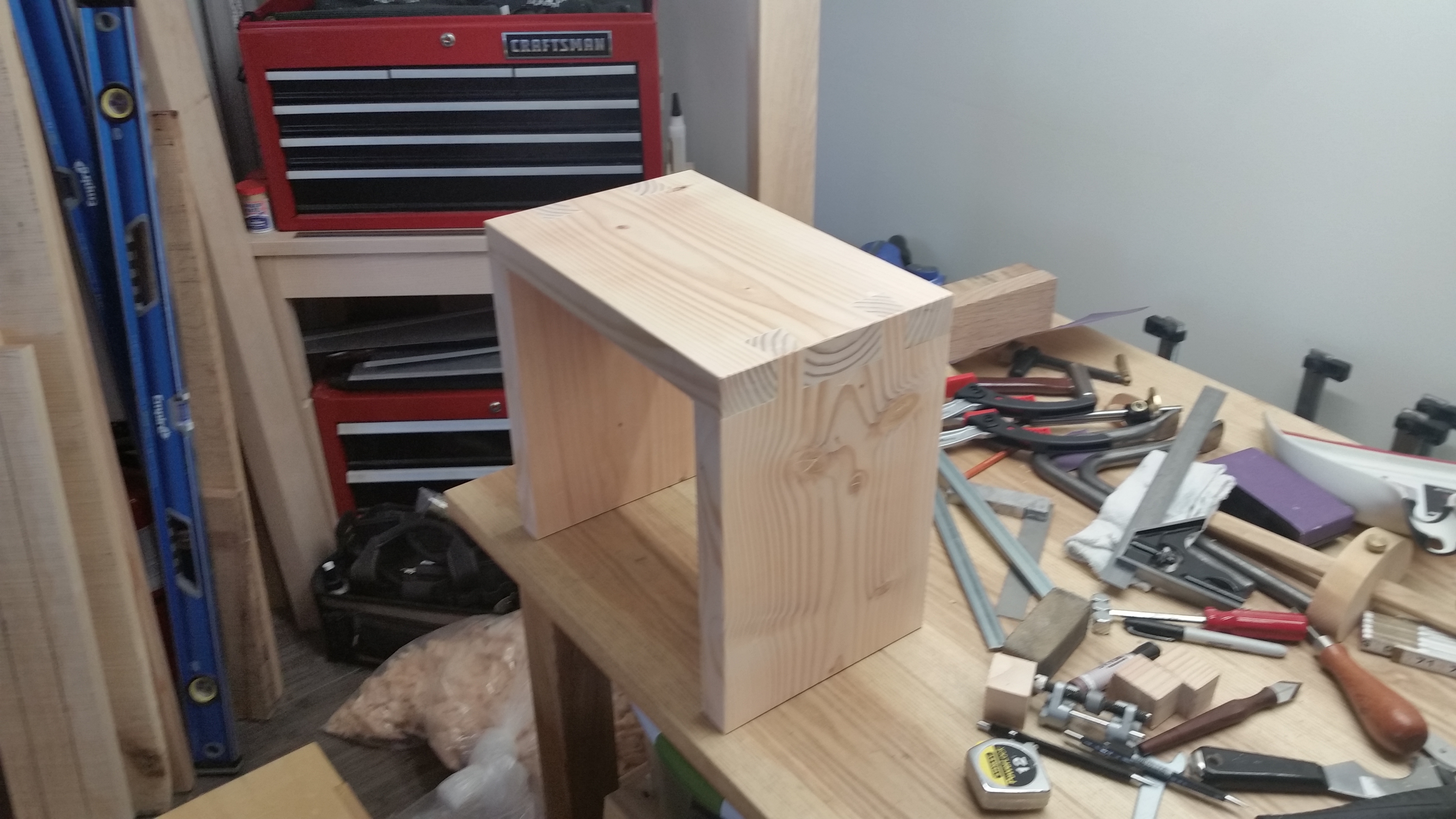
This is very clearly a utility piece.  Made from home center Douglas Fir 2×10 (leftover from the Planing Slab project), I opted to be super lazy and left the stock pretty close to original thickness and width (after some rough flattening, straightening and squaring).  I just realized that I forgot to mark the pieces to ensure continuous grain in the three main boards, but I imagine it will get a couple of coats of paint regardless.

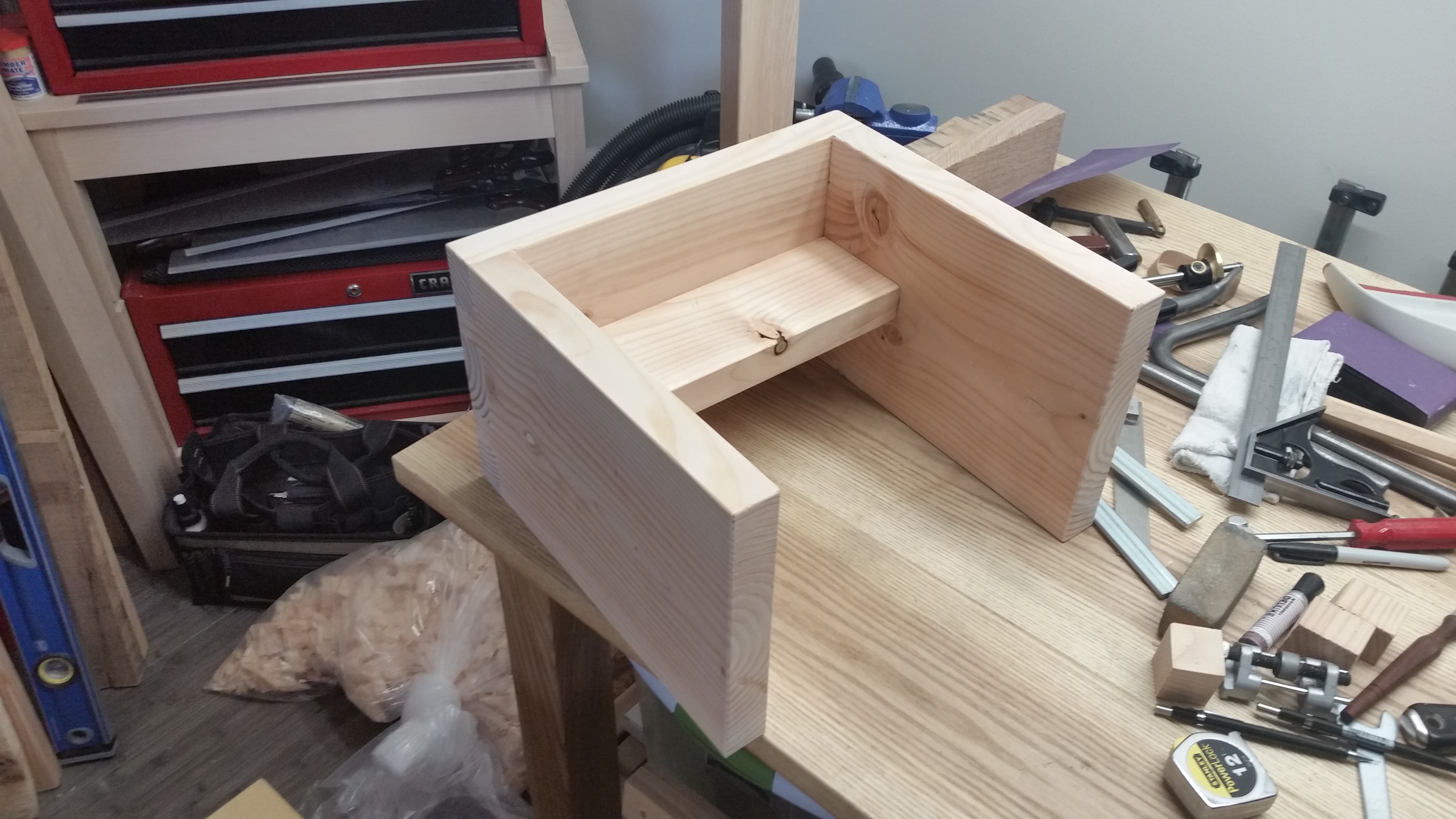
I think that in hardwood, I would have been comfortable with just the two sides and the top.  But in something as soft as Douglas Fir, I opted for an additional cross-support, which connects to the sides via mortise and tenon.  I did not glue or otherwise attach the cross-support to the underside of the top to allow a tiny bit of flex.

Solid as a rock in softwood.

Solid as a rock in softwood.

Speaking of flex, one nice byproduct of using such a soft wood is that the entire piece has a bit of give throughout.  This means that any bit of twist or wobble the piece might have (due to an uneven floor or what have you) vanishes when the weight of a person is applied.

With this done, I am now done with footstools, forever.  Probably not forever, but certainly for a while.

JPG

Safe and Sound

I have been pouring over potential plant stand designs for several weeks and I finally settled on what I think will work. The final height of the pot should end up roughly the same as the temporary fix (see below), which has been a useful guide.  I haven’t nearly finished the build yet, but some of the stock (scrap hard maple) is at least surfaced and ready for final dimensioning and joinery.

In my continued quest to not turn The Apartment Woodworker into a “look at this awesome thing that I made with my awesome tools” kind of website, I would like merely to share the design specs and explain some of the choices.  I am certain the design will be refined further through the build process, but for now, I am satisfied with the aesthetic baseline.

Plant Stand - February 2015

Careful readers will note the ratio of each leg above and below the cross-member is almost exactly that of a lightsaber (or, if you’re boring, a katana).

First, the piece only has three legs. While there has been much going on lately in the world of three-legged furniture, I really just wanted some practice cutting angled tenons and chopping angled mortises. Much of what I design and build is square and true, which can get pretty boring. Plus, the splay and the angle of the legs will keep it stable and the tops of the legs will secure the pot laterally.

Second, the hub design was born from how to get the correct splay angle on the legs. I initially gravitated toward a lapped t-shape (seen top right), which would have reduced the number of individual pieces but required a compound angle on each tenon. Unfortunately, the piece will be weight-bearing, and that compound angle would not place the load on the legs parallel with the mortise and tenon. The hub design, though, allows for the in-line load distribution.  I can drawbore each leg assembly to the hub for an eternal joint, even with the additional complexity.

Finally, although the drawing doesn’t show it, I will probably shape the legs a bit as an excuse to put my new spokeshave (a very old Stanley with a very new blade) through it’s paces.

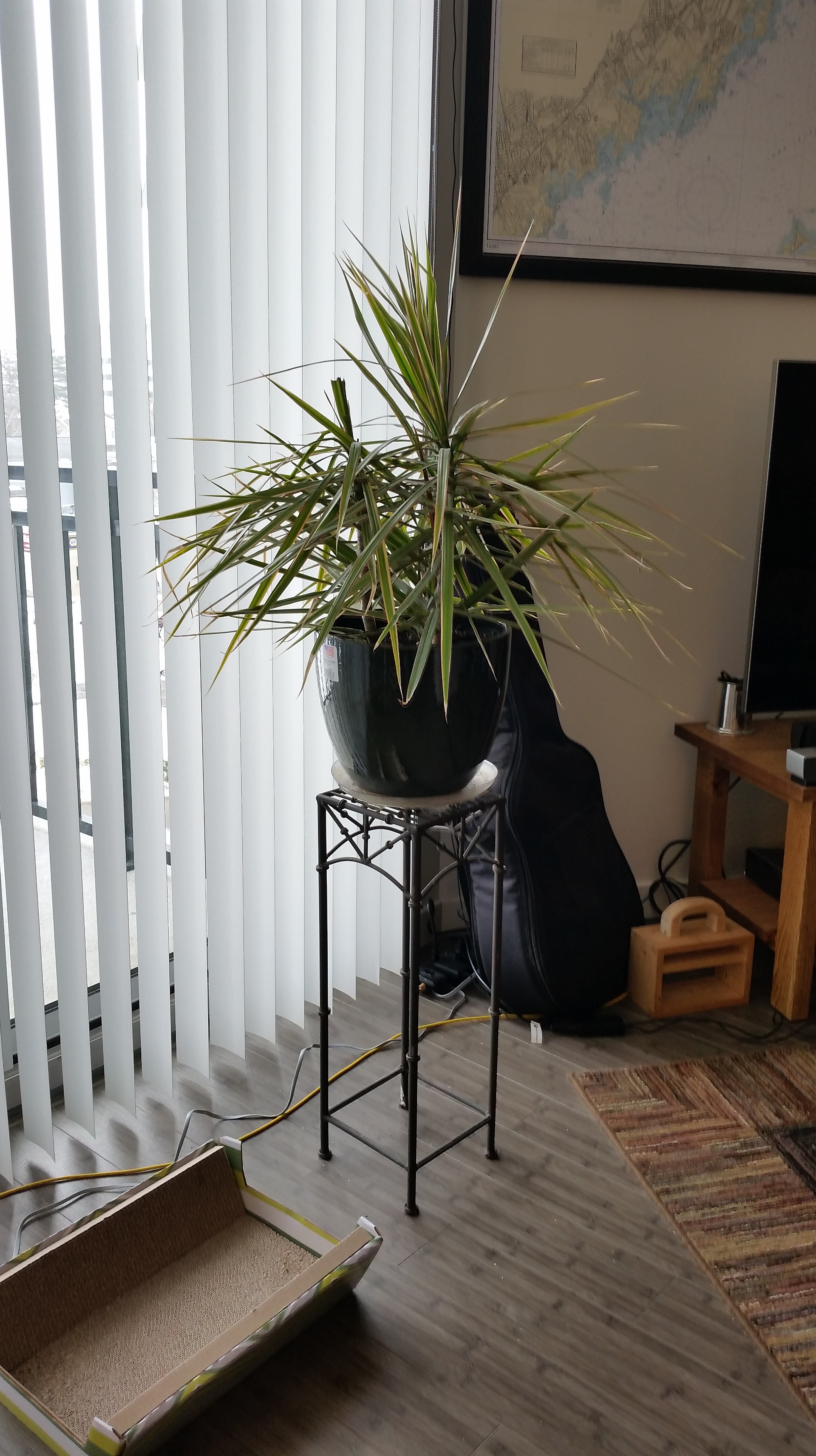
This is my current, temporary solution.

In case you are wondering, this is my current, temporary solution.  River ate the crown off the left stem, which was the impetus for this particular project.

Now I just have to build the thing. I’ll post pictures when it’s finished.

JPG

Now, About That “Mostly”

Whenever someone asks me what I do in my free time, after the involuntary “free time, that’s funny”, I undoubtedly mention that I like to make things out of wood (and write about it).  I think that may be an understatement.  Sometimes, all that keeps me going day-to-day is the fantasy of one day having the time and the space to have a studio/workshop where I design and build furniture on my own schedule.

But, for now, woodworking doesn't (and doesn't have to) pay the bills.  But it does pay significant emotional and intellectual dividends.

But, for now, woodworking doesn’t (and doesn’t have to) pay the bills. But it does pay significant emotional and intellectual dividends.

The next question is usually about types of furniture I like to make.  “Oh, tables, benches and chairs, mostly” I’ll say, careful to also mention that I don’t particularly enjoy casework (in part, because sheet goods are gross).

Now, about that “mostly”…

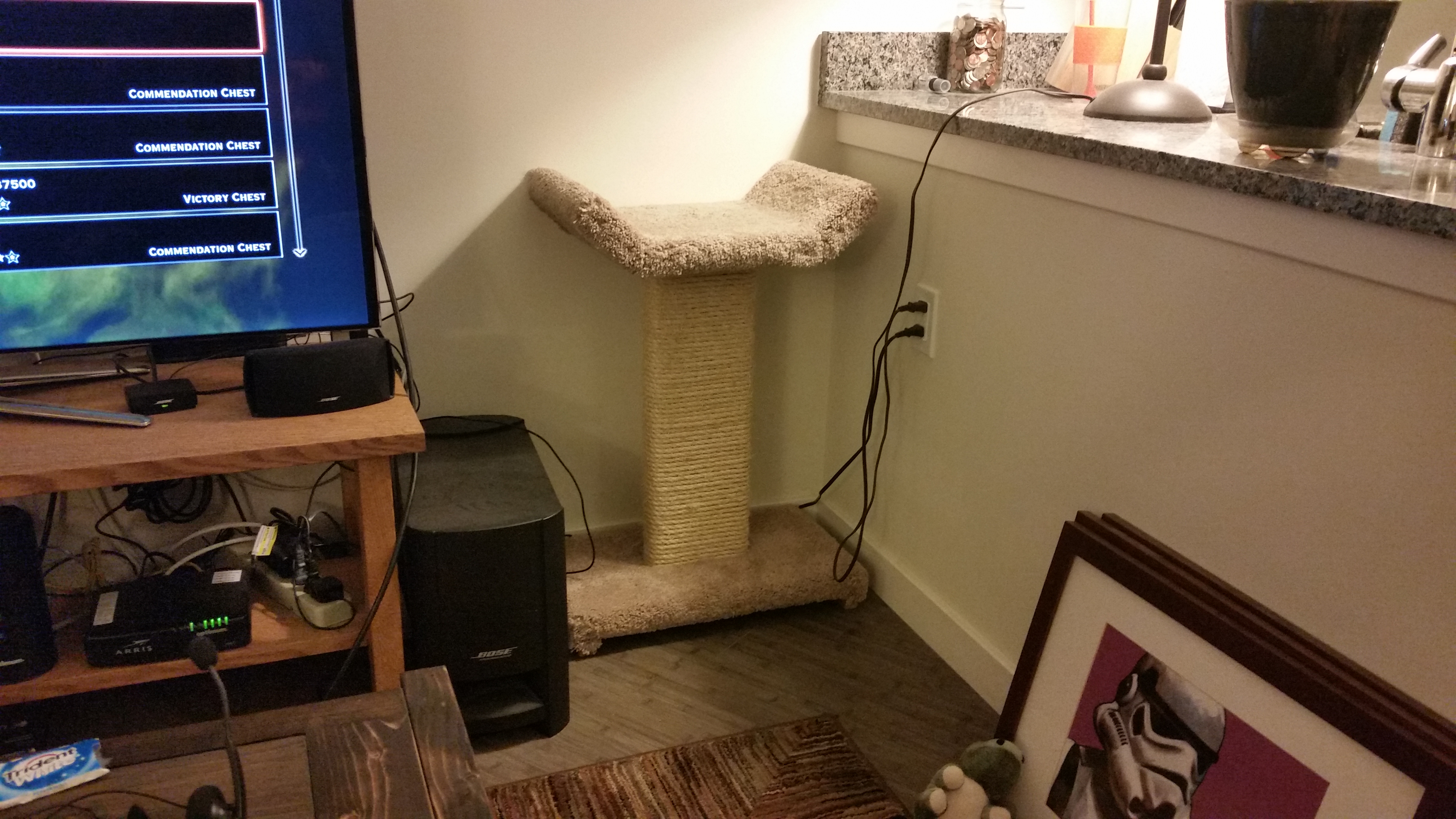
I don’t very often talk about my obsession with pet furniture and plant furniture.  In truth, I spend more time perusing the internet for cat perch ideas and plant stand designs than I ever spend scouring human furniture catalogs.  Store-bought pieces are fine (and I’m certainly not taking commissions on cat perches or indoor planters), but anything handmade by me is not going to break down or come loose.  When it comes to my kitty and my dragon trees, that’s the most important thing.  I know lots of pet owners and indoor plant aficionados who would agree.

This is made from 8/4 red oak offcuts.  Call me old fashioned, but I believe a piece of furniture should outweigh the load its bearing.

This is made from 8/4 red oak offcuts.  Call me old fashioned, but I believe a piece of furniture should outweigh the load its bearing.

I’m not saying I’ll ever actually open up a “non-humans only” furniture store.  I’m just saying it would be awesome and hilarious.  I’m sure my parents would be proud.

JPG

The Next, Best Thing

It’s no secret that I’ve never been happy with that slate-top side table I made late last year. The joinery is tight enough and the color came out reasonably well, and I always intended to build the bottom shelf when I got around to it.

Slate-top Side Table

This thing.

It’s just that the table never quite fit anywhere I put it; too wide, too deep, too short, what have you. Plus, the extra tabletop around the plant pot gives my cat an excellent platform to murder one of my favorite dragon trees.

Veritable plant murder!

Veritable dracaena genocide!

So, I have decided to move on and build something else. A tall, narrow plant stand, in fact. Haven’t put pen to paper yet for a design, but I know the problem I am trying to solve.

I sort of promised the slate-top table to a relative, so I can dispose of it quickly when the replacement is ready.  Though I need to find the time to build something.  I’ll add it to the list.

UPDATE:  I gifted the table to my aunt on Saturday.  I’m sure she’ll give it a good home.

JPG

Other People’s Handiwork

It’s a unique challenge altering someone else’s woodworking project. I have my own design style and fully prescribe to George Vondriska’s philosophy that “it doesn’t need to be perfect, it just needs to be consistent”, so when I need to alter a piece of furniture I did not create, it’s often a struggle to find a reference face.

My brother asked me to help him trim down the height of some chairs he purchased on the internet for his kitchen counter, so I spent a couple hours Saturday with my freshly-sharpened Veritas carcass saw taking 4″ off sixteen chair legs. Thankfully, the front legs were almost square and pretty much perpendicular to the floor, so I had a decent reference face.

image

That’s gross pine and spray finish for you.

What I normally would do is measure down from the seat, but even that measurement was rather inconsistent (like the floor they’d be sitting on), so I just measured from the bottom. I used a knifewall, but with the nail-in sliders, there wasn’t a ton of need for precision (nonetheless, no excuses for bad habits!)

I realized pretty quickly that I should have brought my 24″ blade for my combination square, but everything turned out alright in the end. And it was good saw practice, if on pine. There was a bit of wobble on the finished product, but between the unevenness of the floor and the flex in the chairs themselves, it was fine.

image

Illustrating the height difference.

I of course would have made the chairs myself I’d he had asked me, but he wanted them sometime this year. It was just nice to saw something after three weeks straight of 18 hour days.

JPG

A Strong Finish

Remember those dovetailed white ash footstools I made for my niece and nephew a while back?  My brother recently painted and stenciled them and sent me a picture of the (literally) finished products.

Neither of those colors exists in nature.

Neither of those colors exists in nature.

I have to say the footstools came out quite beautifully.  Although paint is not really my thing (I prefer Danish Oil), the finish certainly fits the application and I am happy to see some of the grain and joinery still shows through. I find the colors a bit gender cliche, but it occurs to me the cliche likely evolved because color coding is the most expedient way to settle arguments among children. With the combination of substantial joinery and heavy duty finish, I am certain the footstools will endure.

I still owe my sister-in-law one more footstool (for the kitchen), but I am almost out of spare white ash. I think I have some extra quartersawn red oak offcuts I can scrounge, though, and red oak is close enough in hardness and texture to white ash to work in a mixed stock piece. Going to keep the parsons design of the two footstools pictured above, but I will change up the detail a bit.

JPG