Tools

To Make or Not to Make

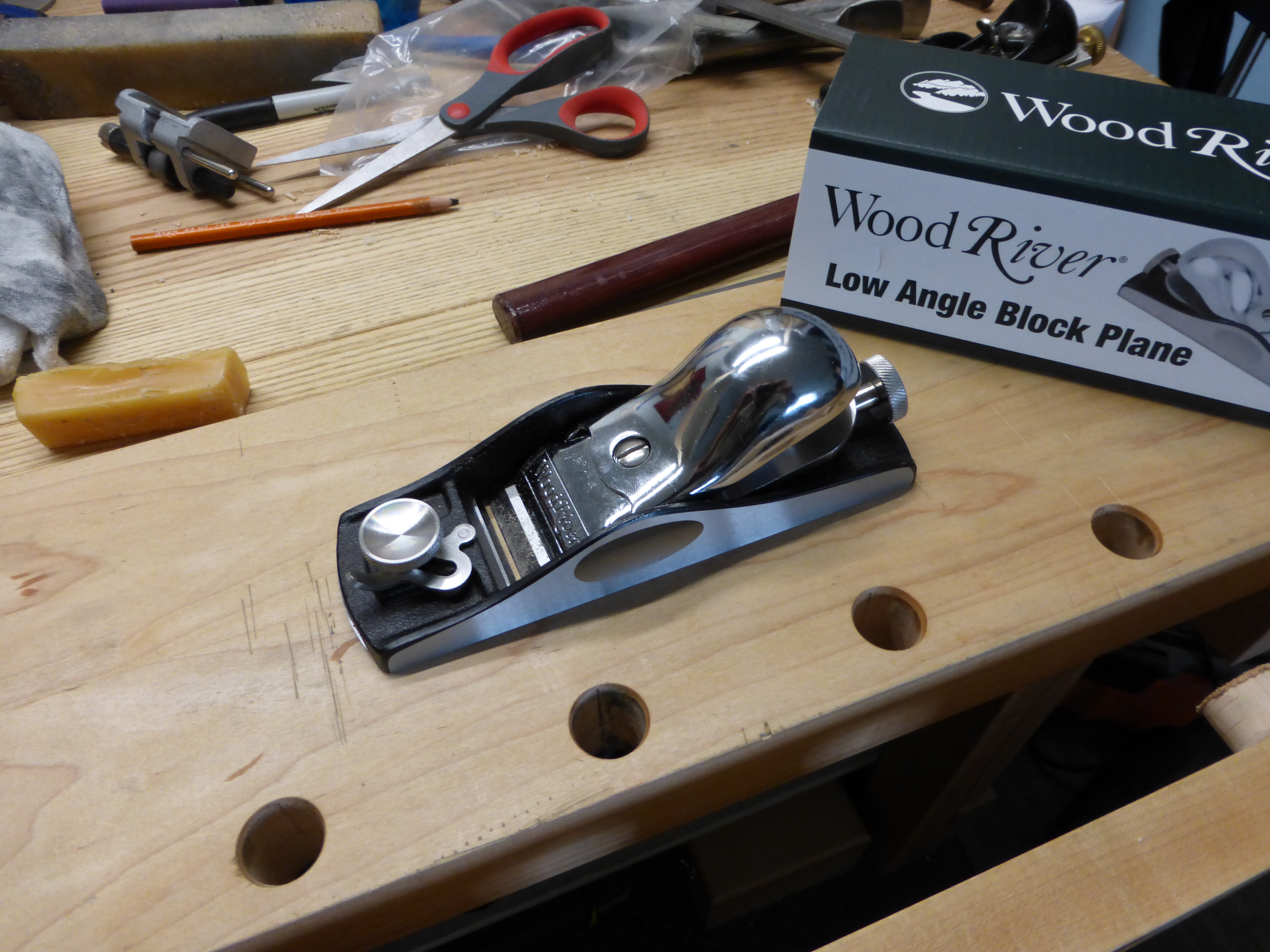
As I’ve mentioned before, one of the things that keeps me from splurging on new tools is space. Case in point, I’d love to own a plow plane, but I have absolutely no idea where to store the thing so it won’t get dinged constantly.

Maybe I could make a lidded box to keep it safe.  Maybe I’ll make a plow plane myself so I don’t care if it gets dinged. Maybe I’ll just suck it up and keep using a compact plunge router.

JPG

Straight and Square is Not Just for Wood

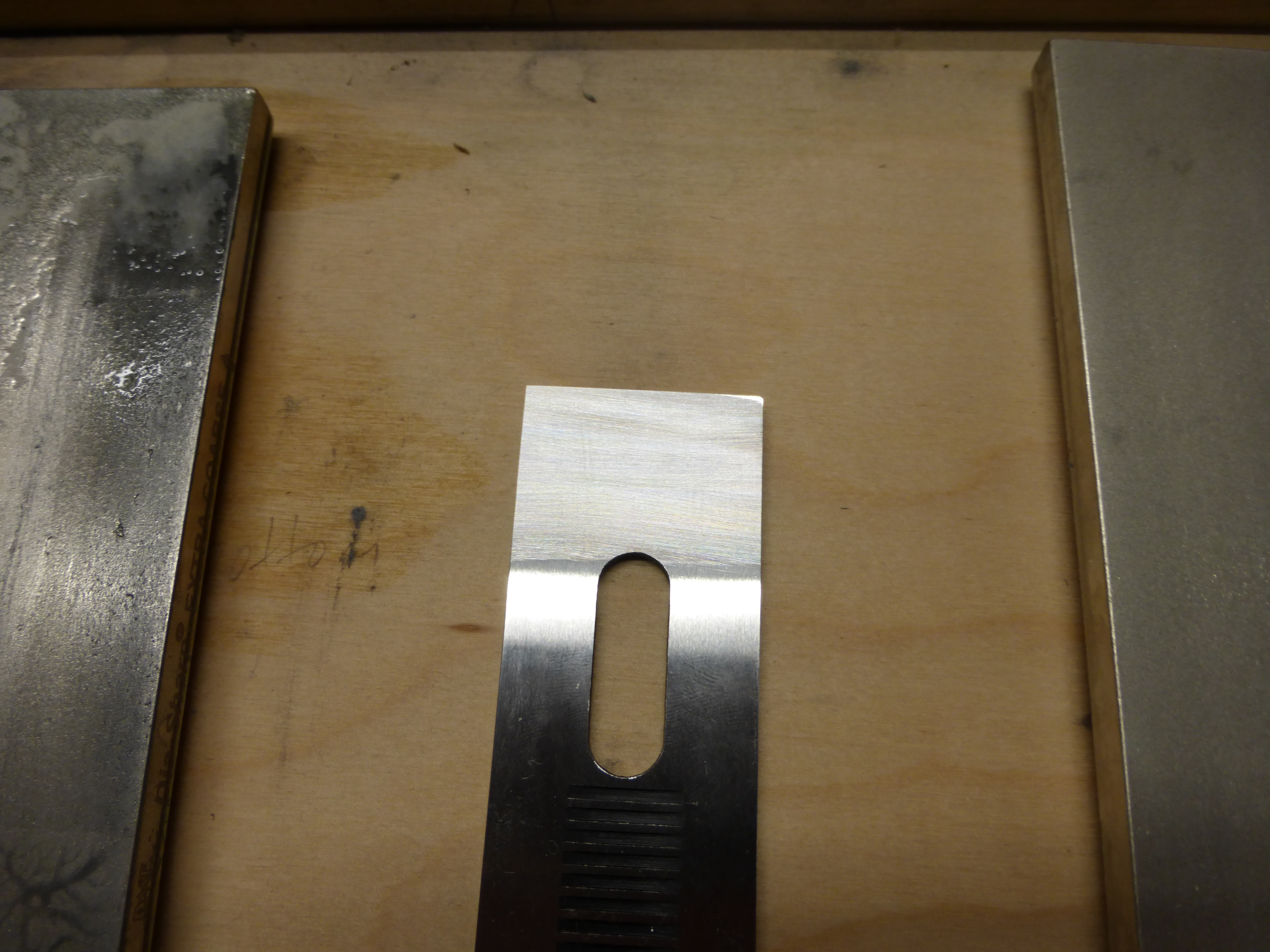
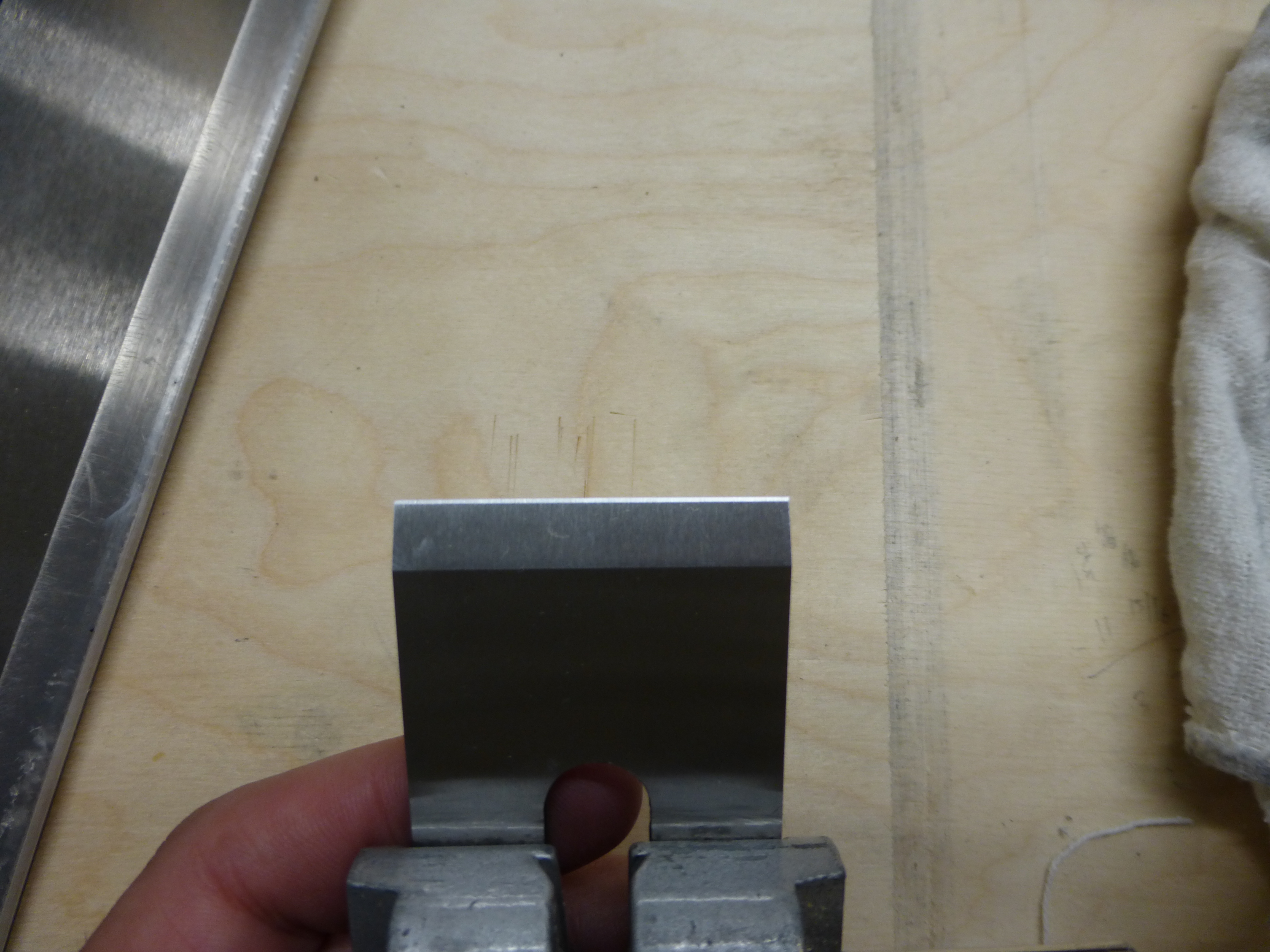
Working on a couple different planing-intensive projects has brought to my attention that I had somehow ground most of my plane irons and chisels out of square.  Again, I blame my Work Sharp 3000, which I really like but have never really gotten the hang of fine tuning.  If anyone is aware of a how-to for micro-tuning a Work Sharp 3000, please send me the link.

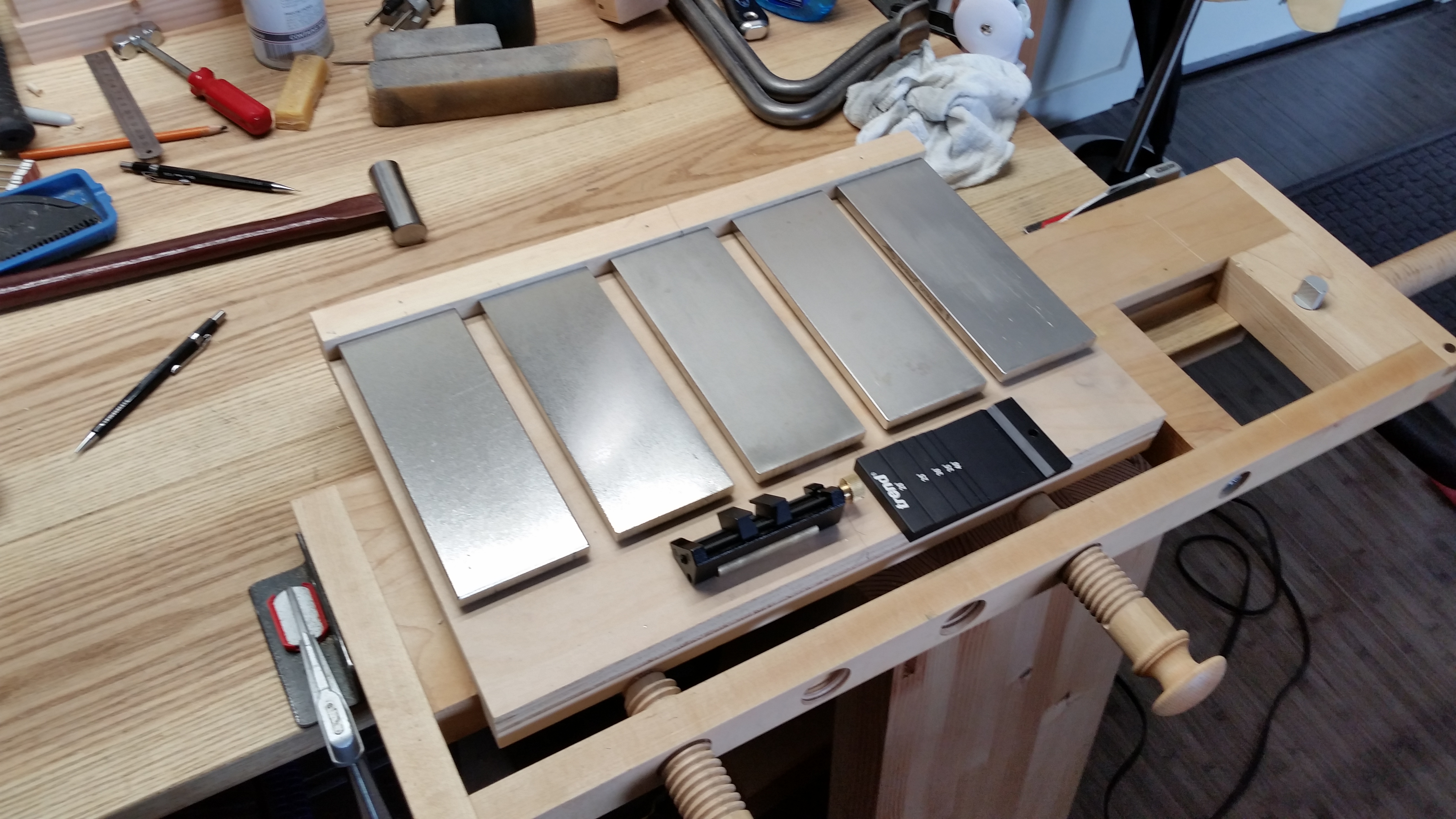
So, the last couple days I have been hand-grinding everything back into square.  I had to dust off my coarser diamond plates, as well as a wide-wheel sharpening guide that I’ve had for a long time, but abandoned a while ago when I picked up one of the eclipse-style sharpening guides.  My reasoning was the narrower wheel on the eclipse-style guide would make tipping a plane iron (to create a camber) easier.  It also apparently made tipping a chisel without realizing it easier.

Wide wheel = stability.

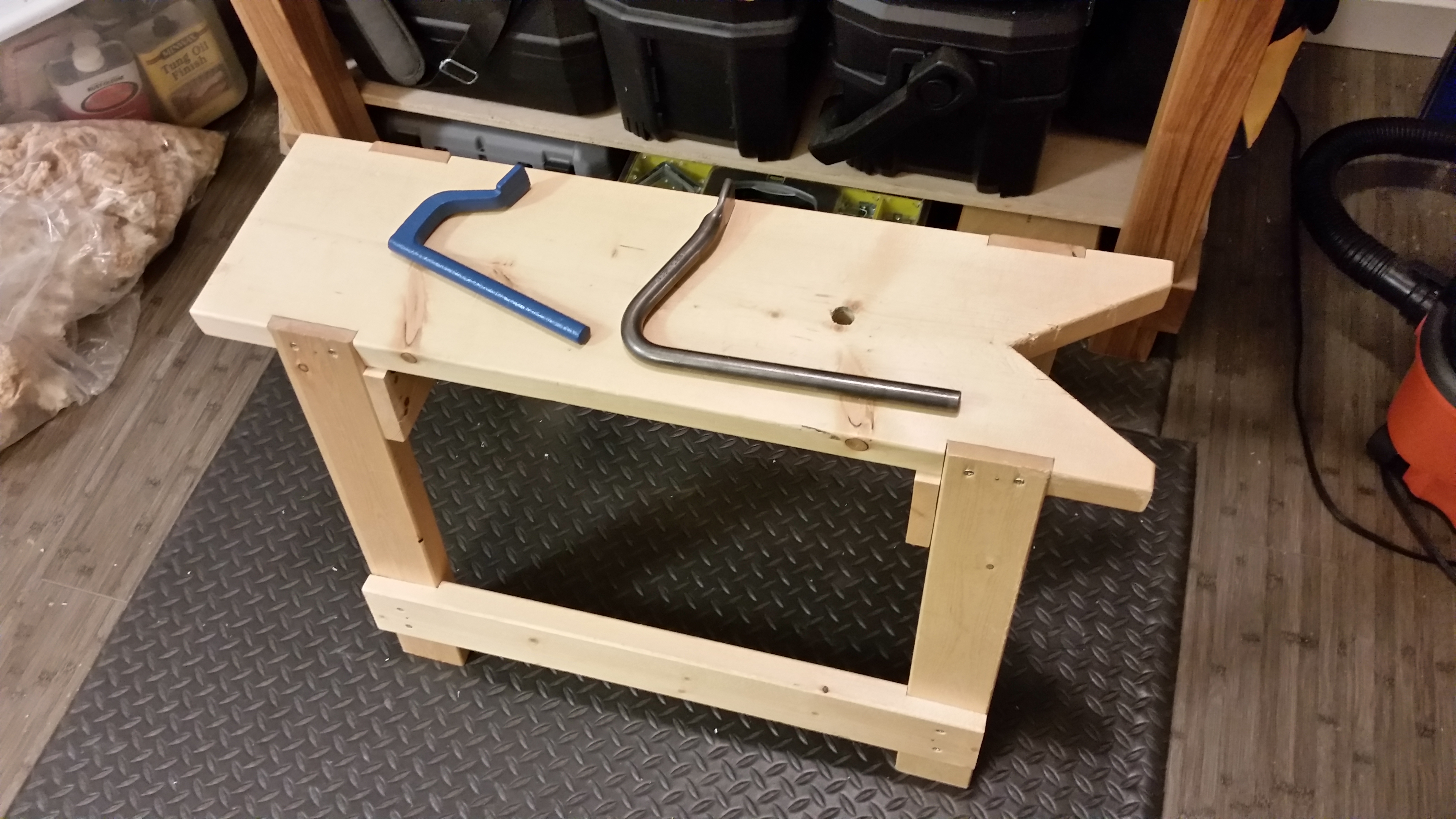
I also made another bench-hook style holder for my plates because I am sick of wiping slurry off my Milkman’s Workbench.

So going back to the wide-wheel sharpening guide with greater stability makes sense for re-grinding square.  I could certainly do it with the eclipse-style guide, but I’d rather eliminate user error altogether (which got me into this mess in the first place).

I do add micro-bevels by hand, though, so there is plenty of opportunity for user error slightly later in the process.

JPG

The Tintinnabulation of the Plane

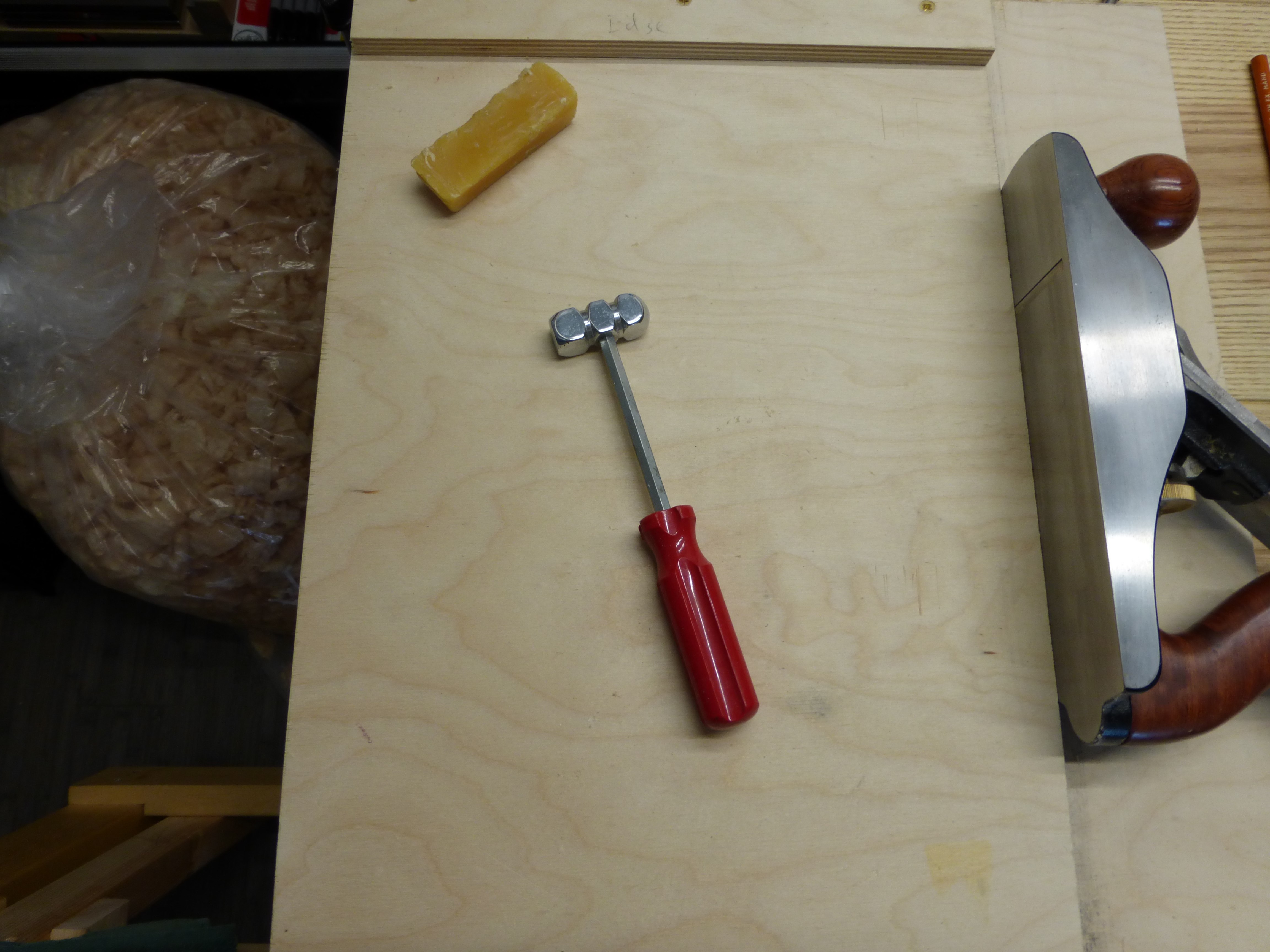
It occurred to me the other day that I’ve never actually used the lateral adjustment lever on any of my hand planes.  One of the first woodworking videos I ever watched was Super-Tune a Hand Plane by Christopher Schwarz and I guess I got in the habit of doing all blade adjustment by hammer tap.

I think I stole this one from my father's toolbox.

I think I stole this one from my father’s toolbox.

Given all the smoothing and shooting I’ve been doing lately for the mini-workbench project (both with my No. 4 and my No. 4 1/2), I have gotten quite a bit of practice at resharpening and plane setting.  One thing I noticed is that my plane irons were apparently ground out of square (I blame the wide blade attachment on my Work Sharp 3000).  After some clean-up in that respect, getting perfect set after a resharpen is much quicker.

I’ve also been more diligent about lubricating the plane sole (see the beeswax above).

It’s the little things, I guess, that increase efficiency.

JPG

Some Slight Hypocrisy

A while back, I decided to abandon super fine sharpening stones because my 1200 and 8000 grit diamond plates had worn unevenly and were ruining my plane irons. After much consideration, I have relented and picked up another 1200 grit plate for plane iron sharpening.

I did so not because sharpening only to 600 grit didn’t get the job done. On the contrary, I would defy anyone to notice the difference from a more highly polished iron.

I reacquired a 1200 grit plate because I was removing far too much material during routine sharpening. Even a couple of swipes to dress up an edge was eradicating the slight camber I put on my irons, turning routine sharpening into a grinding-level ordeal. Micro bevels became nigh-impossible and the ruler trick was rendered useless with the heavier grit.

I will say that all my irons are flatter than ever after two months of sharpening only to 600 grit, but I am hoping that the finer stone will bring routine sharpening back to an under-two minute endeavor. And that’s the point, right? Making it easier?

JPG

Jointer Plane Envy

It’s getting to that point: I think I need a jointer plane. I’ve survived quite well for a while now jointing (and doing almost everything else) with my No. 5 1/2 jack plane.  A jack plane really is more than enough for all normal woodworking tasks (as I’ve said before), but it would be pretty awesome though to have a real try plane. The extra seven inches of length would make all the difference in the world.

wpid-20150218_205822.jpg

That’s what she said?

I will first attempt to clean up an old corrugated Craftsman that was gifted to me last year. But I know myself, and this exercise ends in me splurging for a premium plane. Unlike other size planes where I’m happy to flatten and tune a mid-priced brand, I would rather spend the money for an already true, flat and square sole. I’m leaning toward the Veritas bevel-up model, about which I’ve heard good things.

No matter what, I bet agonizing about it will earn me another few more months to figure out where to keep the thing in my tool chest.  Hollar at me if you have any other suggestions.

JPG

Sharp Enough, From Now On

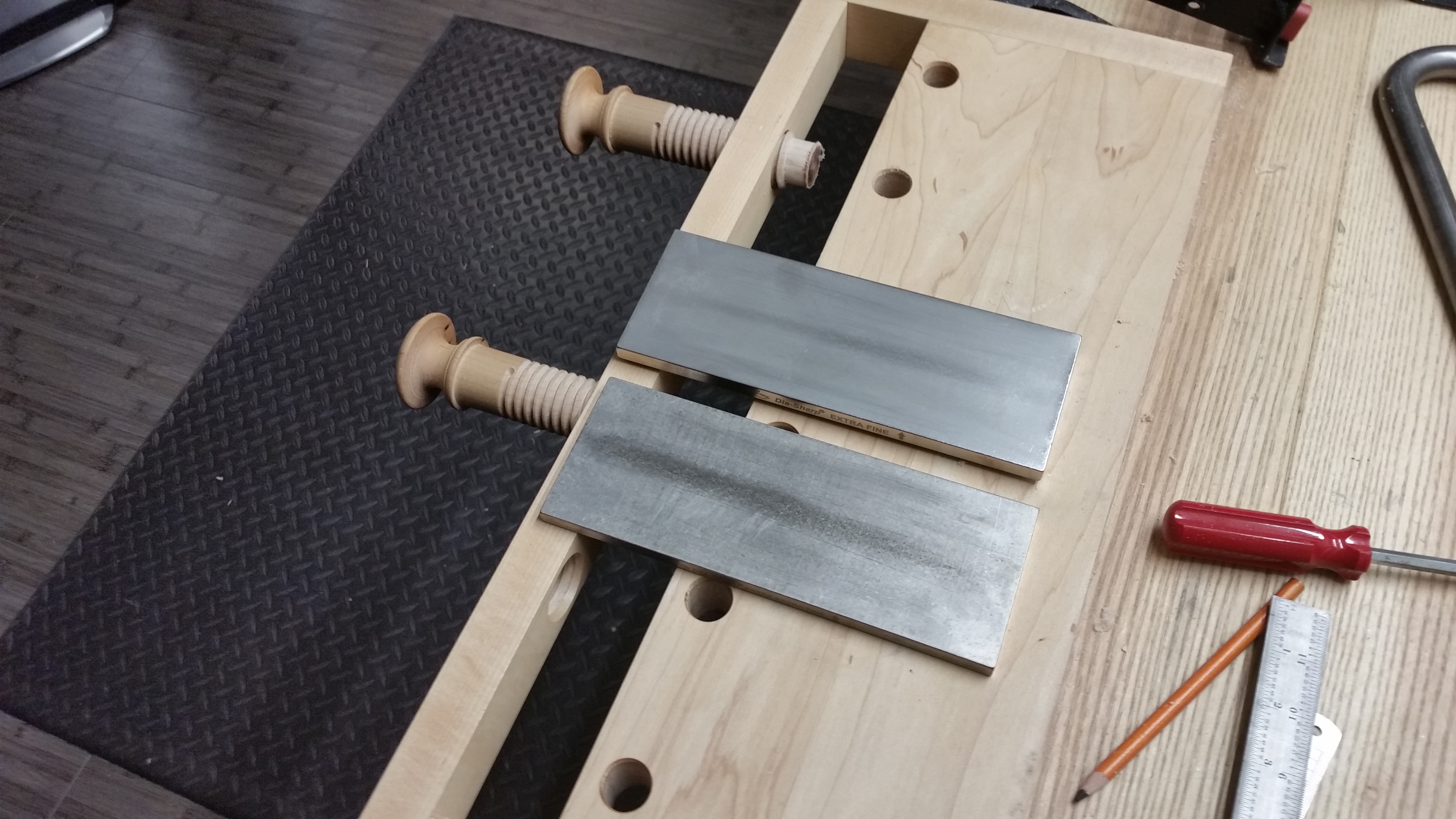
I use diamond plates for hand-sharpening (with window cleaner as lubricant).  Specifically, I use DMT Dia-Sharp continuous diamond plates and I currently own four: coarse (320 grit), fine (600 grit), extra fine (1200 grit) and extra extra fine (8000 grit).  I am truly happy with only the coarse and fine.

I don’t know if it’s the wheel on my sharpening guide or bad manufacturing luck, but both the extra fine and extra extra fine plates have developed a stripe down the center where the grit has worn almost completely off.  This happened almost immediately with the extra extra fine and took about a month of heavy use with the extra fine.  I try to change up which parts of the plate I use, but for thick plane irons, I have no choice but to run right down the center and the difference in grit leaves a dull hump in the center of the irons.

DMT, if you are listening, I am not particularly happy with these two diamond plates.

DMT: if you are listening, I am not particularly happy with these two diamond plates.

So I am trying something new.  Rather than purchase replacements (new territory for me, I know), I have decided that from now on, my plane irons are only getting sharpened to 600 grit (i.e., on the fine plate).  After re-watching Paul Sellers’ Sharpening to 250 Grit video a couple times over the last few days, I think it will be okay (I sharpen pretty often as is).  I’ll still do my chisels and router plane irons to 1200 grit on the extra fine plate (since I can run them up and down the remaining grit on the sides).

I don’t really even use the 8000 grit plate anymore.  Given how proactive I am with re-sharpening, I haven’t found the extra effort makes much of a difference on edge retention.  And I think I remember hearing somewhere that the edge dulls to a lower grit pretty quickly anyway, so what’s the point?

We’ll see how it goes.  If nothing else, it will cut the weight of my tool chest by a diamond plate’s worth of ounces.

JPG

The Largest Thicknesser of All

I absolutely adore my thickness planer.  When preparing rough stock for a new project, I often simply plane two faces of each board straight and square, and then clean up the other two faces with my thicknesser.  Even though it lives at my parents’ house, but I still get to use it fairly regularly.

The capacity, however, is limited to 13″ for face planing and 6″ for edge planing.  This isn’t normally a problem.  I rarely work with boards wider than 13″ and if I am, it’s probably because I glued up smaller board which I already surfaced individually (and jointed in reference to each other).  I can then flatten and square by hand the finished tabletop (or whatever).

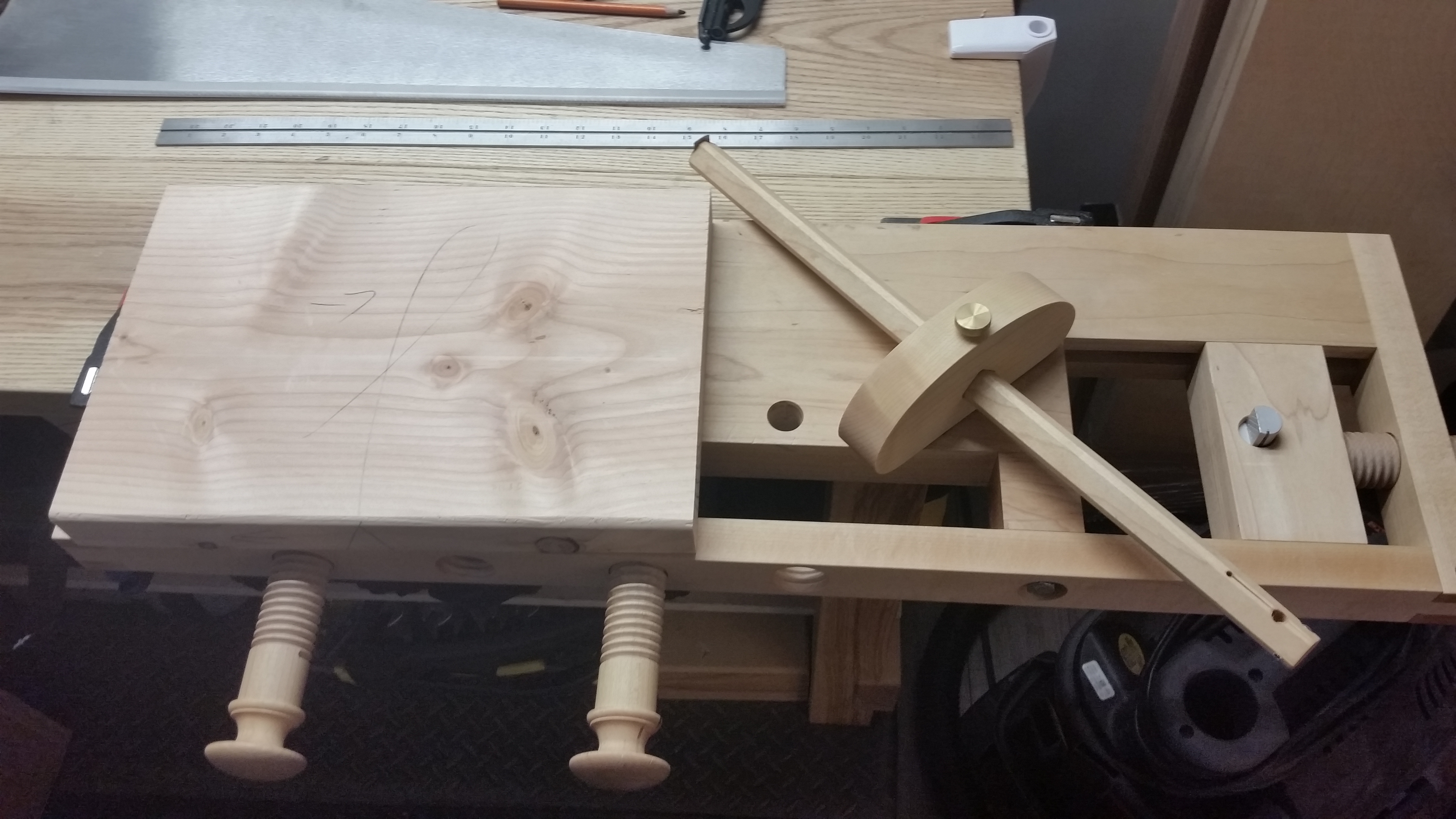
But for pieces wider than 6″ that need parallel edges (e.g., the top of a footstool), the thicknesser just won’t cut it.  Instead, I need to scribe a line on the board indicating the desired thickness and hand plane down to that line (just like you would do for a smaller board, such as a table leg).  For a long time, I had been making due with my combination square for marking thickness, but I recently splurged on a Lie-Nielsen panel marking gauge.

wpid-20150202_121841.jpg

Not sure how I ever did without one.

It takes a little bit of practice to master (especially in swirling grain woods), but the panel marking gauge is a welcome addition to my tool chest (it actually lives on my benchtop).  Planing down to a well-scribed line doesn’t take much more time or effort than sending a board through the thicknesser a couple times and it’s how they did it before thicknessers were a thing, anyway.

I’m thinking about doing a “tools I didn’t realize I couldn’t live without” segment at some point.  A panel marking gauge is certainly on my list.  What about you?

JPG

Holiday Cheer at The Apartment Woodworker

As the year wraps up, I find myself (as always) being very grateful for my loving and (mostly) supportive family and friends (especially Matty).  They indulge me in my eccentricities and manic woodworking fervor and I am very lucky to have such excellent and admirable people in my life.

Now, I would like to brag about the awesome woodworking gifts I received this Christmas.

From my parents, a 24″ imperial ruler blade for my Starrett combination square.  When not in use with the combination square, I expect it will live on the workbench as my go-to straightedge.  Its first combination square task, though, will probably be in connection with squaring the ends of the planing slab (as soon as I finish a couple more laminations).

A gorgeous piece of steel.

A gorgeous piece of steel.

Speaking of the planing slab, my brother and sister-in-law gave me not only a Veritas inset vise (for which I had asked), but also surprised me with the pivoting jaw and the low profile jaw as well (both of which were actually sitting in my Lee Valley online shopping cart ready for purchase).  Now i just need a Veritas planing stop and to settle on inset vise positioning.

I have a feeling this will quickly become my favorite vise.

I have a feeling this will quickly become my favorite vise.

All in all, a pretty awesome Christmas.  Thanks very much, family.

Happy Holidays to all!  I should probably get back to making the second footstool for my niece and nephew.

JPG

Usually not a fan of Brooklyn…

Just received a pair of Gramercy holdfasts from https://www.toolsforworkingwood.com/store/dept/CGT

wpid-20141206_071053.jpg

I guess not everything from Brooklyn is terrible hipsters…

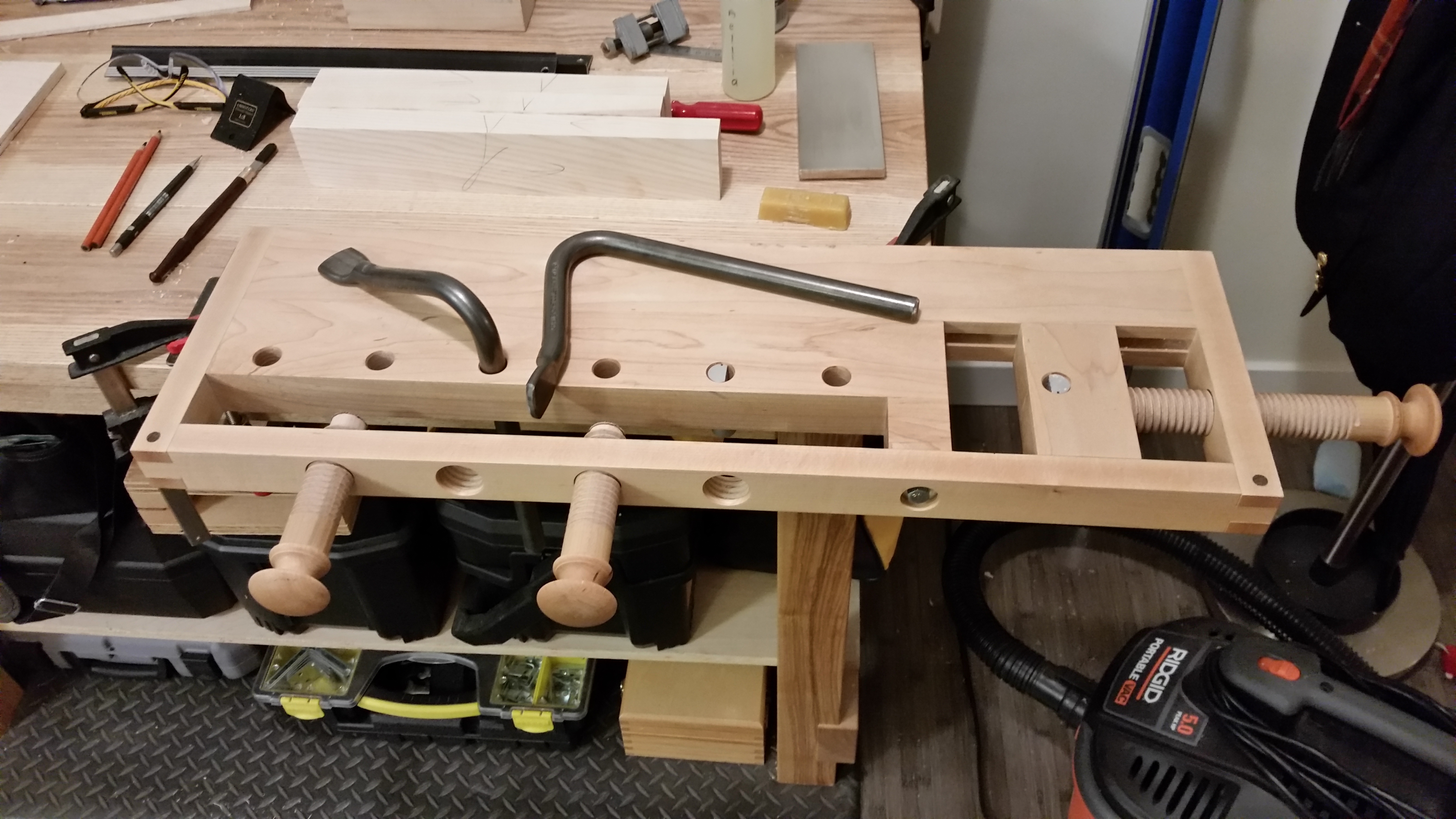
Two is probably a bit much for a 30″ workbench, but the price was just so I right for the pair, so I was more than happy to replace the cast iron holdfast on my sawbench.  Shipping was fast and the included issue of The Comely Advertiser was good for some smiles.

Much better

Much better

All in all, I am glad to know I probably never have to buy holdfasts again.

JPG

Because sometimes what we really mean is “unplugged”

Hand tool woodworking is great.  It’s relatively quiet, can be done with minimal shop space, and the results are often better than anything produced solely or mostly by machine.  I consider myself a hand tool woodworker, although I admit sometimes I reach for a plunge router, cordless drill or an orbital sander.  I also own, and frequently use, a thickness planer to surface the remaining two faces of a board that I’ve hand straightened and squared.

Net net, if I’m deviating from my basic set of saws, chisels and planes, there are meaningful efficiencies at work.

That having been said, I have a new addition to the shop. The Nobex Champion 180 miter box, with Ikeda blade.

Perpetually on backorder at  www.leevalley.com for a reason.

Perpetually on back-order at http://www.leevalley.com for a reason.

I know it’s technically not a power tool, but it is also not an essential tool for hand tool woodworking.  I can mark a knifewall and saw/shoot down to the line. I get it.

I wanted the convenience and the speed of a precision miter box.  Accurate saw cuts mean less time at the shooting board, so I can get back to the fun part, cutting joints.  Plus, I miss my 14″ double bevel compound miter saw and this should be a pretty solid replacement.

I have only cut a few pieces of wood so far, but I have some initial reactions.  First, the unit was much easier to assemble than expected (although there were a few extra pieces [two random hex nuts], which is distressing).  Second, the unit feels sturdy and the Ikeda blade is super sharp (already cut myself).  Third, the blade should definitely be lubricated prior to use.

My brother and sister-in-law requested that I make some footstools for their new house (they left the last footstool, which matched a vanity sink I also made, at their old house), so I will have an opportunity to further the miter box.  I have also been thinking about making some picture frames; not out of necessity, but as practice for cutting mitered halflap joints by hand (which is a favorite design element in exposed joinery).

Edit: After a couple days of use, I am very happy with the saw. I still have to shoot the ends of each board (the blade is ever so slightly canted to the left, which is probably user error), but it is always a slight cleanup, not a major straightening.

JPG