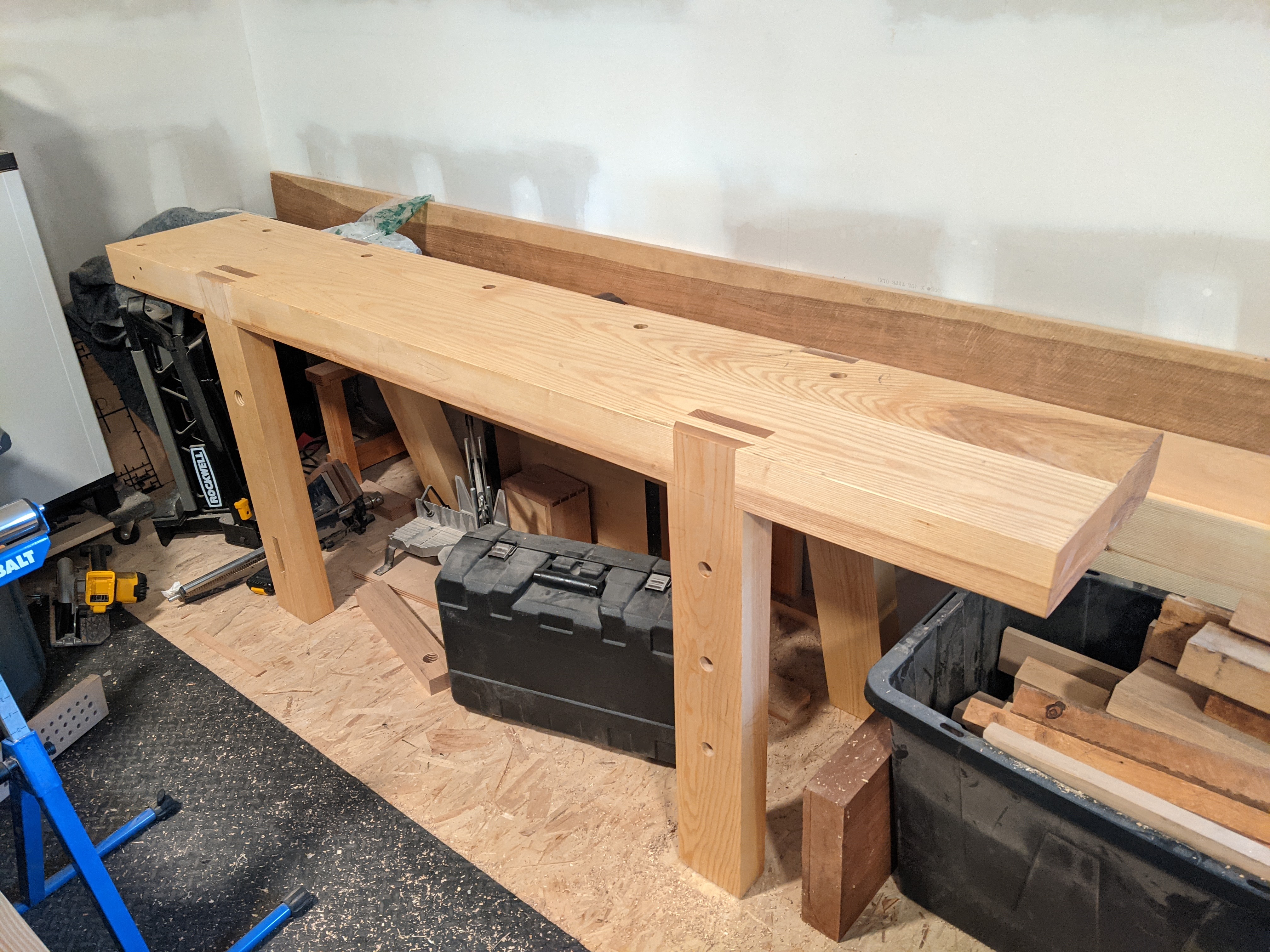
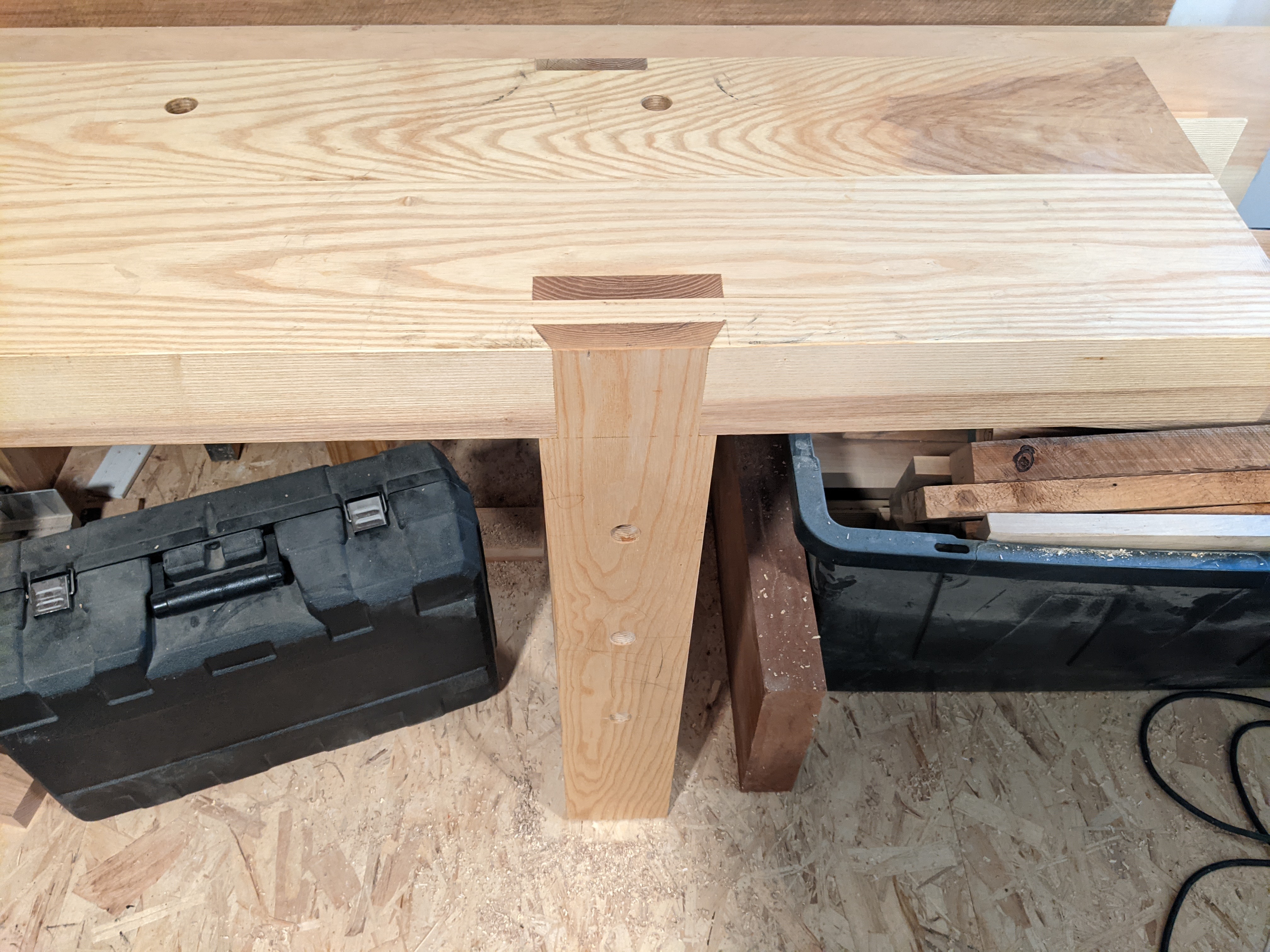
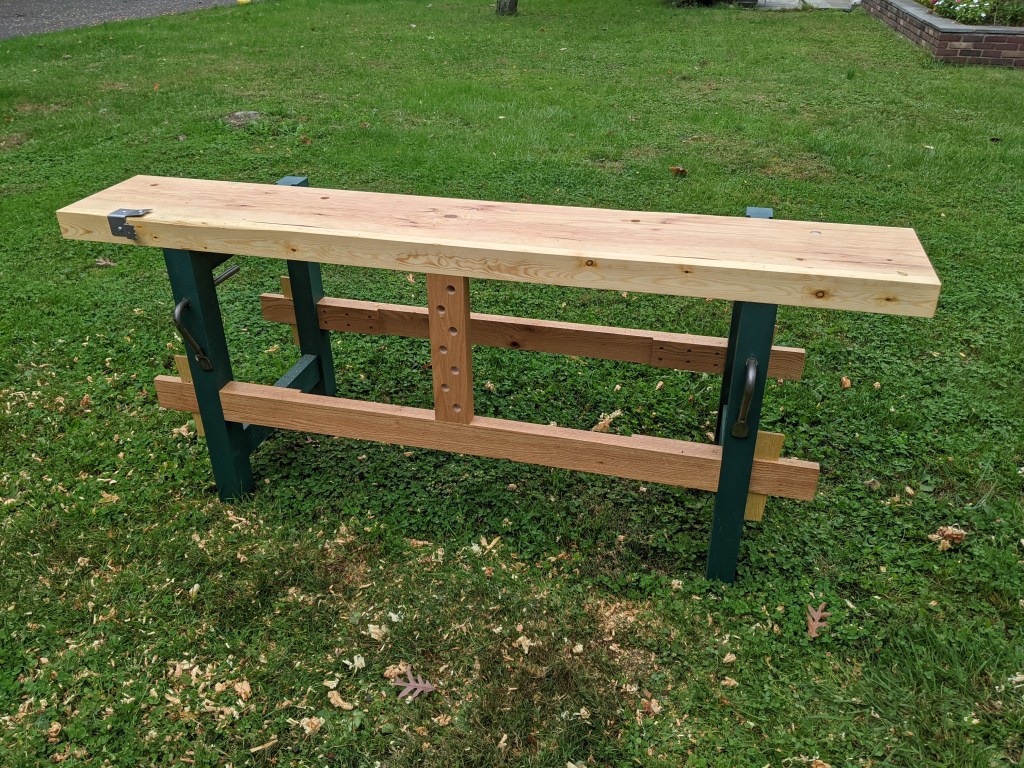
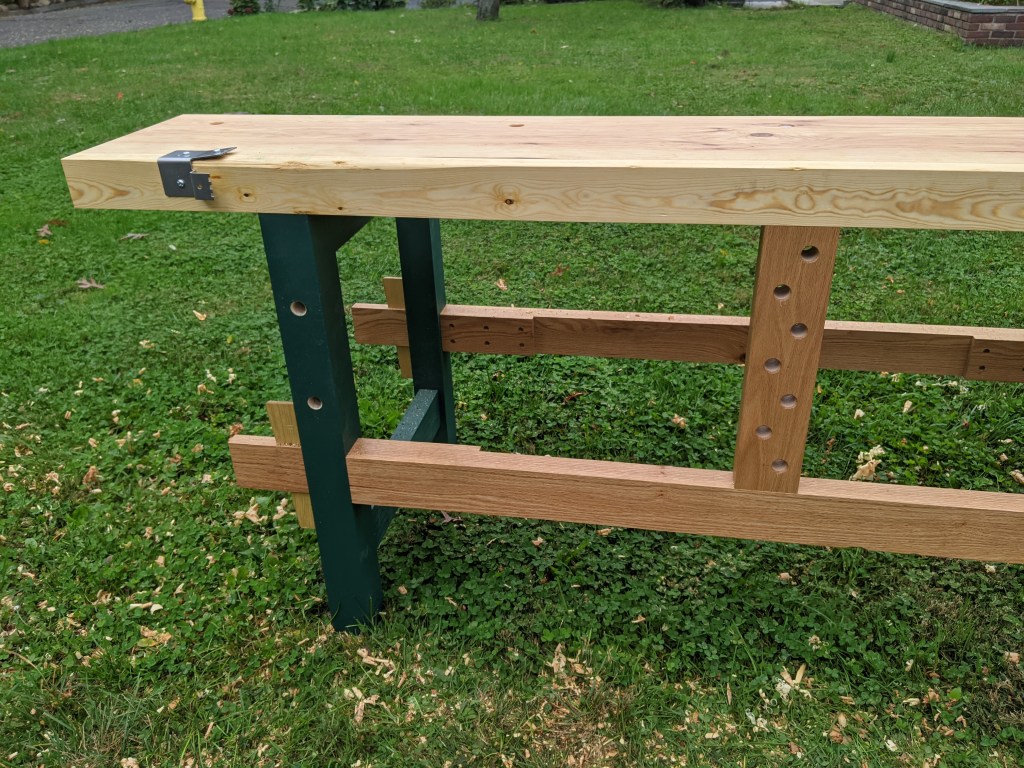
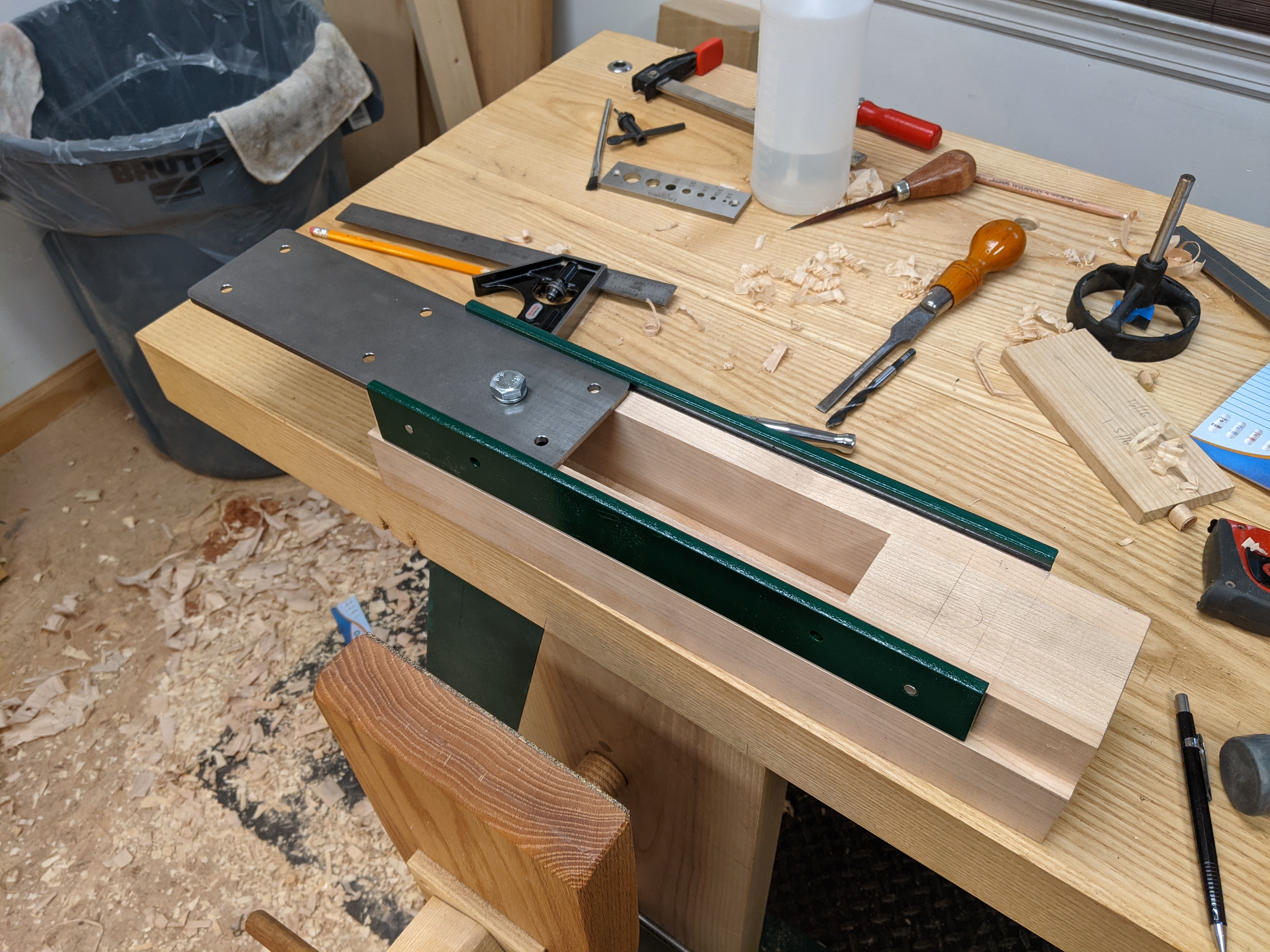
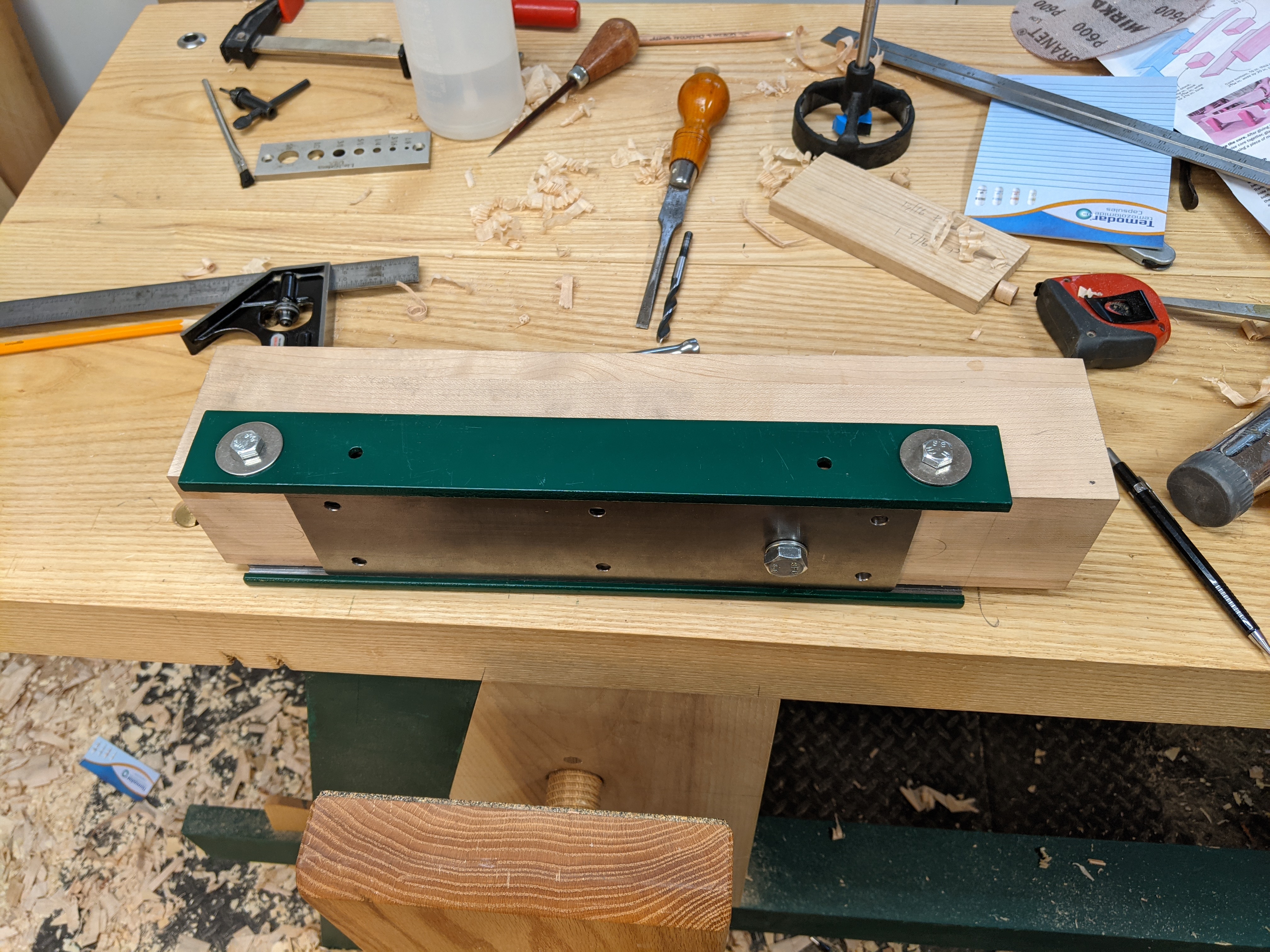
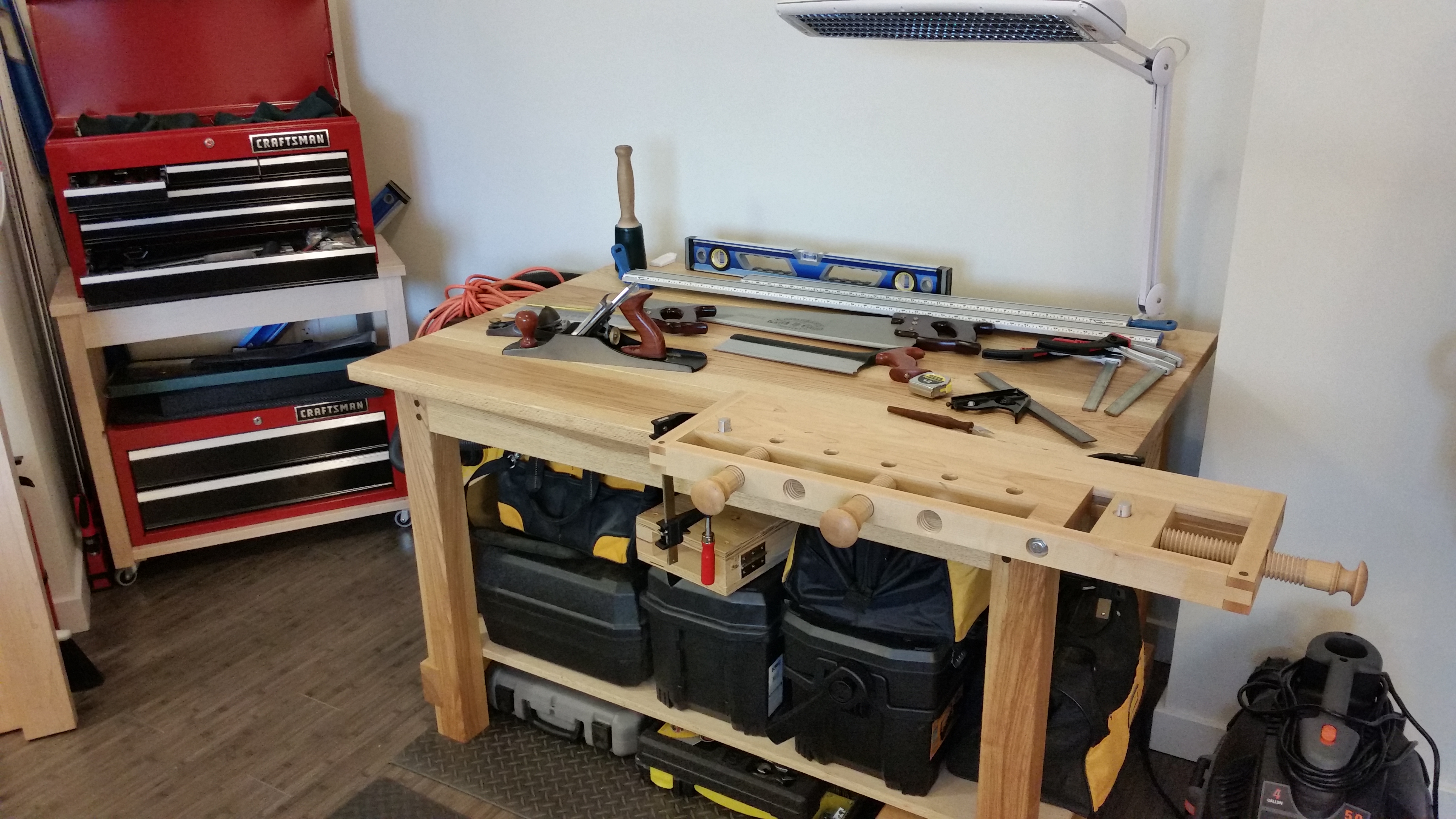
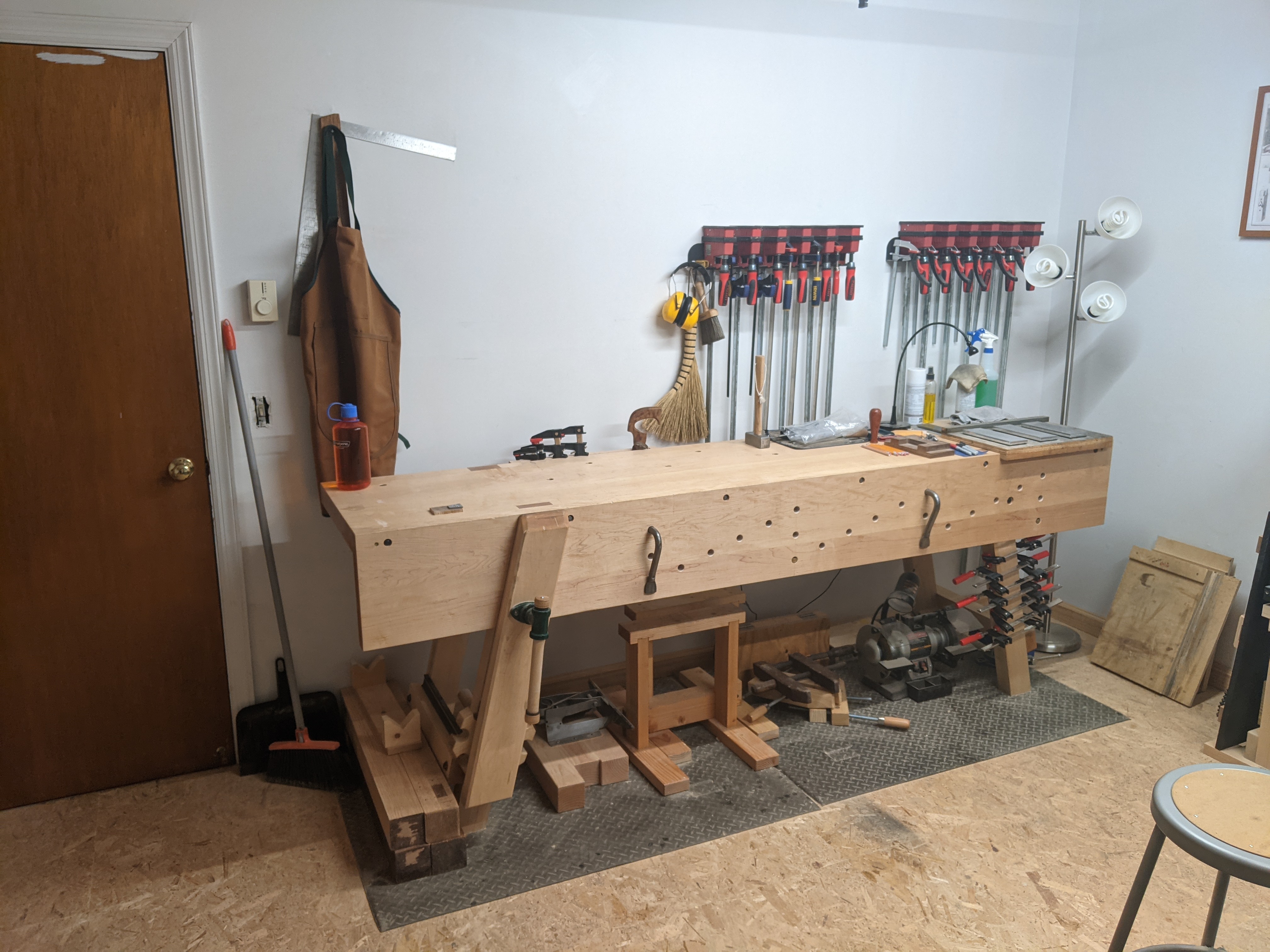
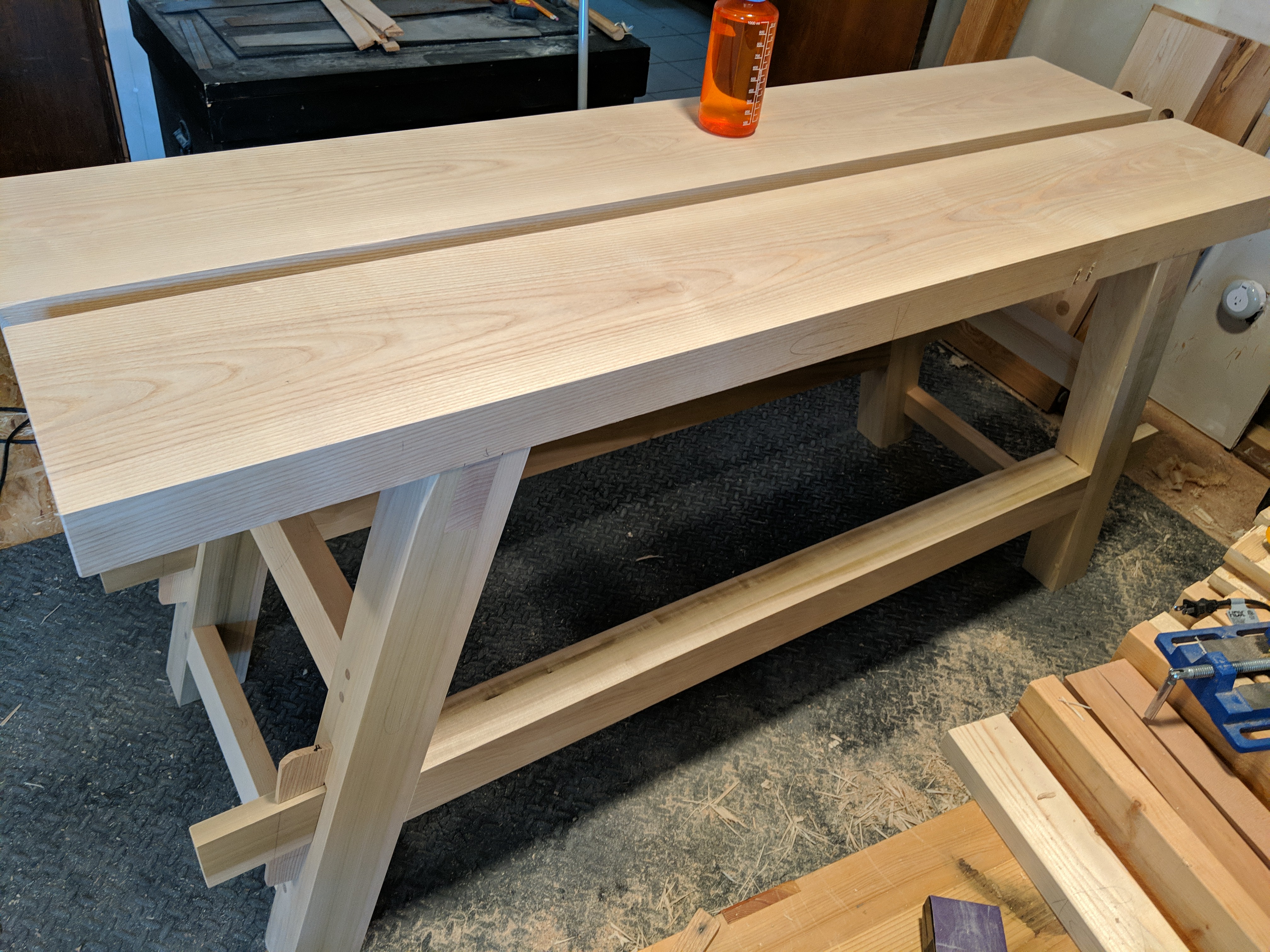
Speaking of fixgasms, I finally got around to installing the Veritas Inset Vise in my Moravian Workbench. It’s not quite a revelation, but I’m glad I did it and it officially completes the workbench.

For those who aren’t familiar, it’s a compact, easy to install, and well made tail vise option for benchtops of pretty much any thickness of 1.5″ (38mm or so). It’s really a carriage vise or wagon vise that’s easily retrofittable into any benchtop of sufficient thickness. HNT Gordon makes a similar option, but I’ve never used one of those.
I’ve had this inset vise for a while (which was a Christmas present from my parents few years ago). It used to live in another workbench before I gave that away. Veritas/Lee Valley is not a sponsor btw (no one is, lol). They just make great tools, especially bench appliances.

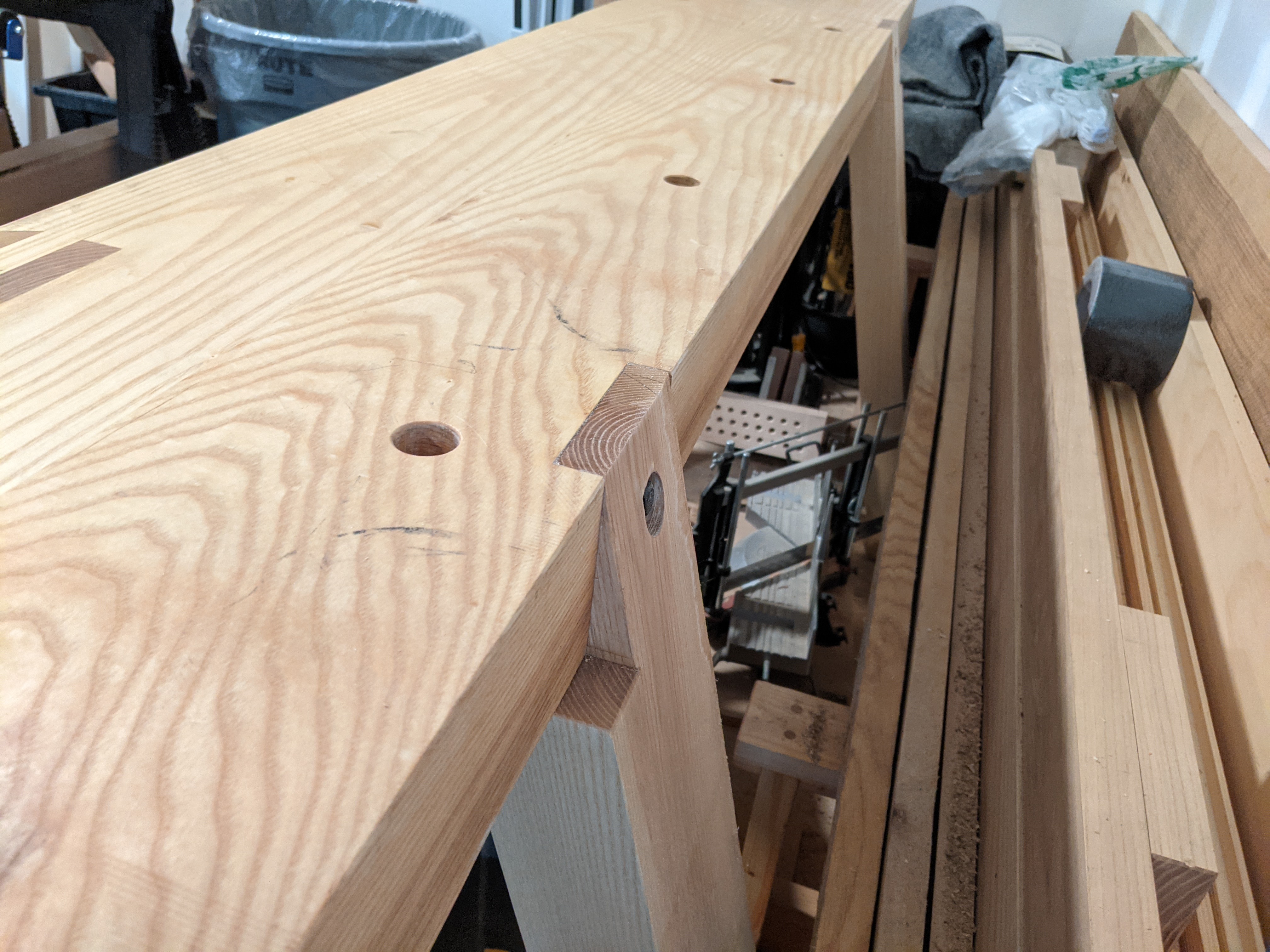
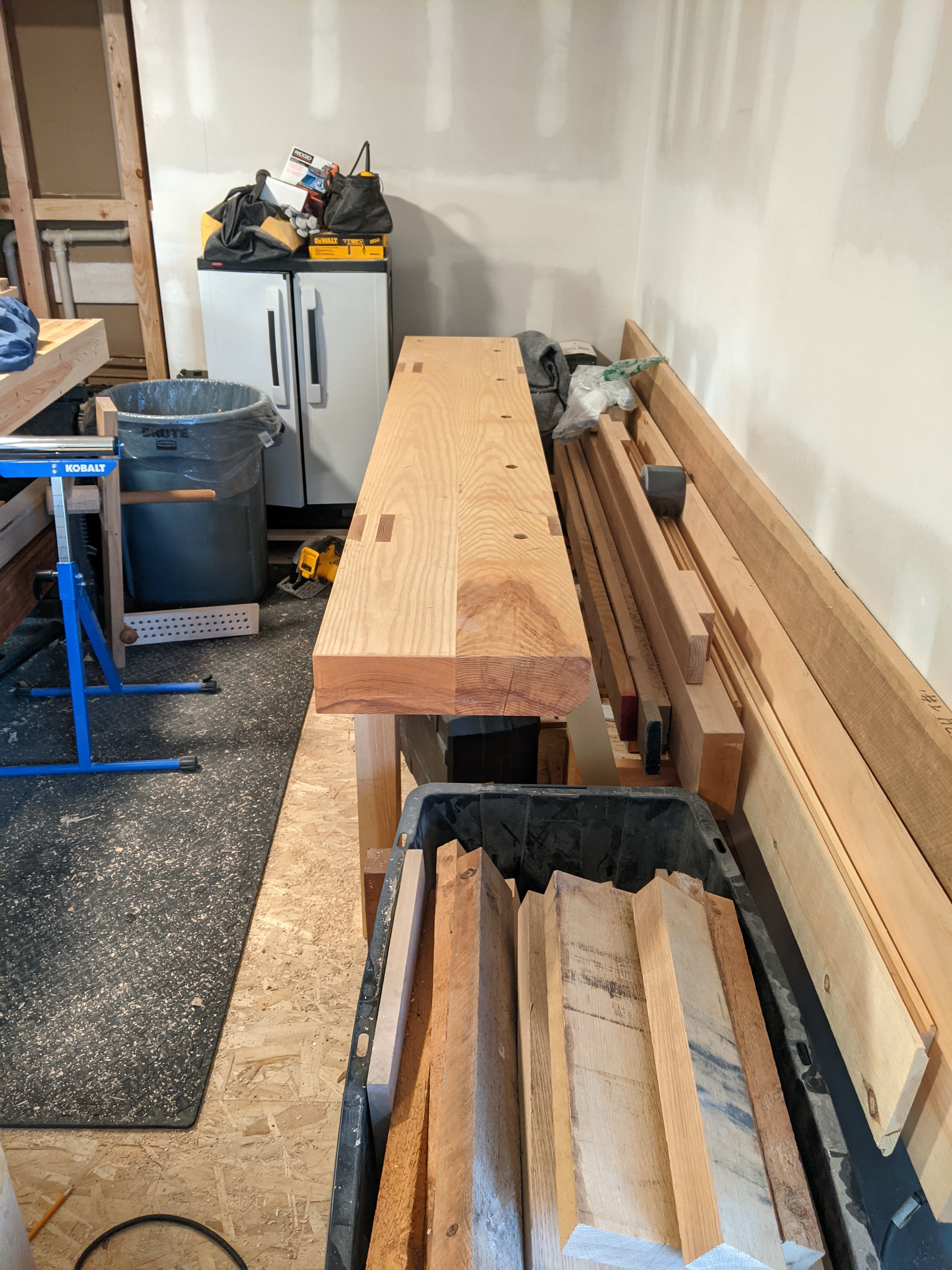
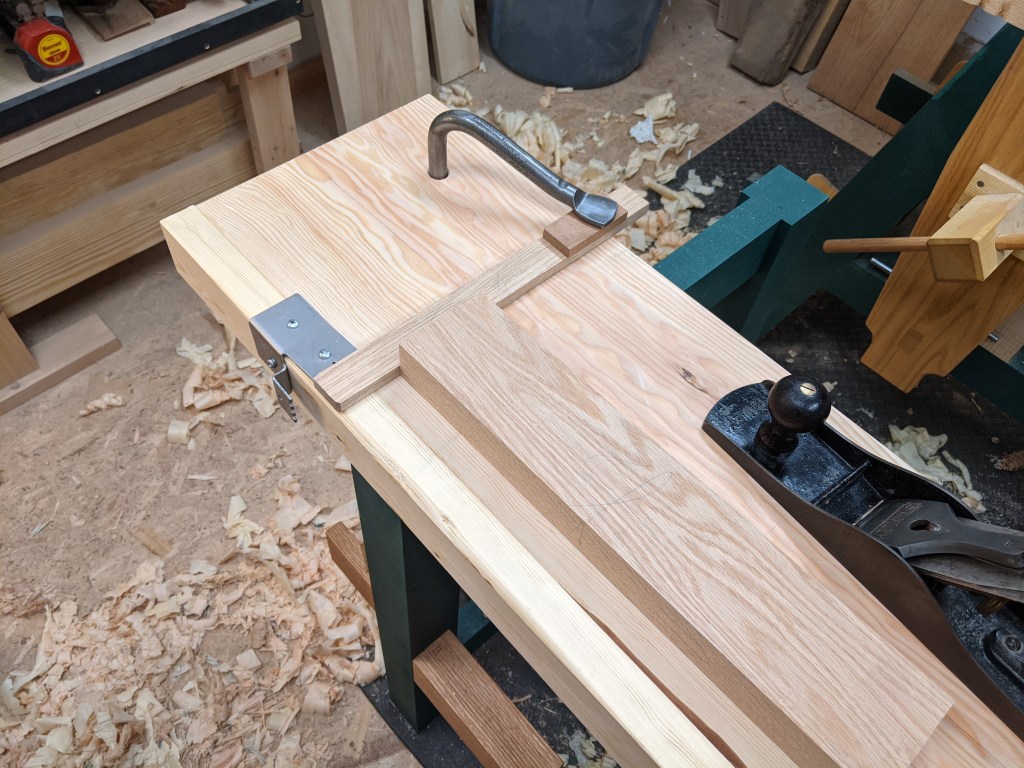
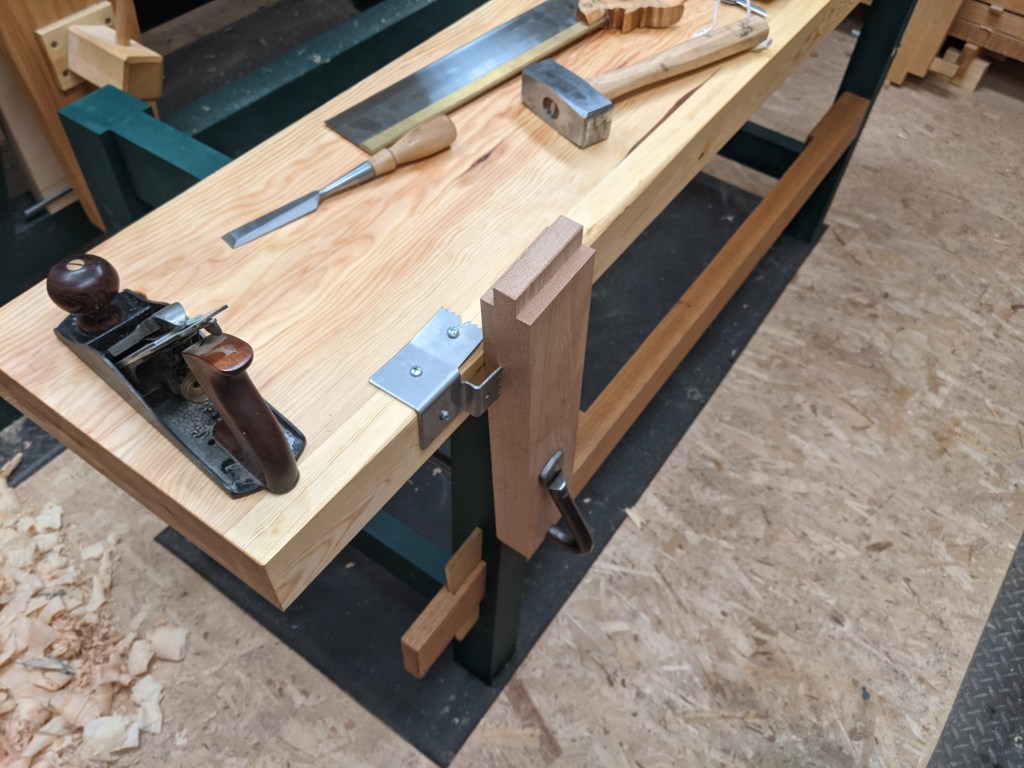
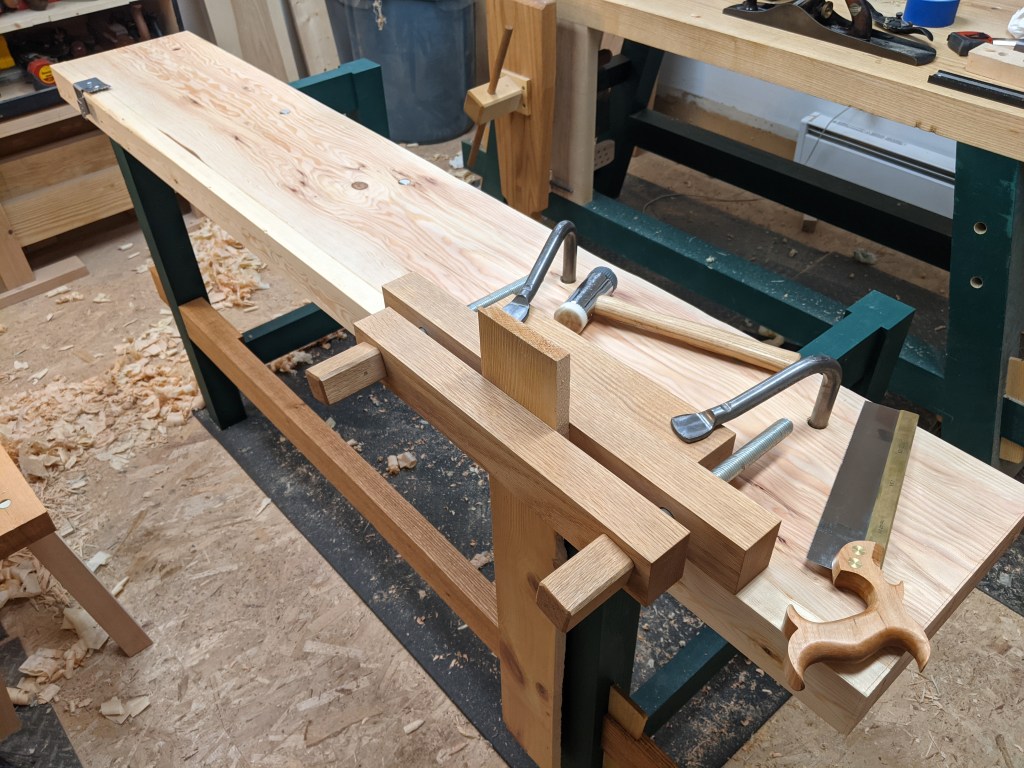
To use a tail vise of any sort, you’ll need a row of bench dog holes in line with the movable jaw on the tail vise (see above). Pinch a board on its face or edge between the dog in the bench and the dog in the tail vise and it stays put. For planing in any direction (especially traversing across the grain or at a diagonal). For mortising or other detail work on the face of the board. If the line of dog holes is close enough to the front edge of the bench, you can use it like a sticking board for use with fenced joinery planes (like a rabbeting or fillister plane).
I like a good tail vise, although series of pegs or a holdfast and doe’s foot are just as good in my book. I wasn’t sure I’d ever install the inset vise into this particular bench, but when laying out the overall size of the undercarriage. I’d gotten by just fine with those other options, but it was time to finish this off.
So now that it’s finished, I would imagine I’ll immediate move on to another workbench.
LOL. Just kidding. Not really. Maybe?
JPG






 The Apartment Woodworker