Author: The Apartment Woodworker

The Apartment Woodworker is a weekly blog with insights, projects and tips for making the most of woodworking with hand tools in confined spaces.

Prepping for Some Trial and Error

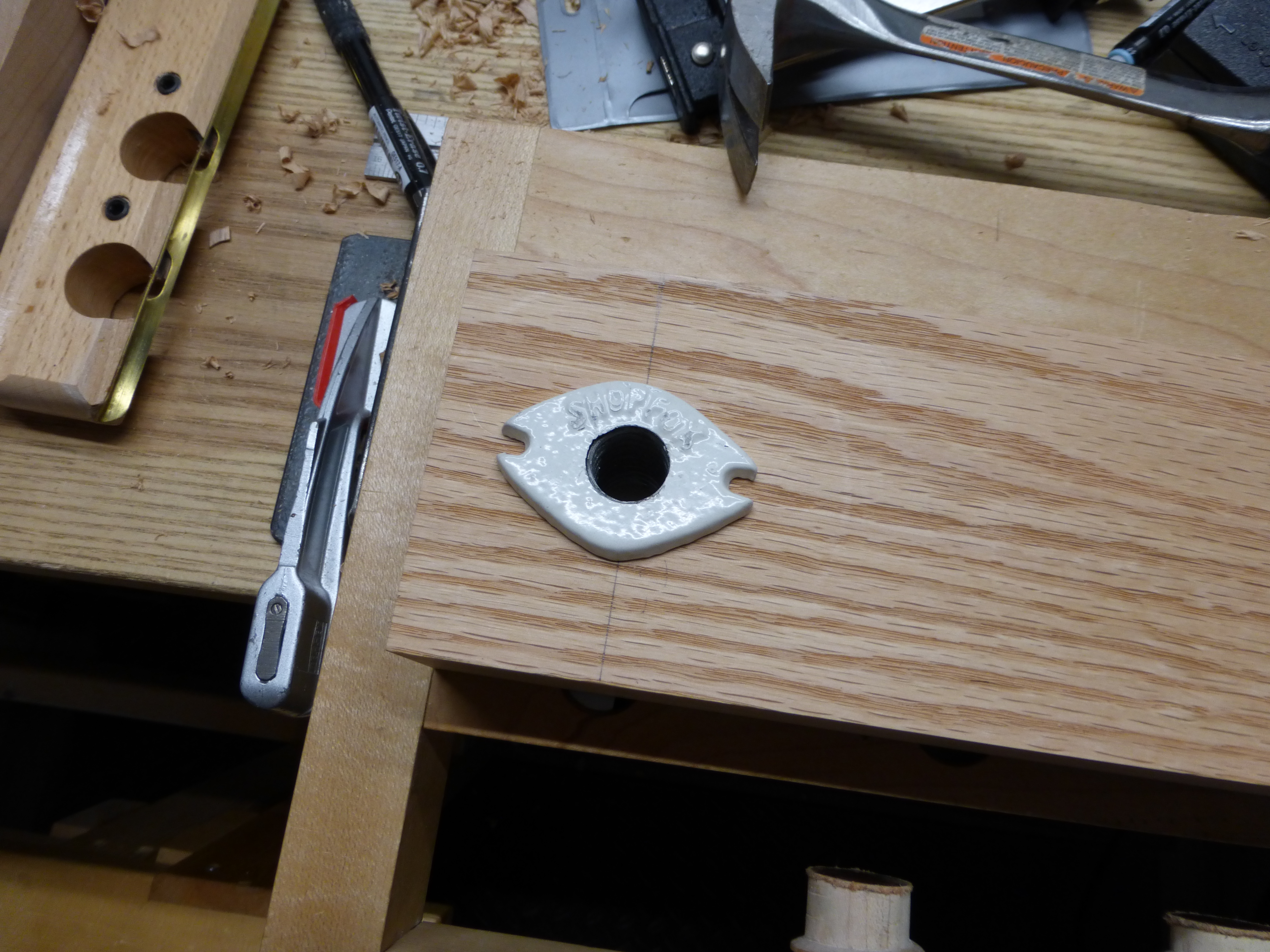
The main benchtop of the new clamp-on workbench is done.  It’s been thicknessed to 1 5/8 inches, the arrises are broken and the first set of dog holes (for the far left planing stop) are drilled.

Although I could have gotten away with less (it’s doubtful there will ever be much clamp pressure on these dogs holes), I left 1 1/4 inches of benchtop behind each dog hole.  Even without an end cap, this should be more than enough support.  I also like to round over the rim of each dog hole.

Oh, the glamour!

The Rockler Jig-it Drill Guide is an adequate replacement for a drill press in a hand-tool woodworking shop.  Just be sure to get the long shank forstner bits.

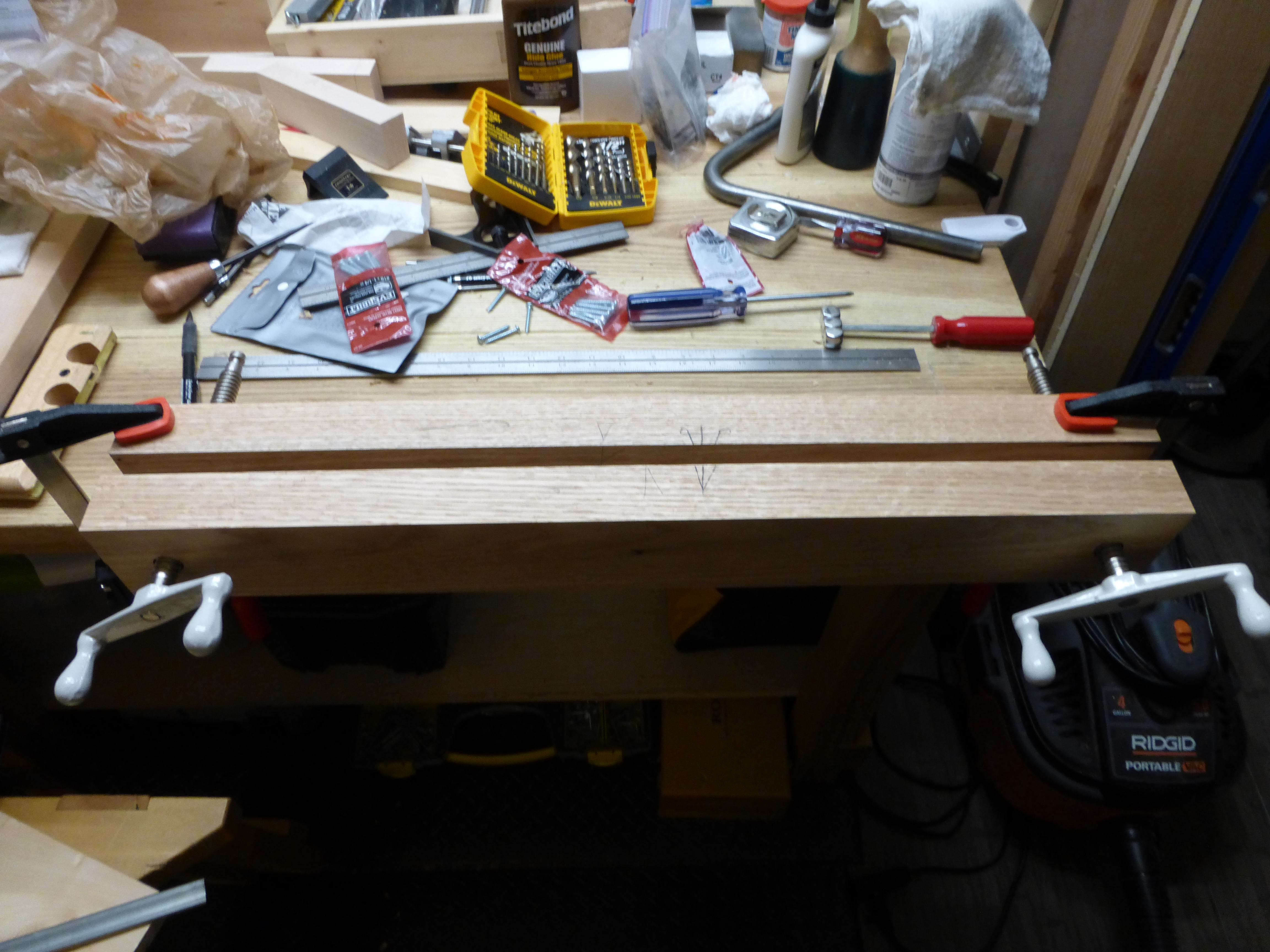
Now that I have attached the angle iron and wiped on a couple coats of natural tint Danish Oil to the top face only, I have a fully functional work surface.  It’s a good thing too, because I needed the larger surface to work on the front vice.

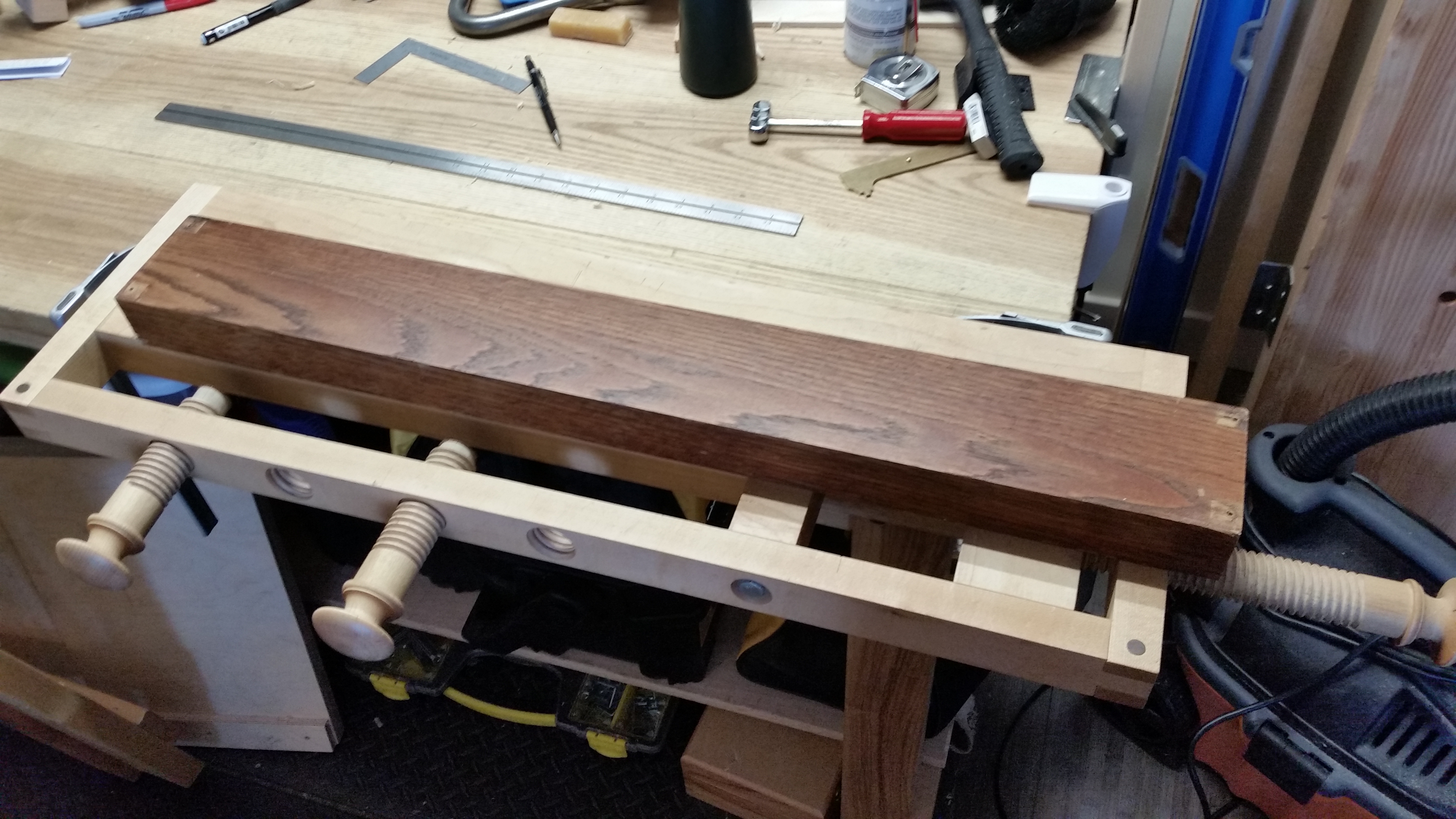
I have never even made vice chops before, let alone DIY’d an entire moxon vise from scratch, so I’m starting with some replaceable material.  Out from the scrap bin came some some 8/4 red oak, reclaimed from a very defunct desk project.

wpid-20150926_163324.jpg

That color ain’t natural.

This stuff is gross.  There are two coats of home center stain and at least two coats of brush-on polyurethane.  All on an open-pore wood.  There might even be some broken-off screws. So if and when I tap the holes for the veneer press screws crookedly or butcher chiseling the recesses for the collets, I won’t feel bad about starting over.

Or the vise will come out well and I won’t have used any new wood.  Either way, a win.

JPG

Mine’s Bigger

I had a modicum of free time last week, so I took the opportunity to laminate the main benchtop of my new clamp-on workbench.  At 48 inches long, the workbench is essentially the same length as the dining table to which it will clamp.

For a size comparison, that's my current clamp-on workbench in the bottom of the frame.

For a size comparison, that’s my current 31″ clamp-on workbench in the bottom of the frame.

In many ways, this new workbench is the spiritual successor to the planing slab that I unsuccessfully made out of home center douglas fir last year, although not nearly as long or heavy.  I’m hoping that with the inset vise (rather than a proper wagon vise), I’ll have about 44 inches between the dogs.  Compare this to 24 1/4 inches on the Milkman’s Workbench pictured above.

In addition to being much longer, the main benchtop is significantly deeper.  My Milkman’s Workbench has a main benchtop of 6 1/2 inches, and an overall depth of 9 3/8 inches including the face vise.  Compare the new workbench, which will have a main benchtop of 8 13/16 inches deep (I lost just 3/16 inches of nominal depth to jointing).  Add to that about 1 1/2 inches of inner front vise chop and another 5 1/2 inches of fully-extended front vise outer chop and I will be able to support almost 16 inches of work over the length of the front vise.  I plan to make a peg-held support for the right side of the bench so I have full support over the full 48 inches.

wpid-20150926_124501.jpg

Grainy work dungeon photo!

All of this is now dependent on how well I hang the front vise.  I plan to cut dadoes in the underside of the main bench to accept the screws.  Then it’s just a question of drilling holes perfectly straight through the outer chop (without a drill press) and figuring out how to seat the collets into the inner chop perfectly in line with the outer chop holes.

Simple, right?

JPG

Free-Hand Sharpening Follow-up

While free-hand sharpening the iron on my No. 5 1/2 jack plane, something occurred to me. The depth adjust on that particular plane has always been tight. No matter how well-oiled the screw or how deep or shallow the frog set, advancing the iron for a deep cut becomes finger-crushing work.

Then, when I was looking for a link to the ruler trick for my previous post, it dawned on me. The bevel on the iron was entirely hand sharpened to about 35 degrees. Meaning the heel of the bevel stuck out further than the factory grinding. Meaning it was butting up against the throat.

So I slapped the iron into a honing guide at 25° and ground the heel of the bevel back down. Now the plane advances smoothly and I didn’t even have to resharpen the edge, as it was well clear of the grinding.

image

Like so

So I guess now I have a hybrid approach for plane iron sharpening. First grind to 25° by guide, then free-hand hone the cutting edge at 35° or so (30° for bevel up tools).

JPG

The Journey to a New Workbench…

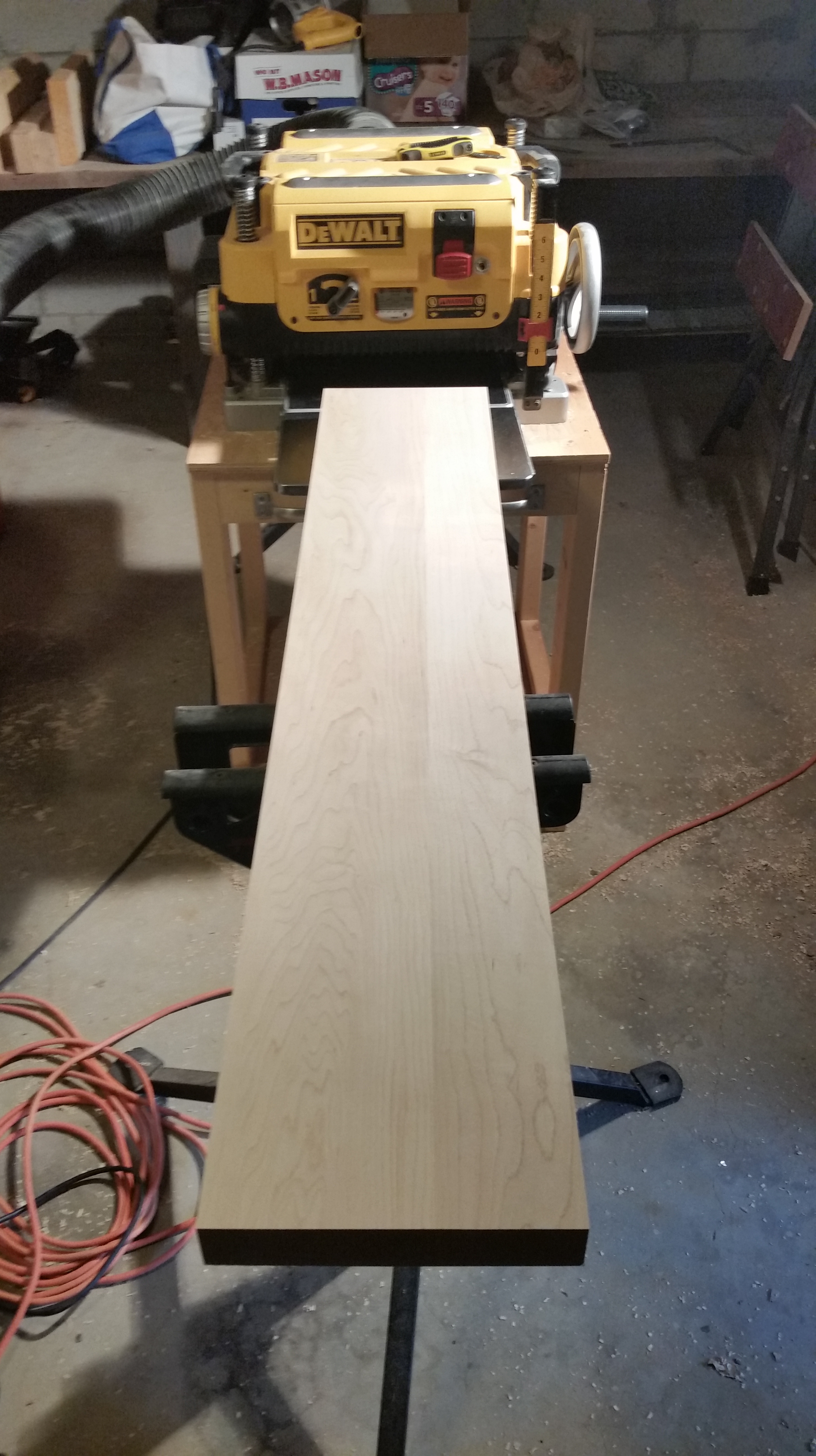
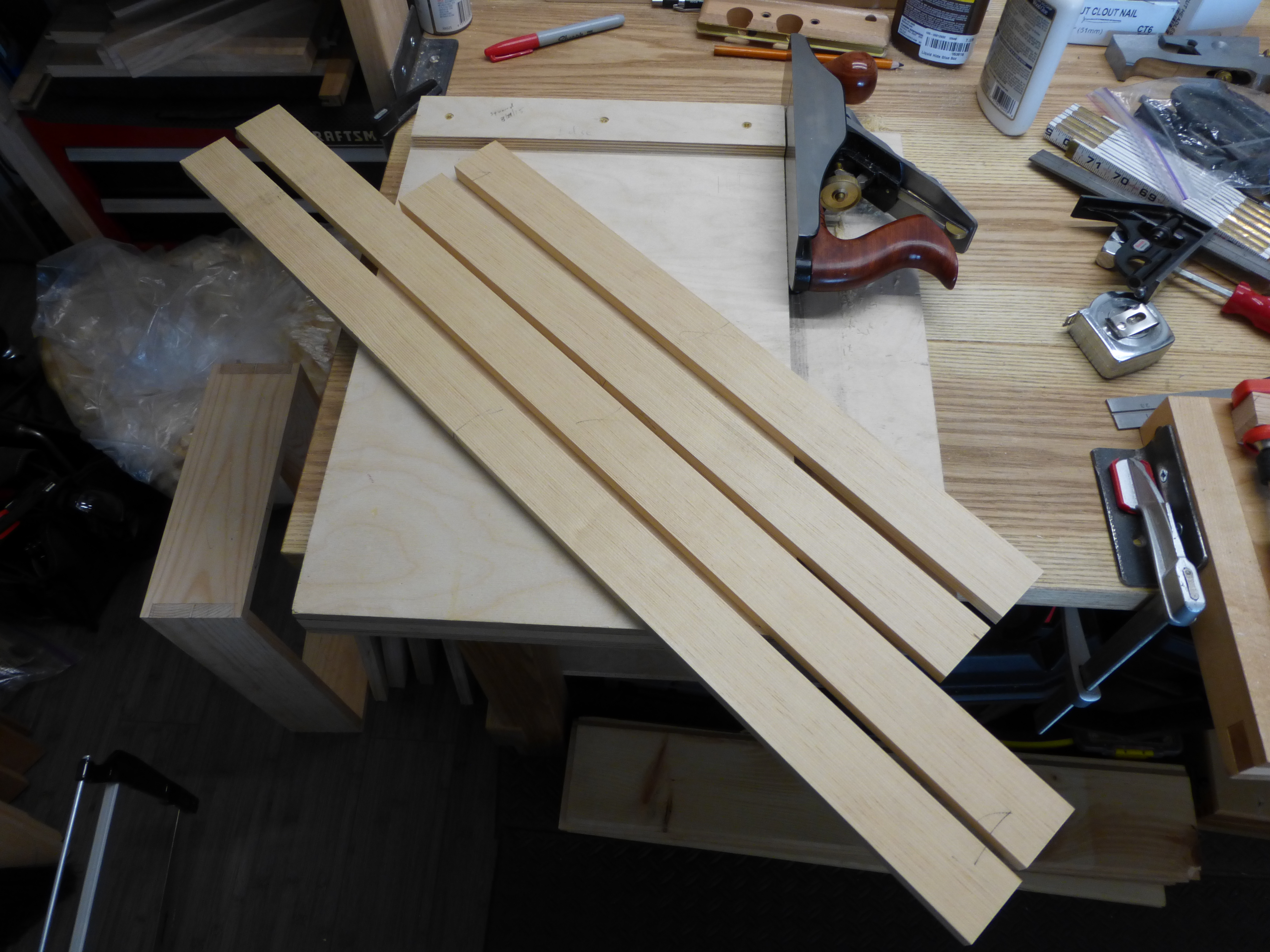
…begins with a single cut.  In this case, some 8/4 hard maple. The main bench should be about 9″ deep (not including front vise chops) and 48″ long.  For comparison, my current workbench, a Milkman’s Workbench, has a main bench 6.5″ deep and 30″ long.

48 inches of 8/4 hard maple will form the main part of the bench.

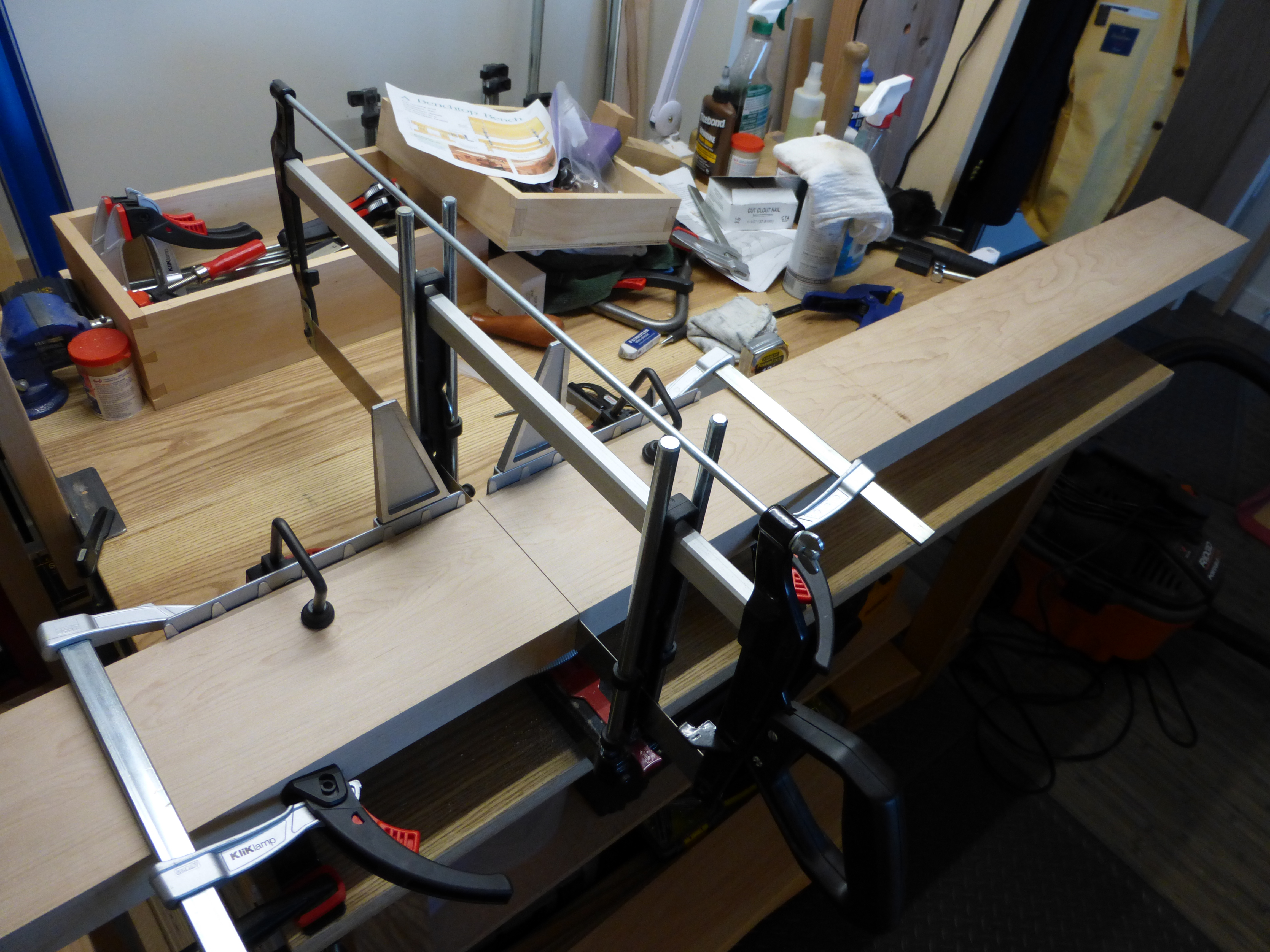
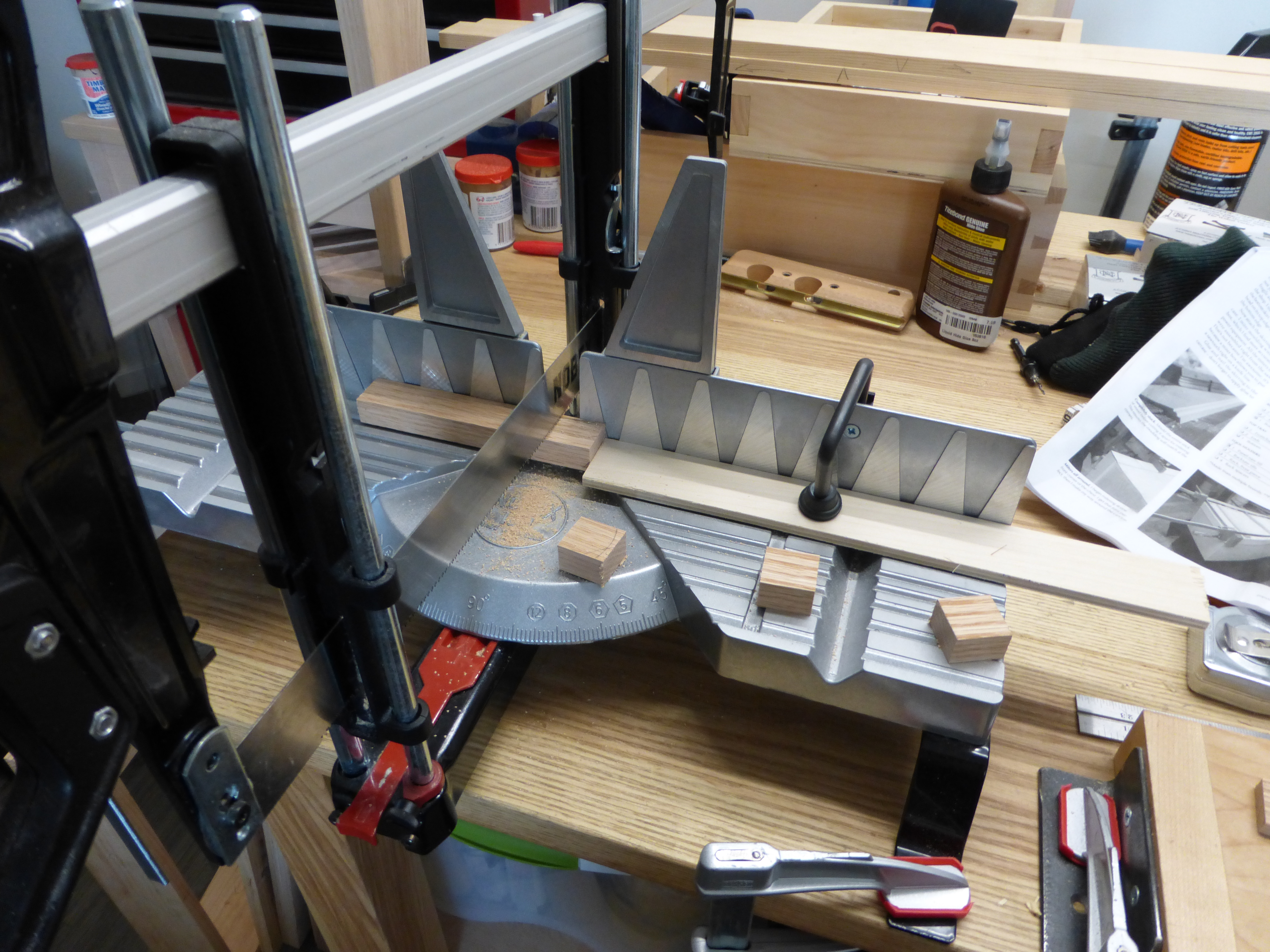
The Nobex Champion 180 miter saw makes rather quick work of it.

While it will clamp onto my dining table with angle iron just like the Milkman’s Workbench, instead of wooden screws the new bench will have a beefy moxon-style front vise using two veneer press screws that have been kicking around the workshop for a while.  I’ll also re-purpose the Veritas inset vise from the planing slab to avoid having to make a carriage vise.

The action on these is surprisingly smooth

The action on these screws  is surprisingly smooth.

One other serious deviation from the Milkman’s Workbench is that no part of the new bench besides the front vice chops will overhang the table.  This should increase the chopping surface significantly.  A major flaw of the Milkman’s Workbench is the unsupported area under the dog holes (which can be springy) and I intend to fix that flaw this time around.

I intend the front vise to have at least 24″ between the screws, and I think it makes sense to run two sets of dog holes down the length of the workbench so I can use a Veritas planing stop (in both tail vise and front vise configurations).

There isn’t much twist in the boards (less than 1/8″ over the 48″), so I’m hopeful the final thickness will be at least 1.5″ (and most likely 1 5/8″) when planed to final thickness.  Time to sharpen up!

JPG

On Freehand Sharpening

Edge sharpening has always been a weak spot for me.  While I took to saw sharpening very quickly, my chisels and plane blades were never been perfect.  I used micro bevels and wide-wheeled guides and even tried the ruler trick, to no avail.  My edges were sub-par and short-lived and almost always out of square.  So I gave up on all of that and went in a different direction.

It’s no secret that Paul Sellers has been a great influence on me over these past few years.  I consider his YouTube channel to be the best free resource for a woodworker just starting out in the craft.  Paul advocates freehand sharpening and none of that micro bevel nonsense.

I already had the diamond plates, so I figured I’d give it a try.  And it’s worked for me thus far.

P1000197

Scary sharp, indeed.

I started with my chisels (easier to correct if I made the edge worse) and instantly noticed that the “macro camber” approach of freehand sharpening lends itself to a stronger, longer-lasting edge.  Since then, I’ve freehand sharpened both my No. 4 1/2 smoothing plane (pictured above) and my general purpose No. 4 and gotten instant results.

No more fussing with stop blocks or fumbling with guides means I just spritz some window cleaner on a diamond stone and work until I feel the burr.  Freehand sharpening has actually decreased my sharpening time.

Maybe I’m just bad with guides and sharpening jigs.  Or maybe this is just the next step in hand-tool only woodworking.

Some Odds on the Ends

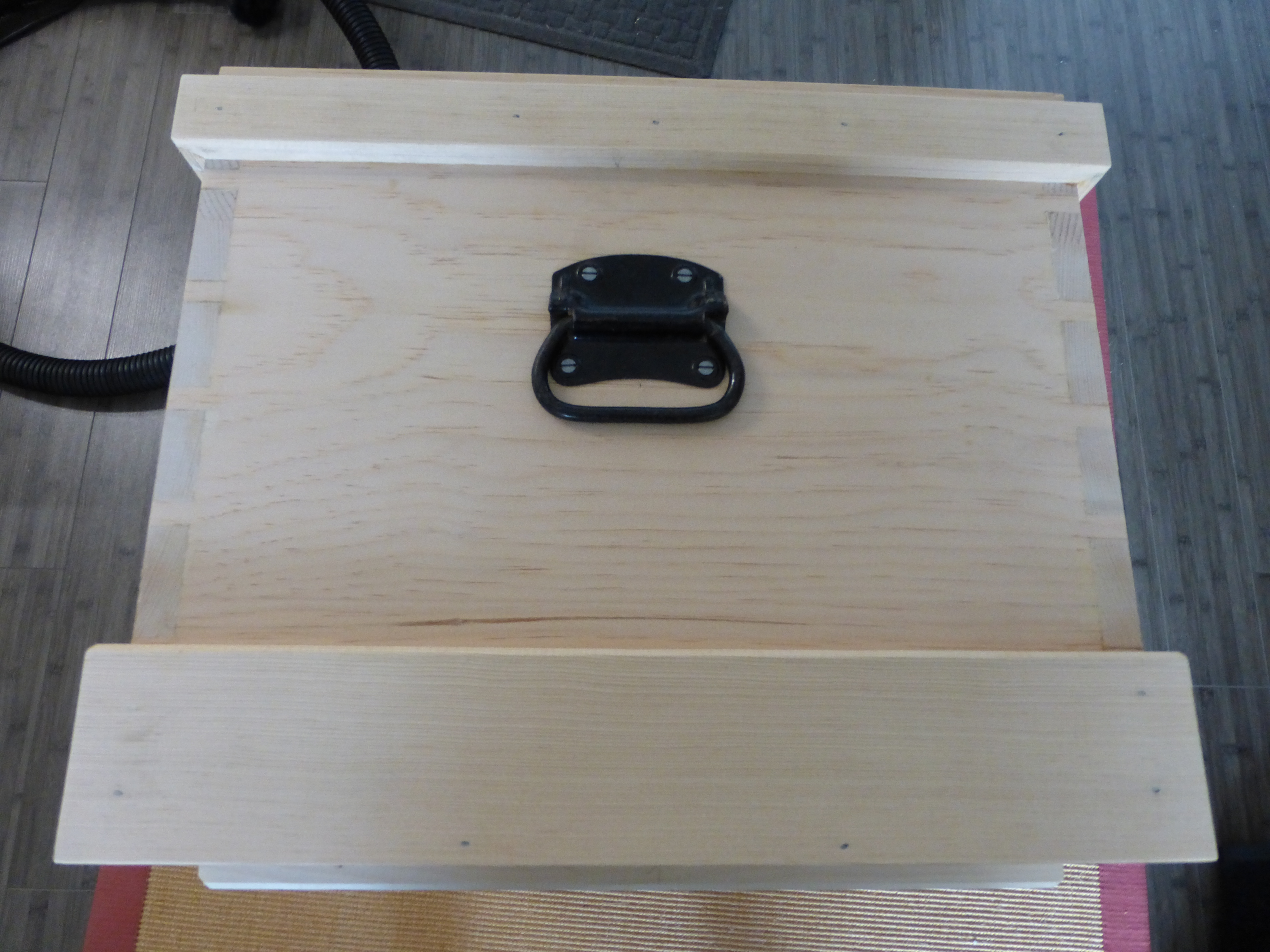
I made exactly zero weekday progress on the medium tool chest this week.  So when I woke up Saturday morning, I knew I had to get something, anything done.  So I attached the trunk pulls.

P1000198

They aren’t dogbones per the plans, but I’m no turner, either.

This might have been the second time ever attaching handles (and the other is on the shop stand for the thickness planer).  And the two pulls differ slightly in overall plate size.  But through careful marking and awling, they ended up as parallel and even as I could have hoped.

I even clocked the screws!

I even clocked the screws!  Thanks The Furniture Record!

Now the chest is much less unwieldy.  I plan to paint the chest on Sunday (it’s sanded and ready to go) and finally cover up all those tool marks and putty.

All in all, it’s not much, but it’s progress, which is important.  Then I will finally make the lid.

JPG

Some Paint is in Order

I hit a milestone over the long weekend on the medium tool chest project.  I am officially done with the carcass.  The skirts are fitted, the drawers are done and the saw tills and chisel rack are attached.  There is literally nothing left build-wise but the lid and dust seal.

P1000195

The second set of saw tills (for my backsaws) came out much better than the panel saw till.

The whole assembly has become a bit unwieldy, so I think I’ll pause the build process so I can paint the box and attach the handles.  I think two coats of paint on a lazy September day will do just fine.

Cards on the table, I’ve enjoyed the build, but I don’t think I’ll actually use this tool chest in my apartment woodworking shop.  It’s just not big enough for all of my tools.  I don’t own a set of moulding planes, but I definitely own more than just two panel saws and three backsaws.

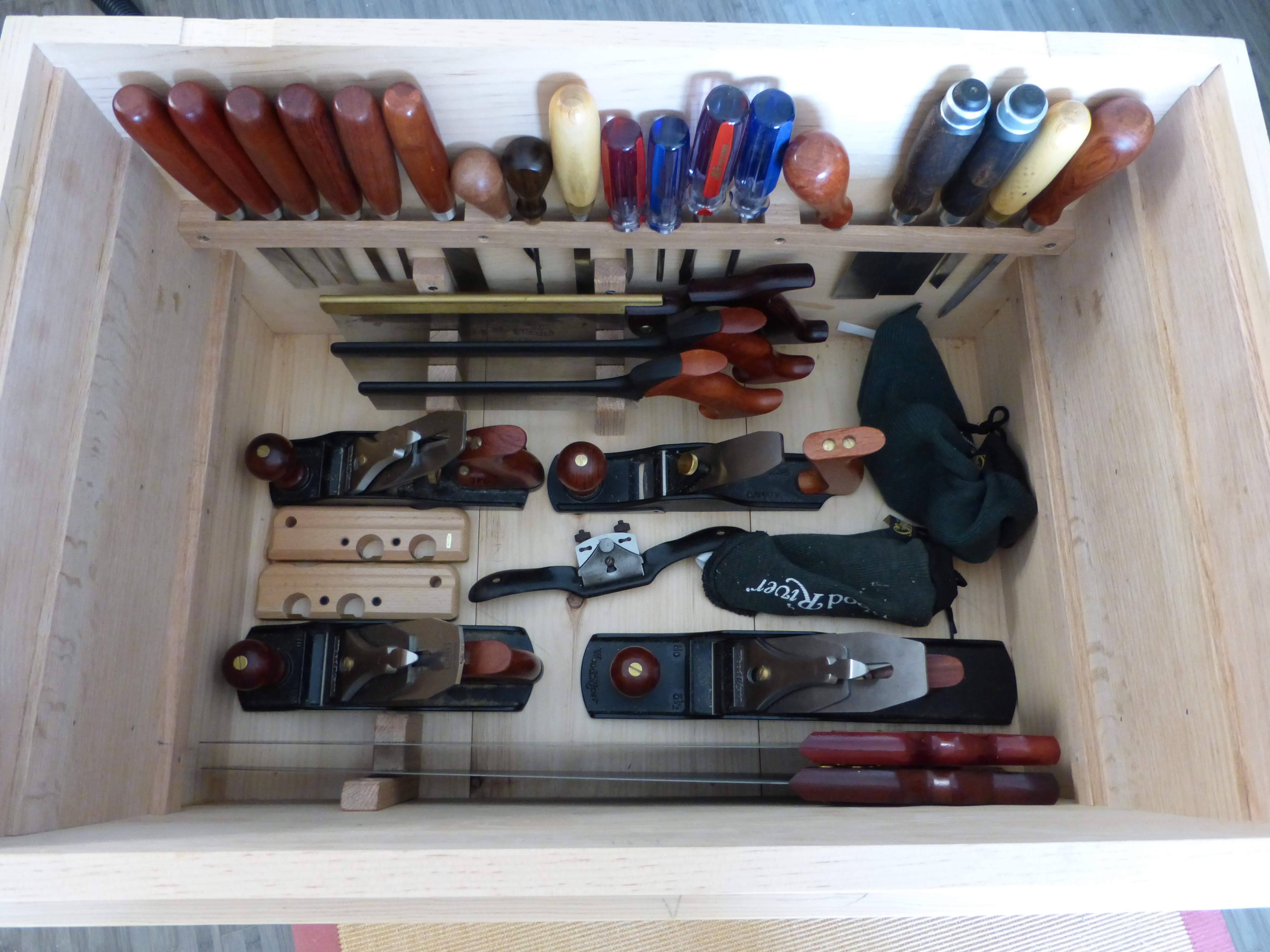
That having been said, I stuffed the chest full of tools this morning, for the first and last time.

The well:

That doesn't even include the jointer plane I'm still intent on buying.

That doesn’t even include the jointer plane I’m still intent on buying.

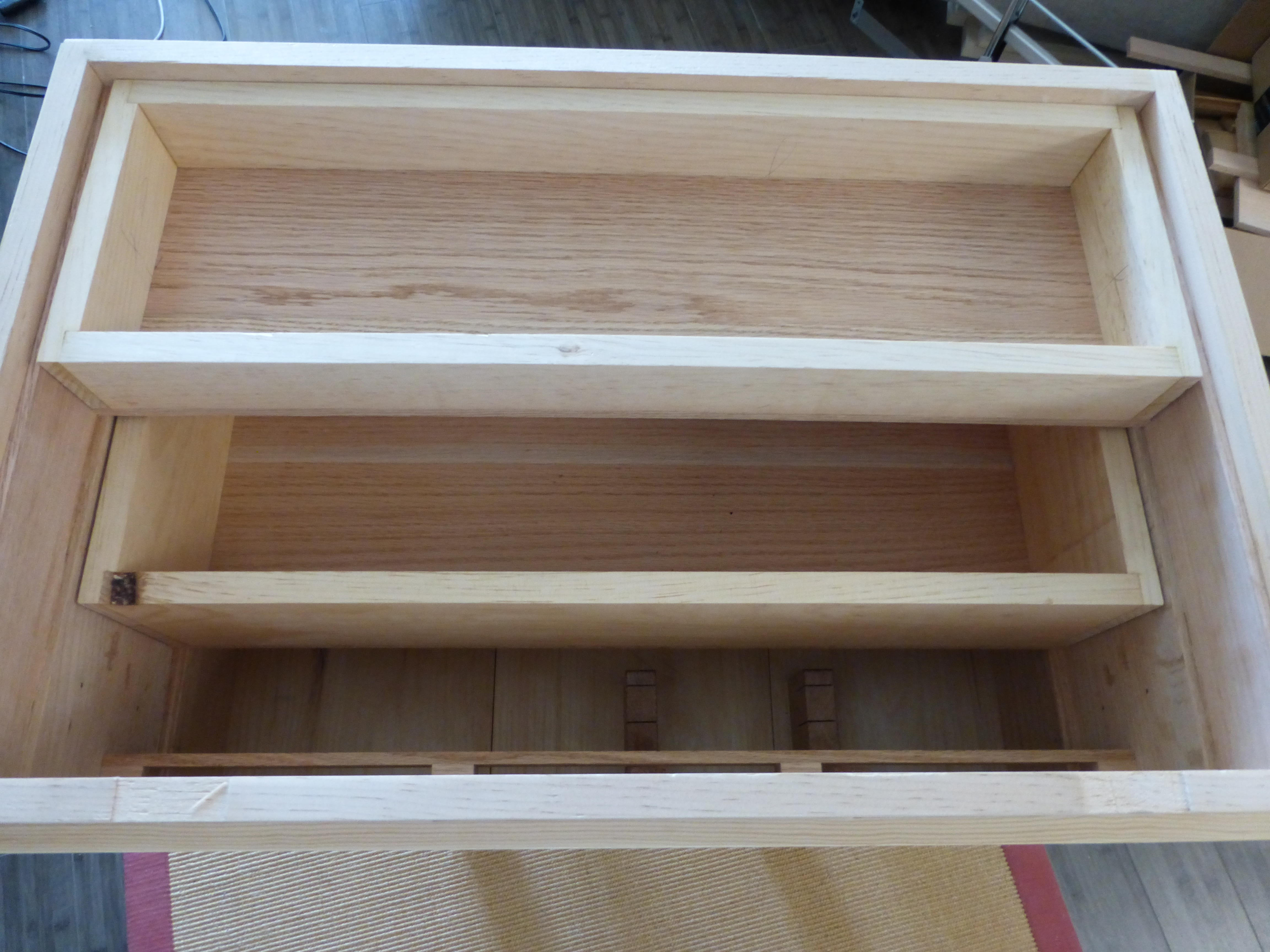
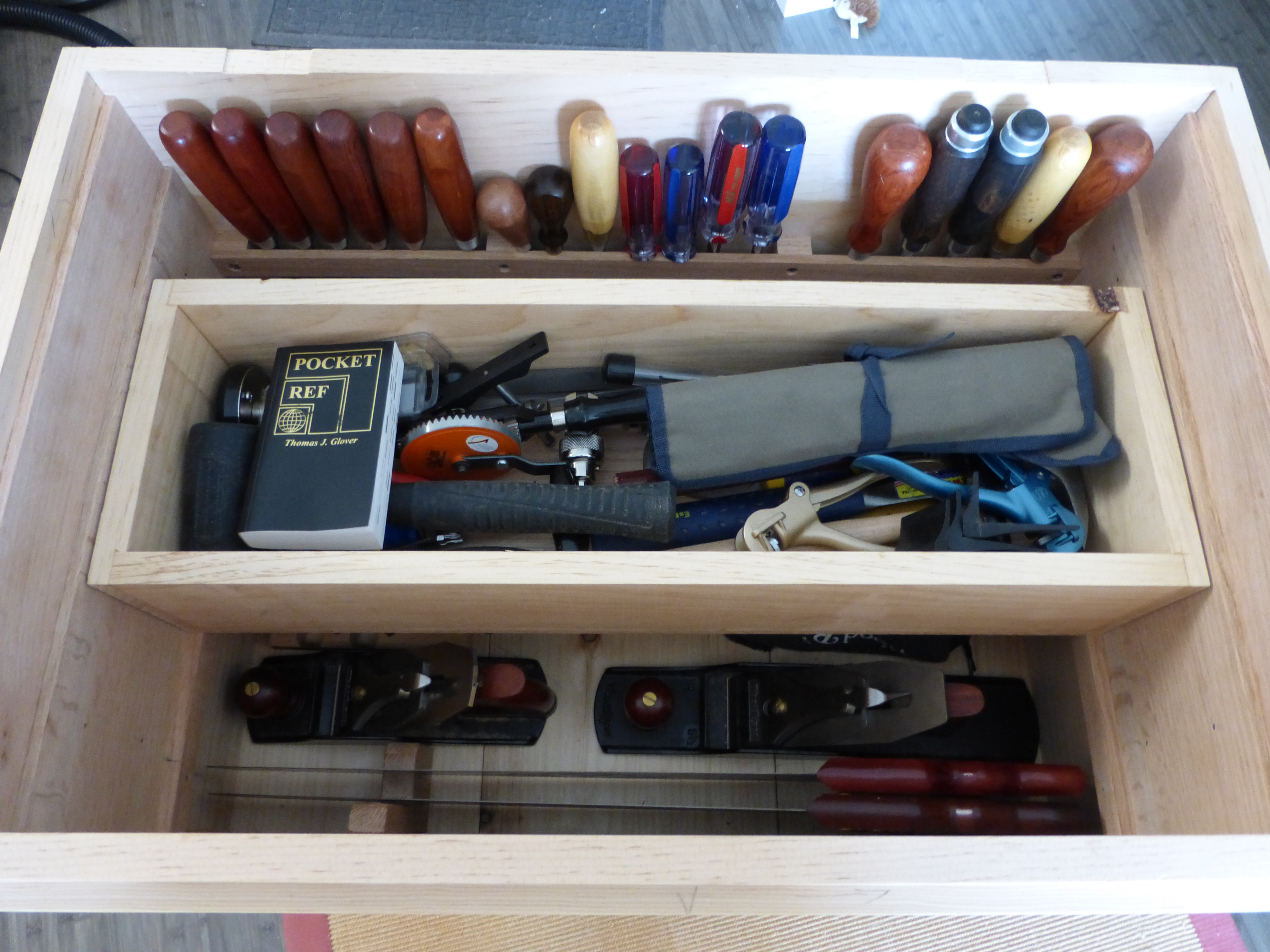
The deep tray:

Yes, I'm a huge fan of Mythbusters.  Thanks for asking!

Yes, I’m a huge fan of Mythbusters. Thanks for asking!

And the shallow tray:

P1000194

Admittedly, almost all of this stuff (other than the small planes and the rasp) lives on my bench.

It felt almost disingenuous staging all of those tools for a couple of pictures, but I to confirm my suspicion that this was the wrong size tool chest for me.  Plus, I got some pretty good tool pron out of it.

I will still complete the entire build so I can gift the chest to someone.

JPG

What I Learned Today

I am intentionally procrastinating on the backsaw tills for the medium tool chest (the panel saw till was an interesting endeavor that I did not particularly enjoy), so next up are the rabbeted/nailed tool trays.  I started with the lower tray, thinking that any major mistakes would be hidden deep within the chest.

True to form, there are serious french marks and I split one of the ends down the middle, trying use 6d nails on the ends without (apparently) sufficient pilot holes.  After a quick reset with headless brads, the lower tray has really come together.

P1000184

The upper tray will be perfect, I swear.

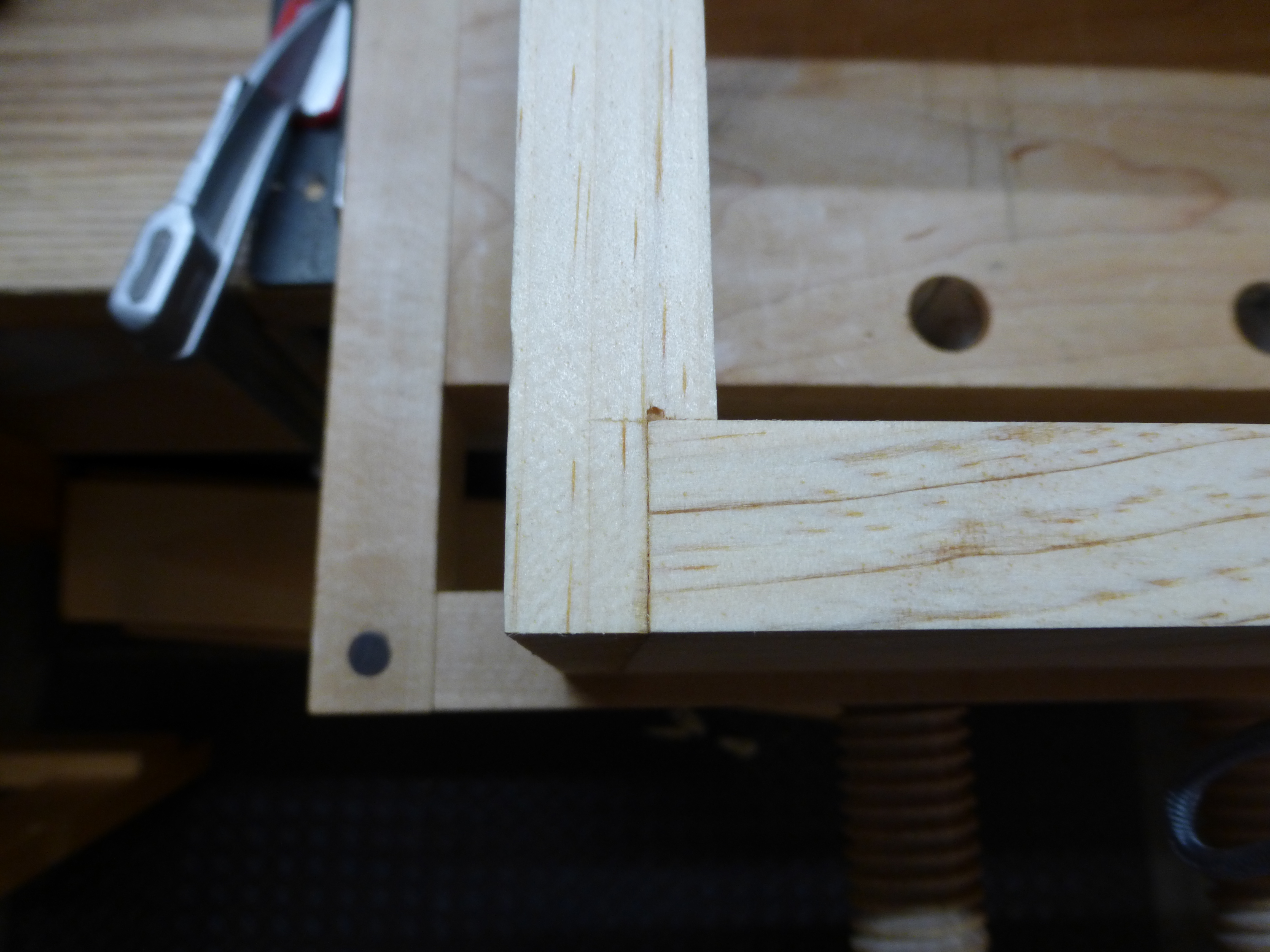
Aside from that minor splitting mishap, the tray itself is actually joined together quite well.  The rabbets were easily split and cleaned up with a router plane and I was sure to size the end grain before gluing.  Four headless brads per corner cinched the carcass right up.  I can steam out most of the french marks and I’m rather happy with the cleanliness of the shoulder lines on the rabbets.

I'm rather proud of how tight the rabbets are.

You’d think I had any clue what I was doing.

The lower tray won’t be ready right away, as I still have to rip the board down to size.  In the meantime, I can attach the upper tray to its bottom and miter the the upper skirt.

Getting very close to being done with the carcass entirely.

Getting very close to being done with the carcass entirely.

Once the trays are done and the upper skirt and backsaw tills are attached, I’ll paint the carcass and affix the handles.  Then it’s just lid/dust seal and stuffing it with tools.

Oh, what I learned today was “don’t use a 5/64″ drill bit to predrill for a 6d nail”.

JPG

If It Works for Chop Saws…

… it also works for Miter Boxes.

P1000177

The ever-useful stop-block.

So much of meaningful woodworking is accurate and repeatable cutting.  Usually, this means knifewalls and careful crosscuts, followed by cleanup at the shooting board.  But why bother with the shooting board at all when each part can be perfect right off the saw?  The use of a stop-block (whether at the chop saw or the miter box) ensures that each piece is identical in length, without any of that silly extra measuring.

Speaking of silly, I found in my cabinet some of that no-run, no-drip PVA glue and used it to assemble the chisel rack for the medium tool chest.  I swear, you only get about 45 seconds of tack time before the glue grabs, and I really don’t think you need more than 15 minutes of clamp pressure before the bond is all but permanent.

P1000179

Never coming apart.

Speaking of the rack, just an FYI: there isn’t a measurement for it in the plans, but I would suggest you space the bottom of the rack no more than 1.75″ from the top of the lower runner.  Any higher and your chisel handles will protrude above the carcass line.  I learned this the proverbial hard way.

Just a test fit after adjusting the rack height.

Just a test fit after adjusting the rack height.  That’s the panel saw till at the bottom of the frame.

Lots more to do but other responsibilities call.  Hope everyone had a nice weekend!

JPG

My Beloved New York Mets

I’m going off topic today, because it’s my website and I’ll do what I want.

The New York Metropolitans, my beloved NY Mets, are currently 70-56.  Atop of the National League East at 6.5 games ahead of the Washington Nationals, Los Mets have their largest division lead since the September which shall not be named.  Because of their torrid winning ways, the Mets are garnering more and more attention as of late and it distresses me.

My Mets are underdogs.  They claw and they scratch and they make something out of nothing.  They engender a Stockholm-esque masochism that we Mets fans wear like a badge on our orange and blue sleeves.

My Mets are not a fashionable bandwagon juggernaut of superstars and refined culture.  That’s the other New York baseball club, and let’s keep it that way.

There is much baseball left to play, but for the first time in a while, my beloved New York Mets are in control of their own destiny.  I believe, but I’ve been burned many times before.  Nonetheless…

Let’s Go Mets!

JPG