Big Projects

Quick Workbench Update

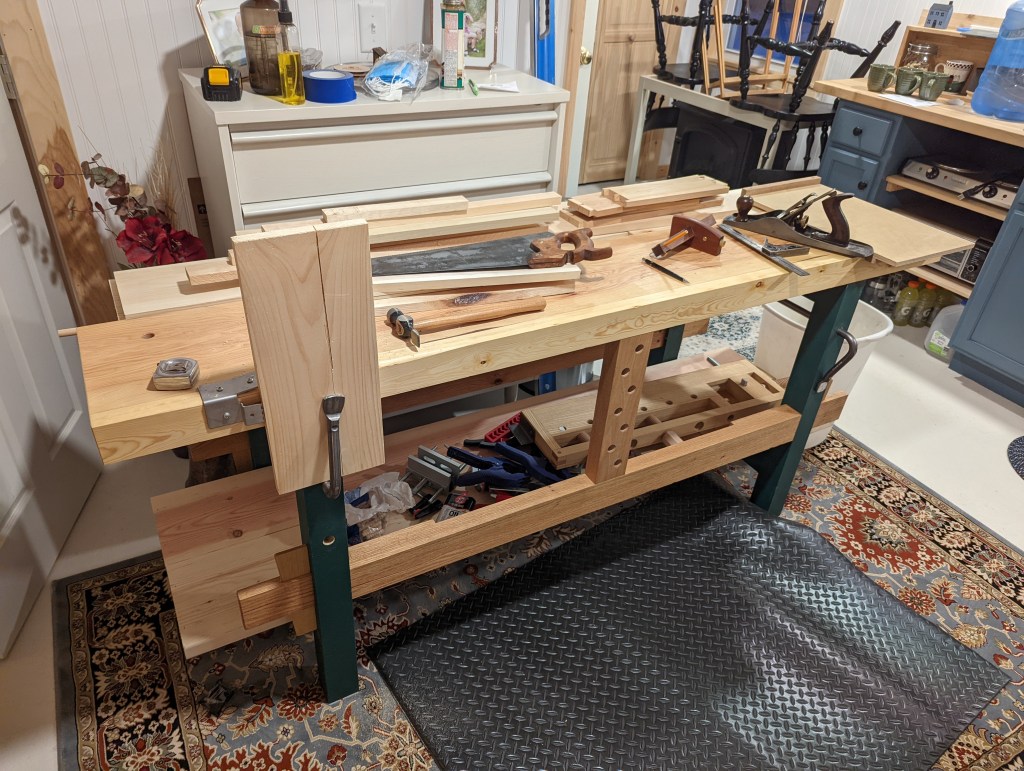
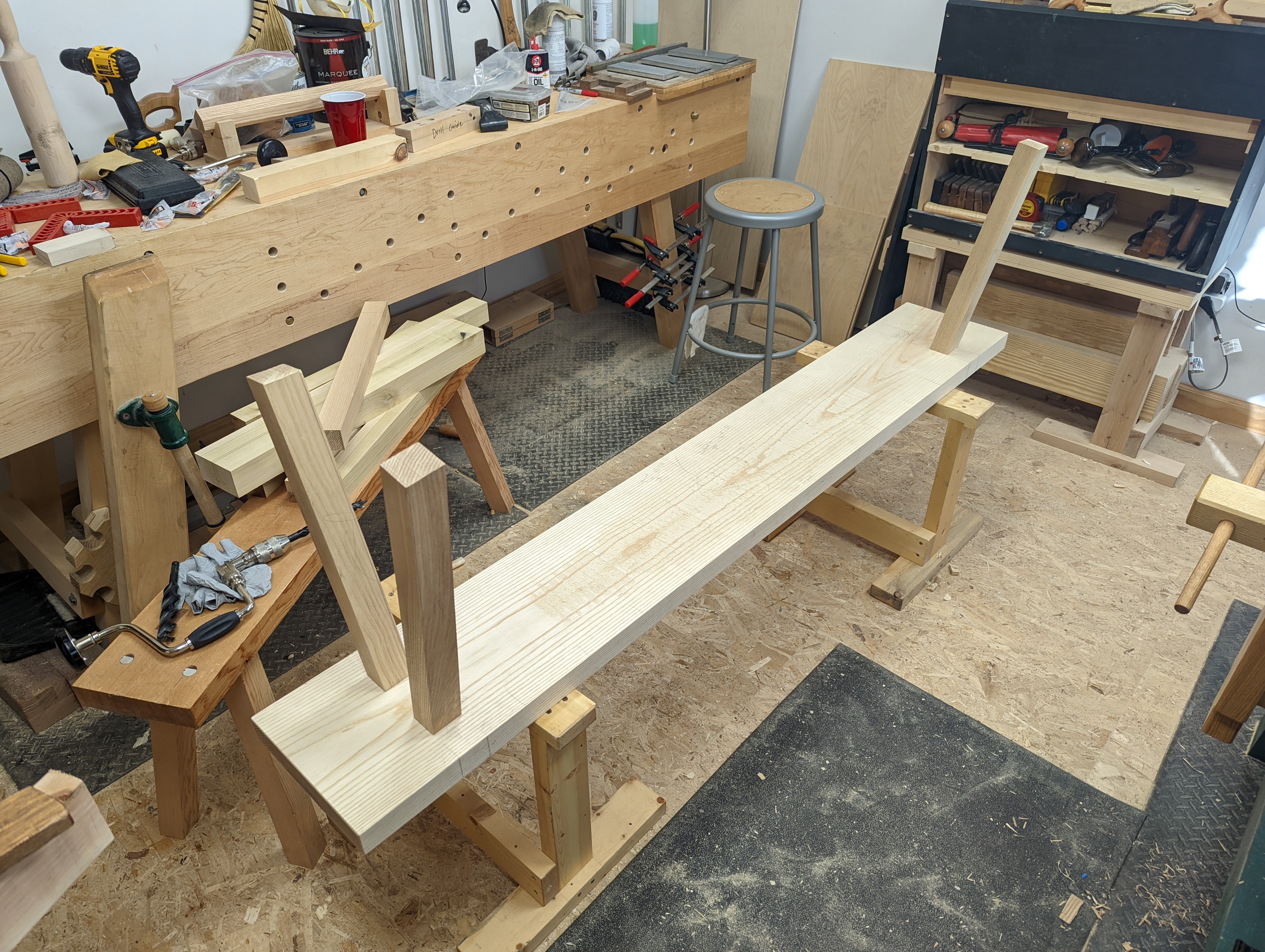
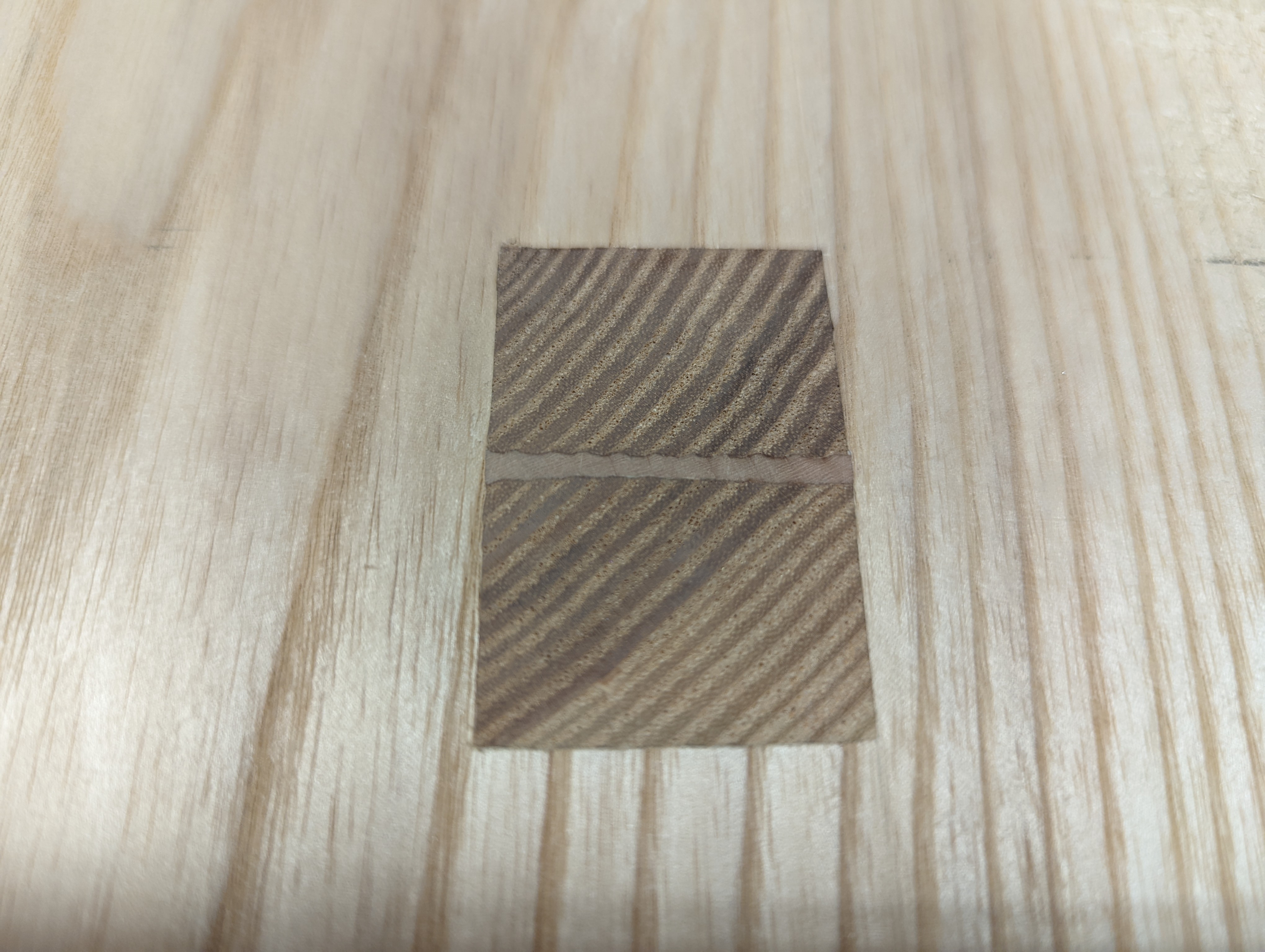
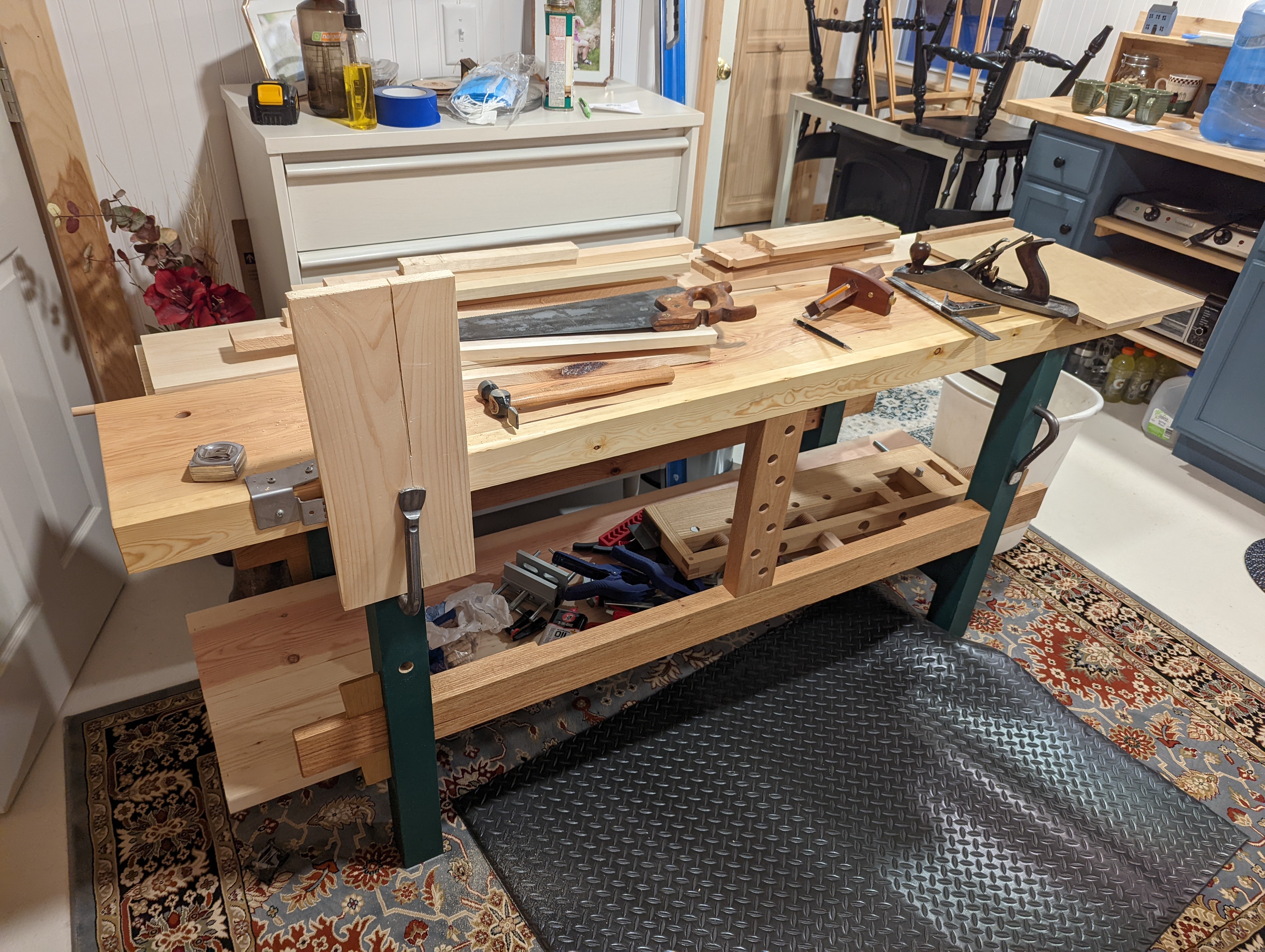
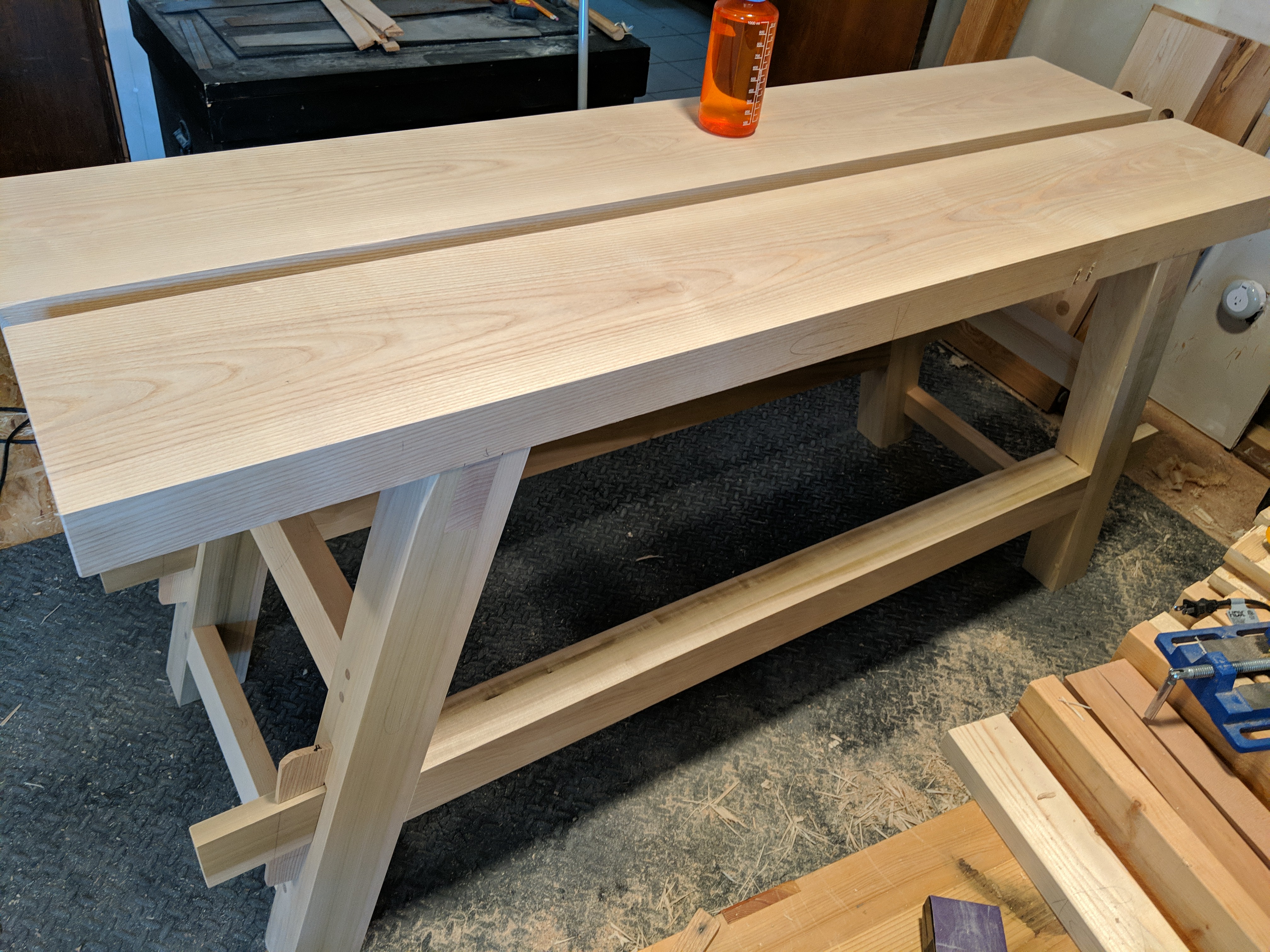
Just a quick update on my new workbench: I have attached the slab top (with pegs like a Moravian workbench) and oiled it a few times (with untinted Danish Oil), which I think looks super neat.

I’ve also bored holdfast holes in the top (12″ back from the front edge of the bench and 14.5″ on center, which I think is the right spacing for Grammercy Holdfasts) and attached a Compass Rose planing stop. Finally, the vise back is mortised into the stretcher and the underside of the top, so I’m ready to work on the vise chop itself.
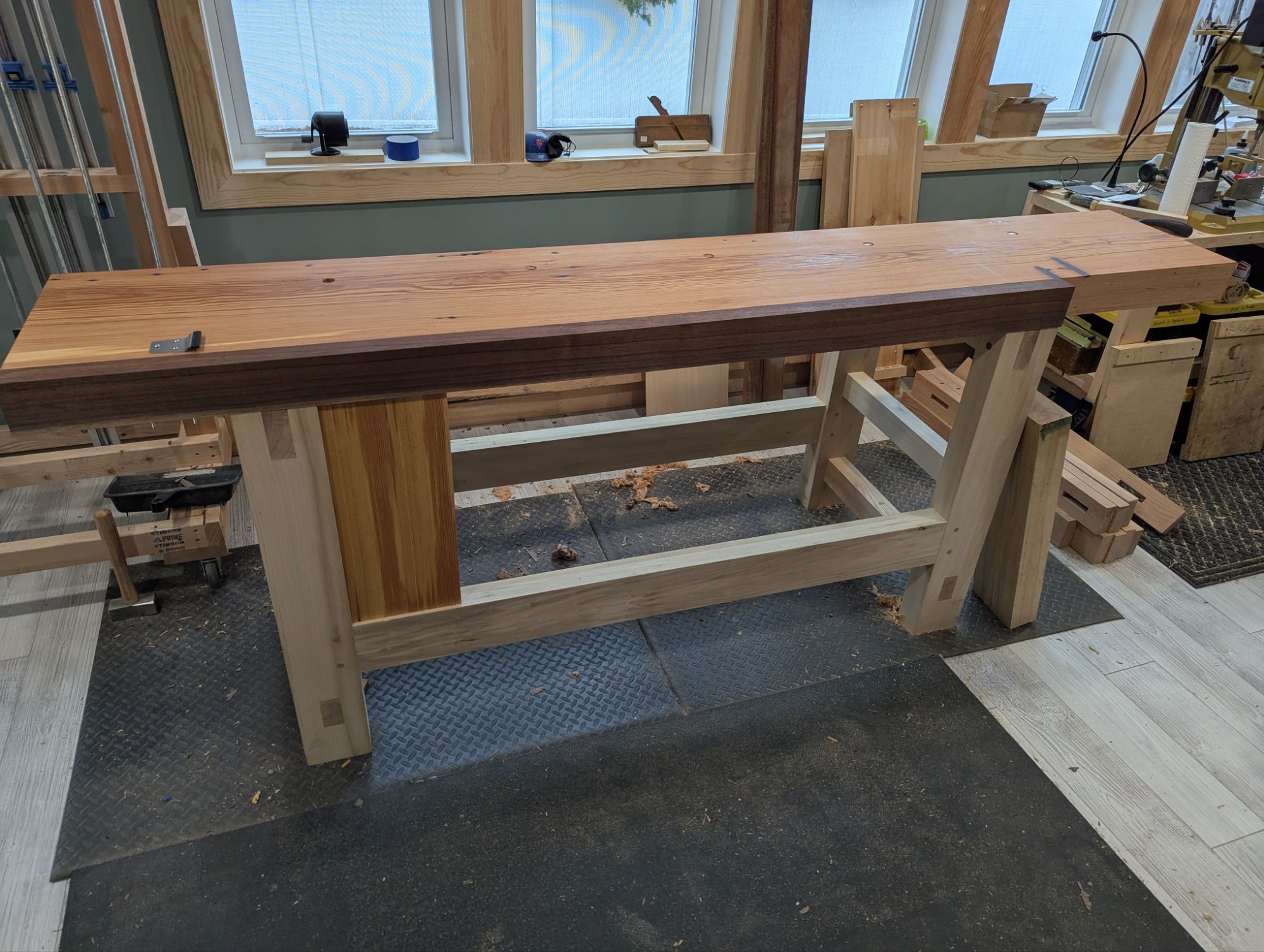
I’m not one for sentiment, but that top sure looks nice with a couple coats of oil.

In addition, I finally unboxed my Veritas Quick Release Sliding Tail Vise and attached it to the workbench. I followed the directions exactly but I guess my vise (which I bought for myself in 2021, right in the thick of the pandemic) had some issues with the casting or the machining. The attachment points for the vise chop were not in plane (more than 1/16″ off) and the threaded holes for the bolts to attach the vise chop were not spaced as described in the instructions (exactly 1/8″ off). Perhaps there was a setup issue in the factory?

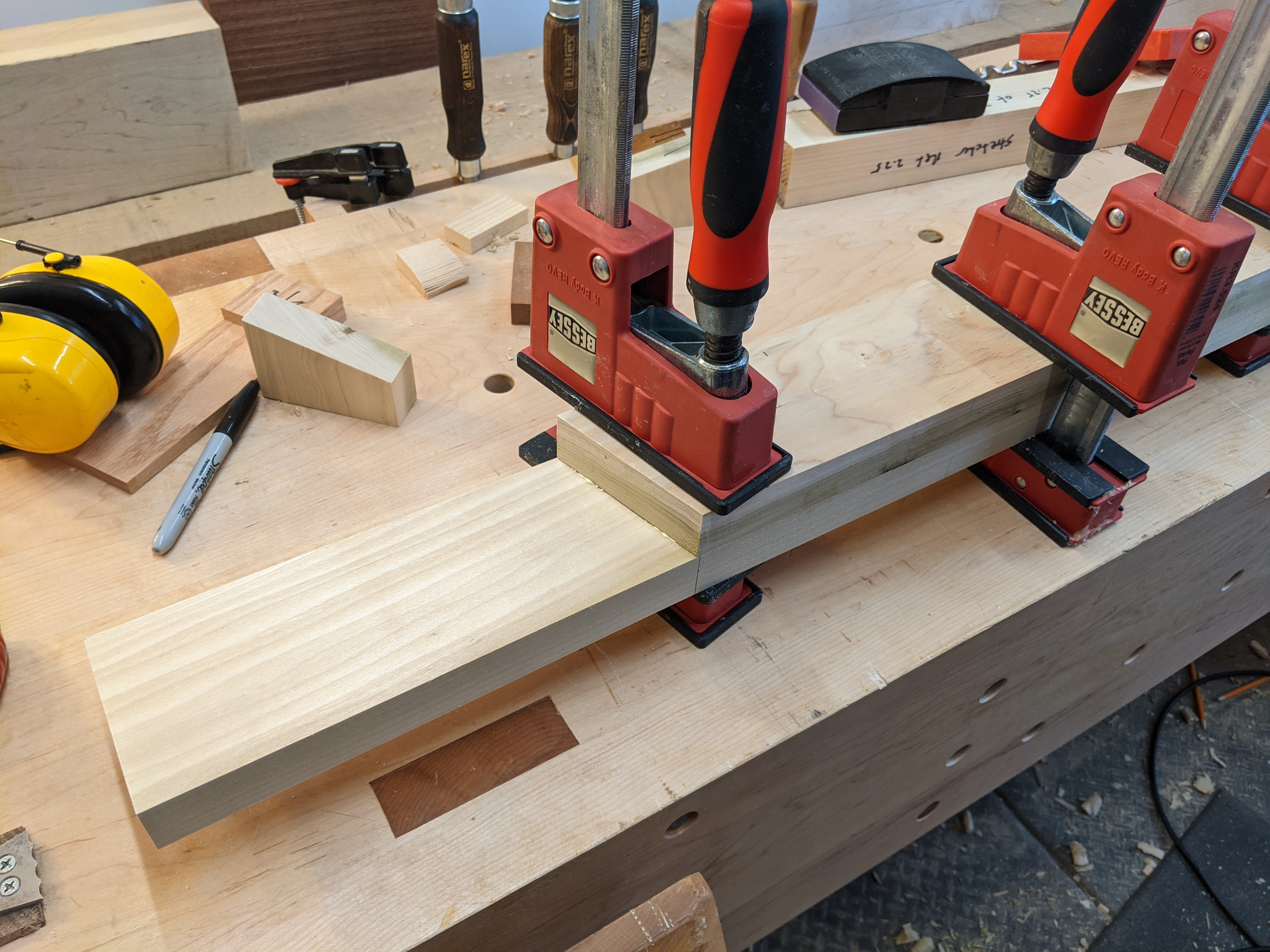
This meant I had to scrap the continuous grain walnut vise chop and laminate a new one out of poplar (again, trying not to buy new materials for any part of this workbench).
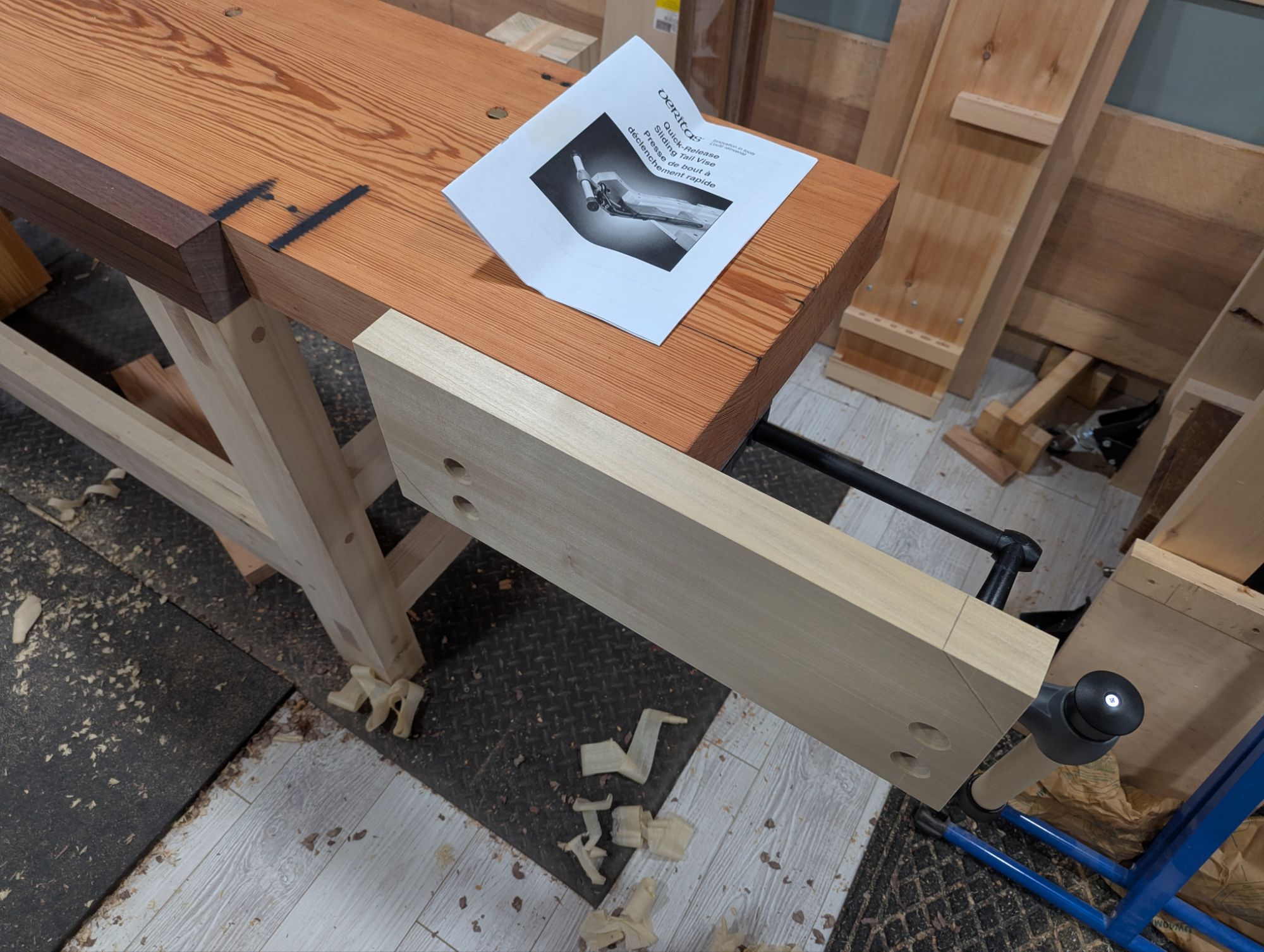
Kind of annoying but ultimately not an issue.

It’s still a very nice piece of hardware and works great (after I was able to sort out the problems with some fender washers as shims and the aforementioned replacement vise chop). Outside of the irregularities the build quality is great. I have no doubt it’s just a bum unit from the dark times when quality control wasn’t ideal. It happens.

I by no means intend to stop shopping at Lee Valley and I don’t want anyone to think I’m disparaging them. The instructions for the vise were detailed and super useful. If the mounting holes hadn’t also been off, I don’t think I’d even be posting this.
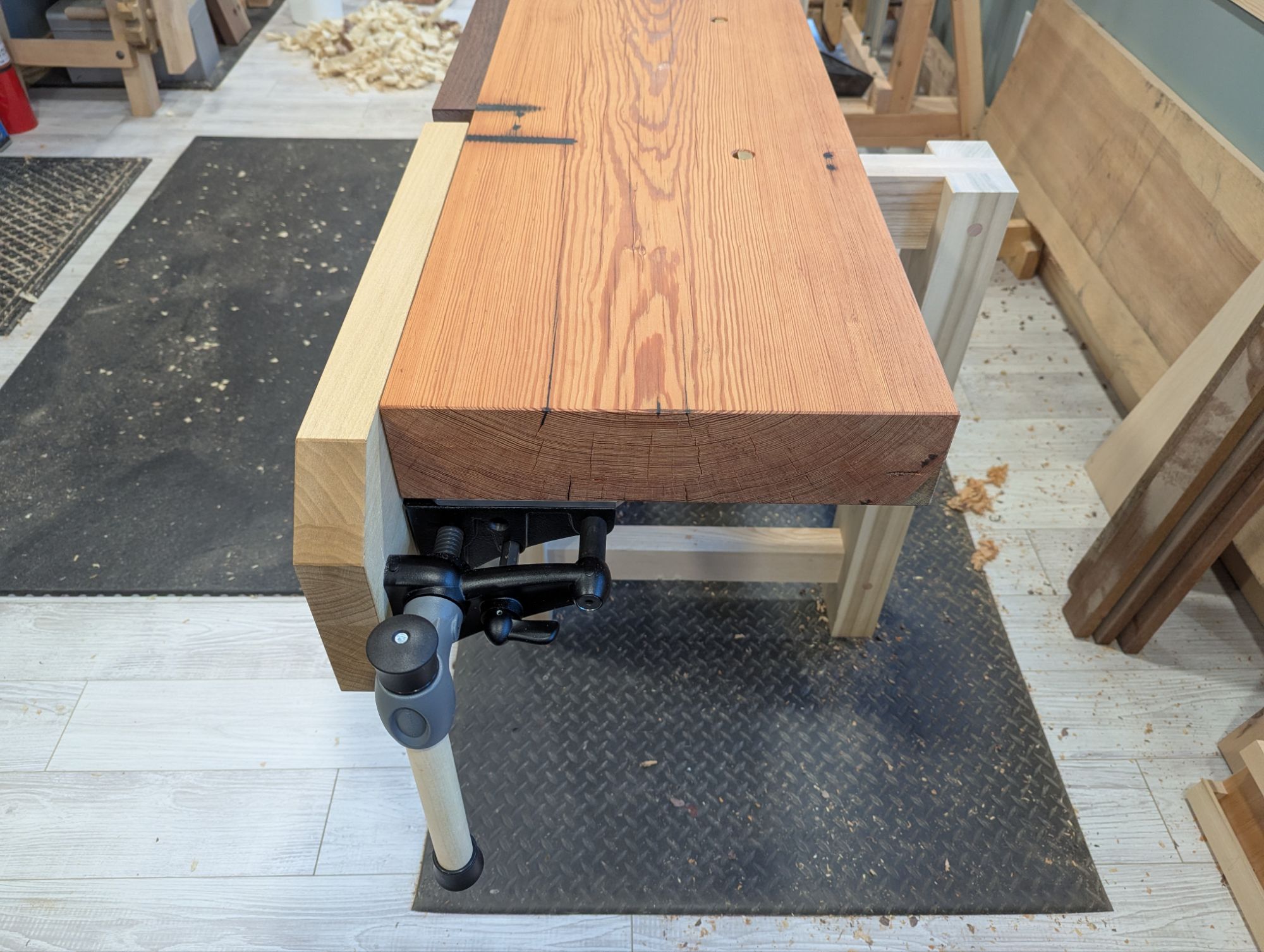
This thing is really becoming a Frankenbench, though.

Having used the finished vise for a few days, I’ve noticed a couple things, though. First, the vise is clearly designed for thinner workbench tops. The first attachment point is 5/8″ below the underside of the workbench, so there is a lot of unsupported chop on a 3 1/2″ workbench top. This leads to some vise chop lift. I’m not quite how much clamping pressure would be lost on an even thicker workbench top because of the twisting force on the unsupported part of the vise chop.

Second, everything is attached with screws (No. 14 wood screws for the mounting plate and 3/8″ lag screws for the vise assembly). They are beefy, for sure. But especially for softwood benchtops, I bet carriage bolts would be a better long term option. If it works for metal face vises, it should work for this.

That said, I am not a production woodworker. So I doubt I’ll ever put enough stress on this vise to test either of my theories.

This weekend, I’ll be building the leg vise. This one will be pinless, with a metal screw (also Lee Valley) and a 1 1/2″ linear bearing (and carbon steel shaft), both from McMaster-Carr.

Stay tuned and have a great one!

JPG
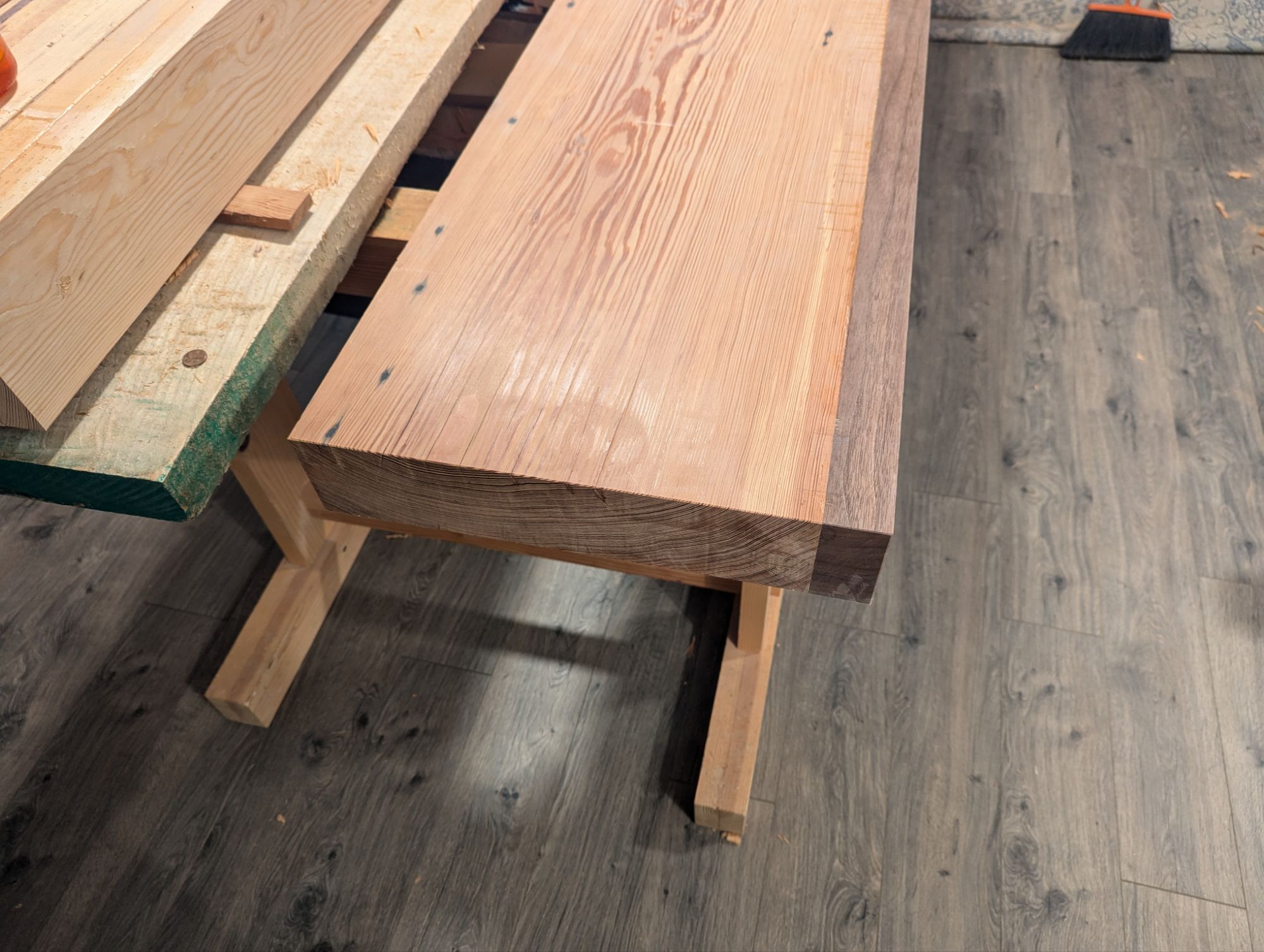
Beefcake!

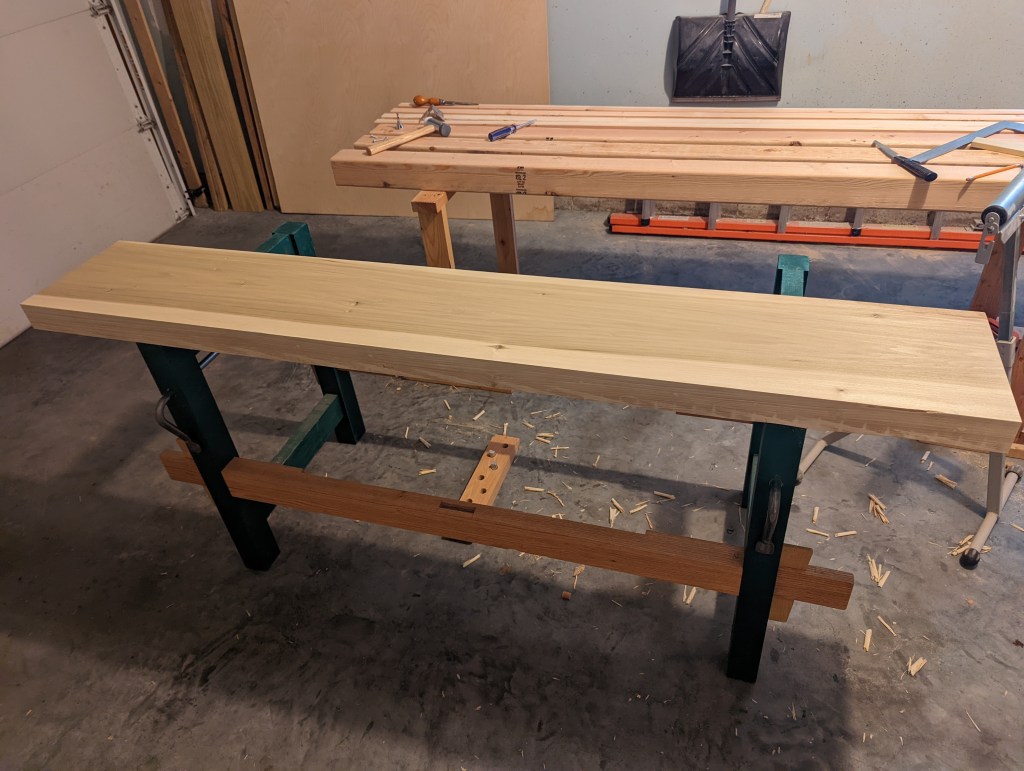
If you follow the blog at all (or my new BlueSky handle: @aptwoodworker.bsky.social), you know I build a fair amount of workbenches. In fairness, it’s been a while since I’ve built one for myself. But I have some exciting news: I am making one more workbench, before hanging up my cleats forever.

This new bench is a mishmash of poplar, ash, walnut and southern yellow pine. And the centerpiece is a slab of old growth Slash Pine that I bought from a reclamation yard for the main part of the workbench top.

Look at all them growth rings!

This is by no means a “dream workbench”. I don’t really have dreams (literally: it’s just not a thing I do very much). And I certainly don’t go in for the sappy sentiment. But I have poured all of my knowledge and skill into this thing, and I’m pretty happy with it.

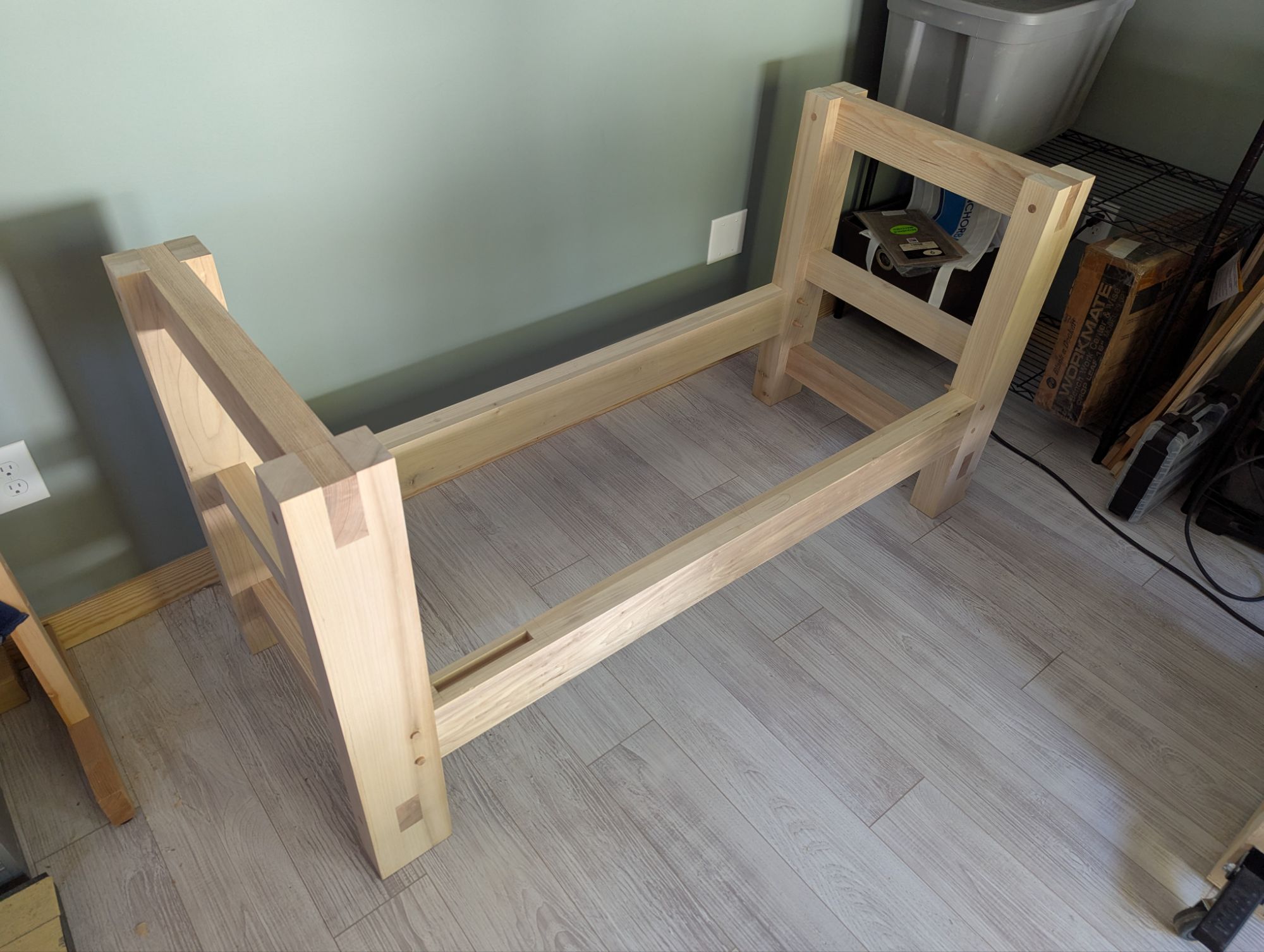
To date, I’ve finished the base, which is super beefy. I resolved not to buy any more lumber for this workbench, which has required being creative in using materials (including resawing and laminating materials as needed). Between the leg vise (Moravian workbench style) and sliding deadman (TBD), I’m still cobbling together all the necessary pieces.

I may still paint the base in the future.

Now I just have to get rid of an 8 foot hard maple Nicholson workbench that I’m realizing I never really took any good photos of over than here. Anyone in Southern New England (USA) interested?

JPG

A Love Letter to Impact Drivers

I made a comment on a recent post about how I ever managed to live without an impact driver for almost a decade of woodworking. I’d like to expound on that a bit more.

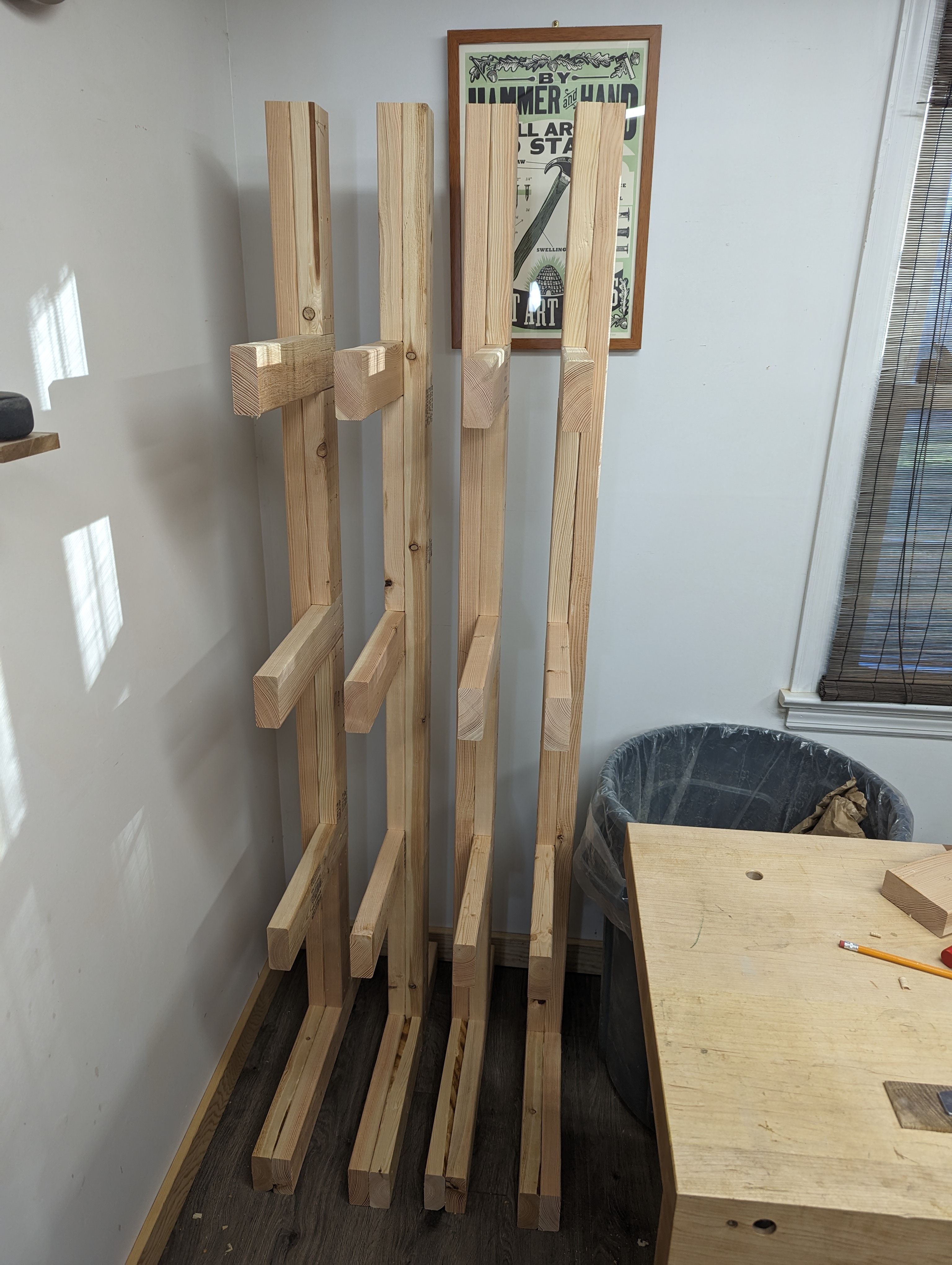
As folks may know, I build a lot of workbenches. I haven’t actually built one for myself in a while. I’ll find a design that seems intellectual stimulating, build it, and then gift it to a friend or family member. So whenever I’m at the lumber yard, if there is a particularly wide and clear slab of 12/4 or 16/4 lumber (typically ash, poplar, douglas fir, or red oak), I can’t usually help myself. The pile of slabs was becoming a problem, so I made a full size lumber rack. Not one of those wall hangers (Bora, you’re great, but I am constantly worried my entire wall is going to tumble down). A proper, free standing, rolling cart.

Do you like my “The English Woodworker” style saw horses in front?

There are probably 250 star drive construction screws of either 2 1/2″ (65 mm) or 3 1/2″ (90mm) screws in the entire assembly. As much as I’d love to say I drove each with a brace and bit, I in fact used an impact driver. It’s just so useful and effective (if a bit loud; I wear foam earplugs for work like this). To put it in perspective, I wore out not one but two (!) of the included star drive bits in the boxes of screws. I know these aren’t of the highest quality, but still.

I used a lot of what I learned from the television easel project in making this project. That is, the lumber rack is a series of posts set into a foot that is offset from center based on the calculated center of gravity when loaded with lumber. With a 24 inch foot and 13″ or so of shelf, I calculated that the post should be centered at roughly 8″ from the back of the foot.

So each post of the lumber rack was comprised of the following, all 2×4 framing lumber, glued and screwed together (a la Naked Woodworker workbench) after drilling clearance holes for the screws.

  • One vertical beam at 72″ high (part of this is a tenon that laps into a dado in the foot)
  • Four shelf spacers of 15″ high (although the top one is cut to length)
  • Three shelf bars at 16″ long
  • One foot beam at 24″ long
  • Two foot spacers, on at 6″ long (back) and one at 14.5″ long (front) [these create the dado around the vertical beam tenon)
I made four posts, but one of them was like 1/2″ off every single shelf height so I scrapped it.

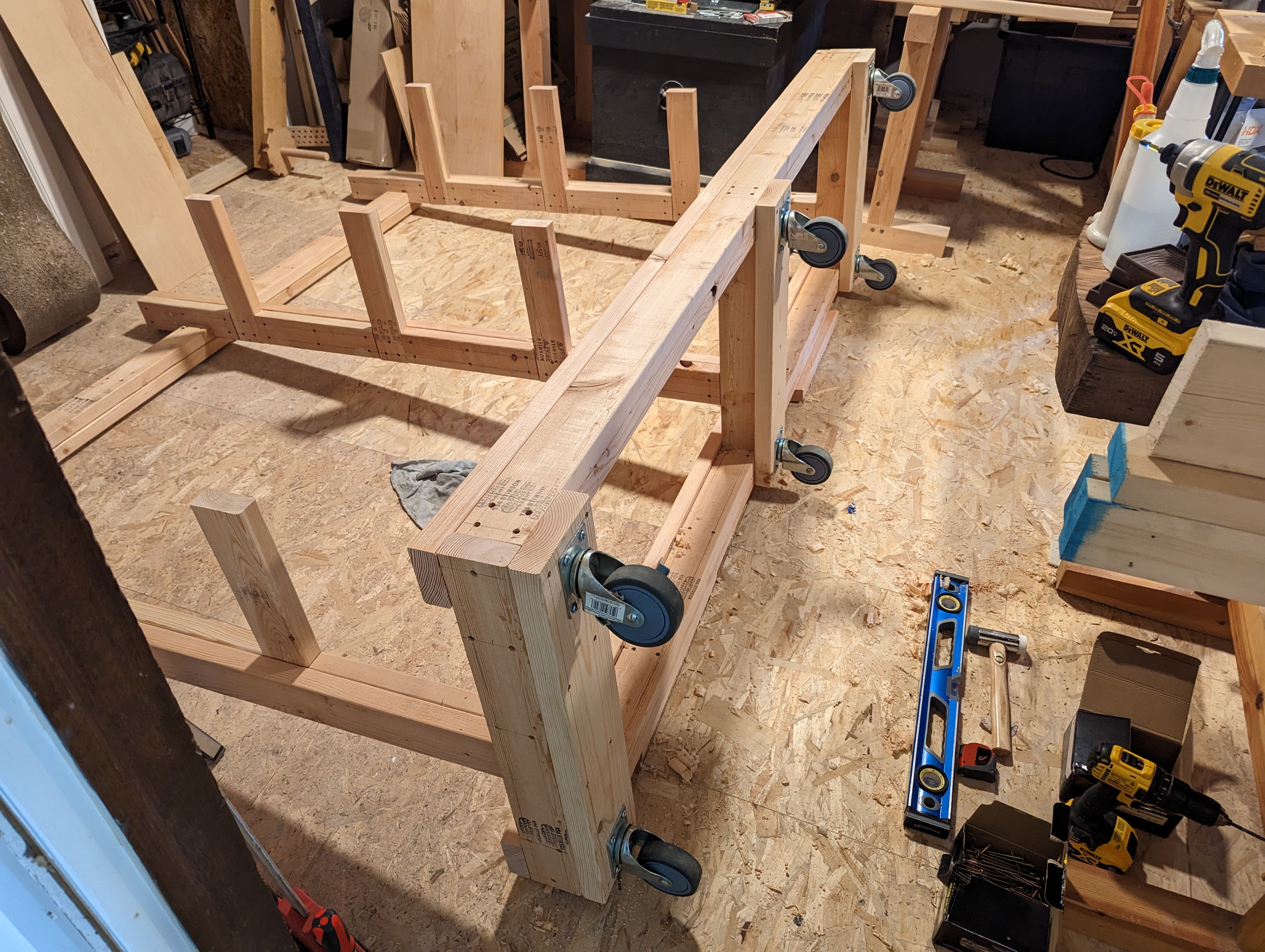
With the posts made, it was time for the base. I started by joining the two end posts with an 84″ long beam, and added a 27″ long end cap on both (creating an enclosed mortise for the tenon on the vertical beam, rather than just a lap joint). Then I added spacers between the ends and the middle post (to form dadoes) and tied everything together with an 87″ long cap beam on top. The back cap beam also created a convenient catch for storing a few things vertically, leaning against the posts.

First cap beam installed as shown above.

After adding a long rail to plumb up and tie together the tops of the posts (with spacers to make more dadoes), it was time to add some bearers beneath the post feet. These, made of 2×6 (instead of 2×4), would both (a) further support and secure the posts and (b) give a wide surface (away from the joinery screws) to attach some heavy duty casters.

Nice detail of the end assemblies here.

The last step (aside from knocking down the rough corners with an orbital sander) was to add a diagonal brace to each post, reinforcing the base of each post. I’m not 100% sure these were needed, as the posts were each secure and restrained by (w) a tenon that lapped into each foot assembly, (x) cap beams front and back on top of the foot, (y) a bearer below where the casters attach, and (z) a shitload of glue and screws on the general base assembly. But they make me feel better and this thing will have about half a ton of lumber at the outset. It was either this or add some rachet straps, which looked ugly(ier) to me.
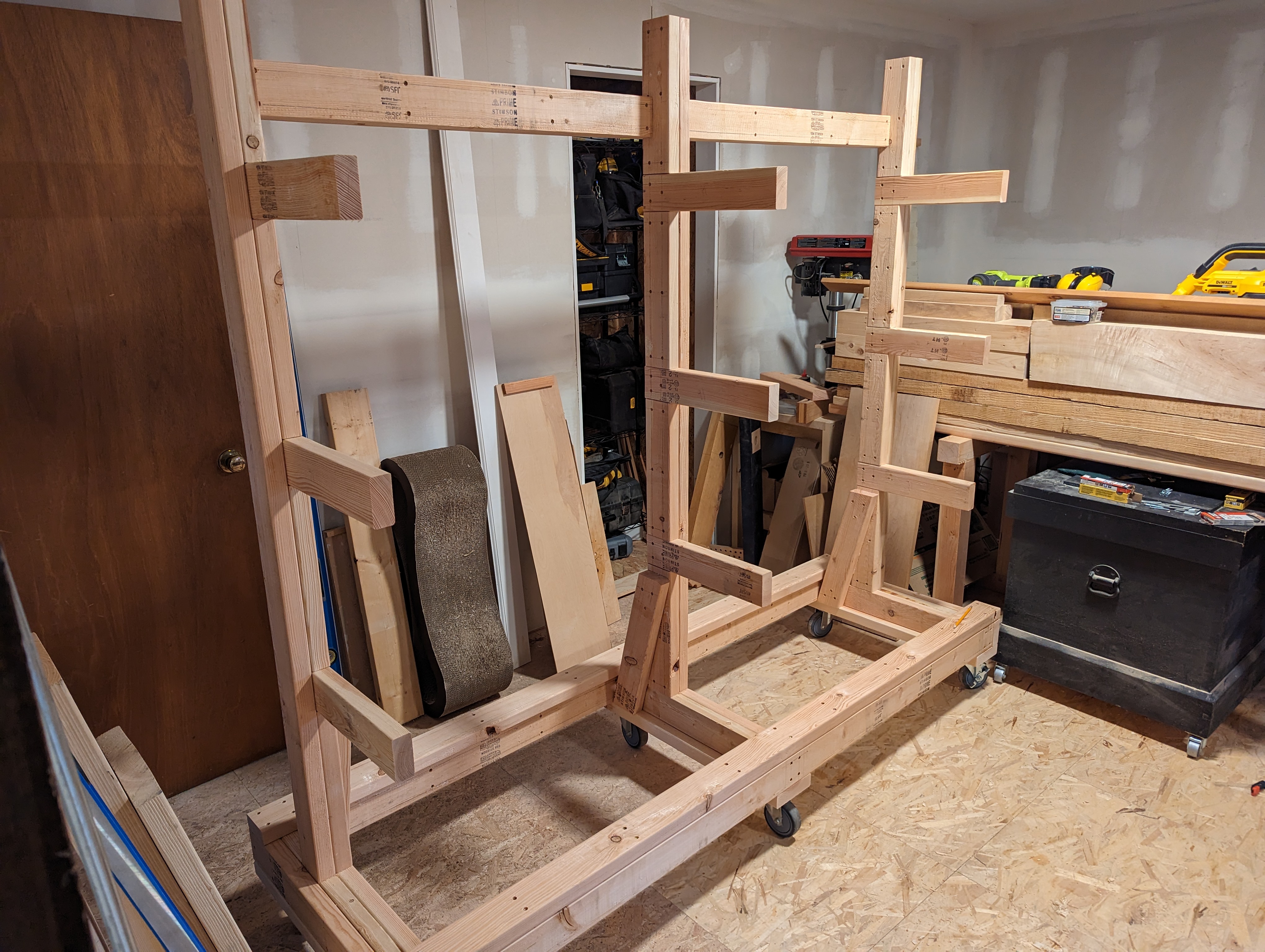
Diagonal braces seen here.

I am sure (because I checked) there are plans out there for prettier lumber racks. And I absolutely could have spent 10x the time and 2x the money mortising 4×4 posts and drawboring everything. I wish I could say otherwise, but other than a combination square and a marking knife for some more precise cuts, I did not use a single traditional hand tool on this entire project.

But when you need a giant lumber rack, and you’ve got handy a chop saw, an impact driver, some 2×4’s, and a giant box of screws, you do what you have to. I even think I learned a thing or two in the making.

And, most importantly, I can at least walk around in my basement again.

JPG

Sunk Costs

I am not super great at interpersonal stuff. With the exception of a few traumas from my youth, I get past things pretty quickly and don’t dwell on stuff. And by extension, I don’t get attached to much (people or things).

I learned about the Sunk Cost Fallacy early in my life and I embraced the hell out of it and never let go. Which seems a tad ironic as I write it: I don’t easily form attachments because of my religious-like devotion to a core tenet of rational economic action. But I think my low-grade sociopathy makes me a better woodworker. I just don’t get attached to materials or projects because I will never let myself succumb to the sunk cost fallacy.

This is going somewhere, I promise.

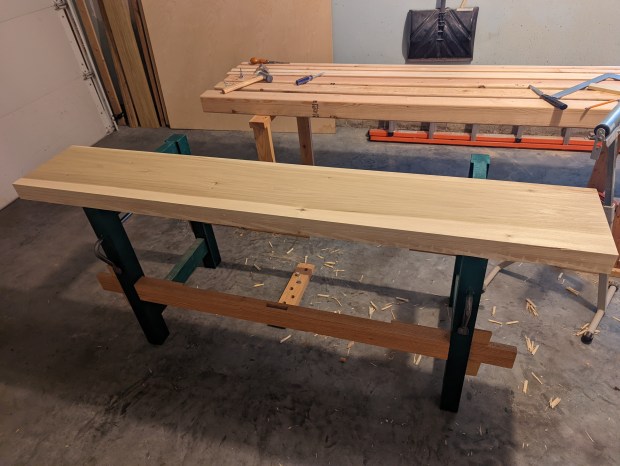
Late last year, I used a bunch of scraps to make a knock down workbench for woodworking away from my shop. Whether on the lawn or at my parents’ house in Vermont (which, I just realized, this morning, is a French portmanteau of “Green Mountain”), this bench has served me well. Except the slab top (face laminated Douglas Fir), which got wet in the back of the truck and cupped horribly.

So, embracing the sunk cost fallacy, rather than spending hours reflattening and whatnot, I scrapped the slab entirely (I’ll cut it up for firewood later). I had a lovely Poplar slab that is a perfect replacement and that only needed some minor attention before it was ready for the thickness planer. Sure, that poplar slab was technically for another project in the queue, but I need a workbench for outside now.

The most important tool for hand tool woodworking is a decent thickness planer.

Also, I think it’s worth mentioning that the last slab was 78″ long. But making the poplar slab 76″ would leave an offcut large enough to get four table legs out of. So the new slab is 76″. That only leaves 11″ overhang on each end of the undercarriage. Oh well. Sunk Costs.

I am well aware that is not the correct use of the term.

In the end, I think we could all be better at avoiding attachments. For instance, it would have been easy enough to try and blind peg the top to the existing 5/8 dowels in the undercarriage. But I took the time to saw off and plane down the old dowels and re-blind peg the top with larger dowels (3/4) that completely subsume the old dowel holes.

Let the past die. Kill it if you have to.

This post has gone a bit off the rails, admittedly. But I still need to mortise in the fixed deadman (seen on the floor above) and bore holdfast holes in the slab. And attach the Whipple Hook (which works great and is not being abandoned).

Because not all prior effort is actually a sunk cost.

JPG

CAP4TR: Addendum

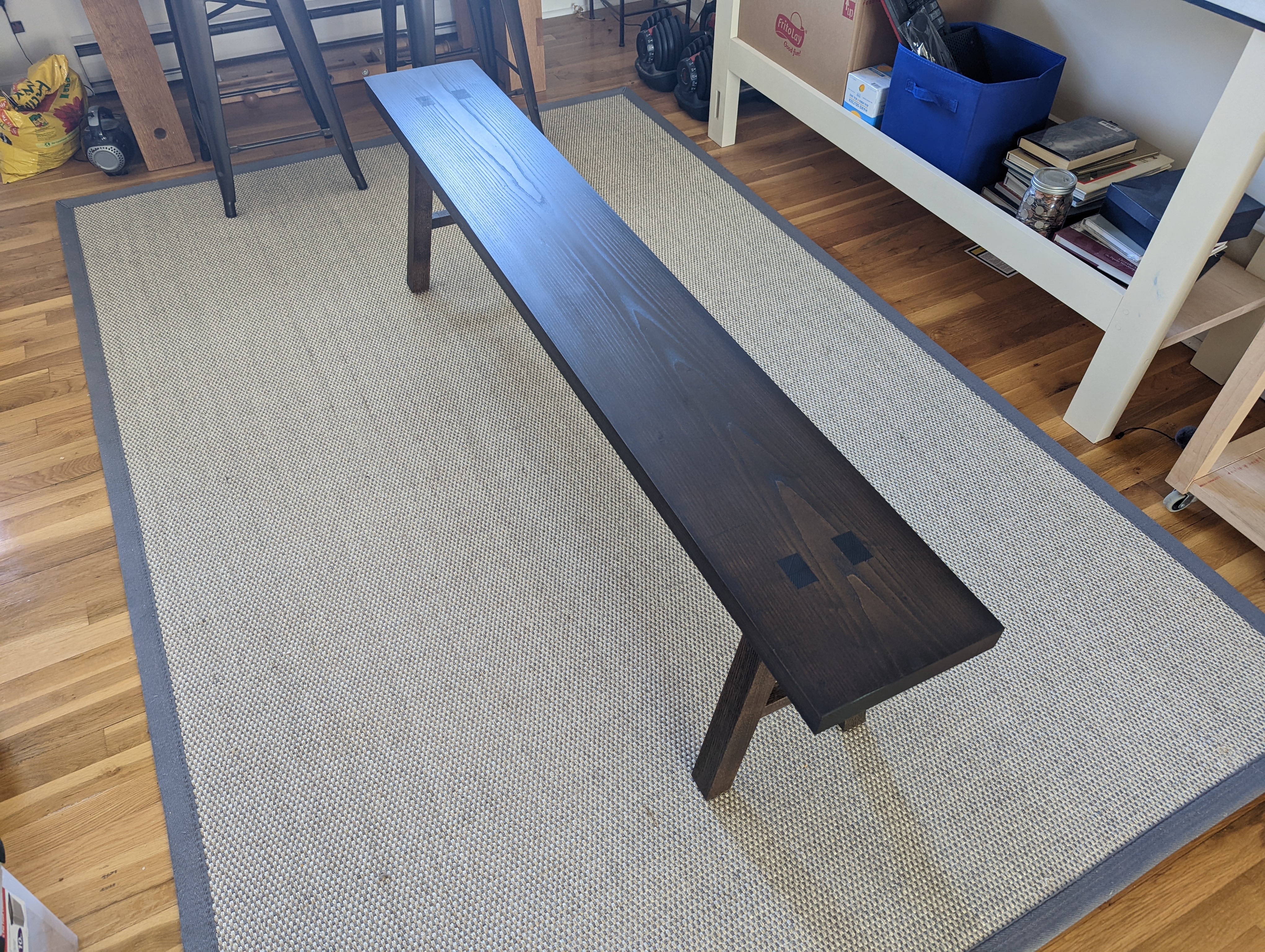
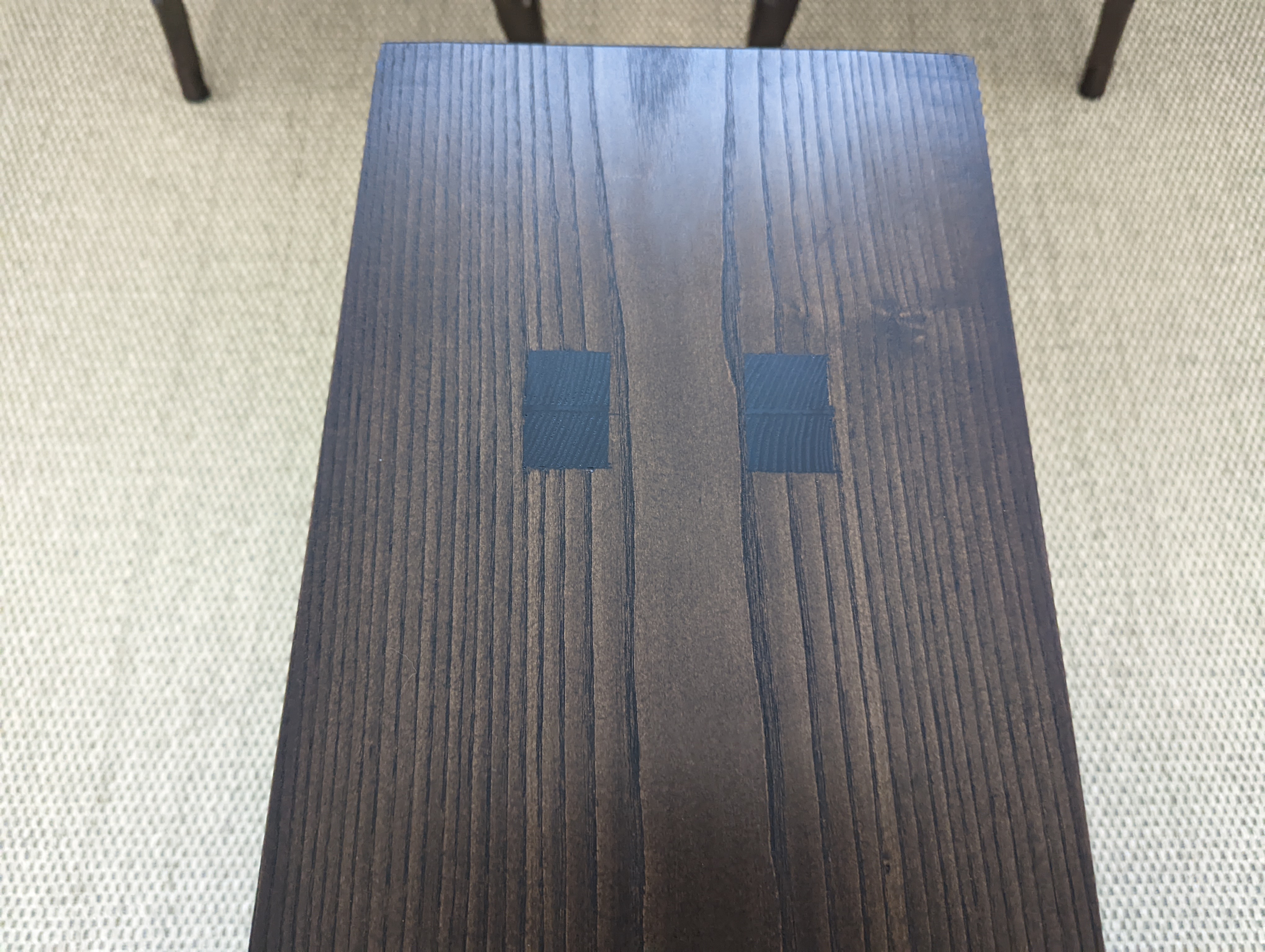
Just a quick update before the weekend. I finished (literally and figuratively) the joined low bench (which is what I’m calling it now). Two coats of Jacobean stain and some dark paste wax. No film finish.

I think it looks great.

It still stinks (both the stain and the wax smell the same to me) but it’s getting better and feels dry to the touch. I’ll give it a few days to cure before I sit on the thing, just in case.

All in all, I remember why I stopped staining projects. Natural wood color is nice and a wipe of Boiled Linseed Oil or Tung Oil is just so much more convenient (and less messy) than staining things. But sometimes you don’t have the wood you want on hand and have to make due. Or, sometimes, the wood you want just isn’t going to match the rest of the furniture.

Although it probably needs one more coat of wax in a few weeks.

I think I stained the thing so that I wouldn’t just turn this into a low workbench. I now can’t glue any blocking to the underside for holdfast holes or a twin screw vise on the side. And it’s better that way.

Not everything needs workholding.

JPG

Cultural Appreciation (Pt. IV: the Revenge)

With the first, I ended up with a simple sawbench.

Just when I started to think it was over, I made a less simple sawbench.

Then, furniture’s most misunderstood creature returned, in a minimalist coffee table.

This time, it’s personal.

If you don’t get it, watch the Jaws 3 and Jaws 4 trailers.

For a while now, I’ve been fascinated with the Chinese-style of “staked” furniture construction. Instead of round tenons, they are square or rectangular and therefore able to be made with very simple cutting tools (just a saw and a chisel, essentially). This also means that the angles can be micro-adjusted in a way that outshines even reaming tapered round tenons. So getting the fits and angles perfect is within reach of anyone, especially with some basic angled guide blocks.

If you click the links above, you’ll see I have gradually increased the complexity of the build project by project. And it is now culminating in what will be a sitting bench for the bottom of the bed. No palm or holdfast holes on this beauty. And no softwoods for margin of error.

A mid-build shot.

I was tempted to go stretcherless on this piece. The entire project is 8/4 ash (the legs are actually a bit thicker than the finished top) and there would have been plenty of strength in the beefy, wedged mortises. I even considered lapping the stretchers on with some die forged nails or square head bolts for accent, but it just didn’t match the aesthetic for which I was aiming. After checking all the information available in a single internet image search for “chinese workbench” (which actually turned up two great articles, including one by The Schwarz himself), I decided to mortise in the short stretchers.

Had I done single shouldered tenons like with the original saw bench, I’d be done already. But I had to get all fancy and do double shouldered tenons. Because I’m a masochist.

With this bench, there is 10 degrees of splay but only 2 degrees of rake (remember: splay sideways, rake foRwaRds). So I assumed the tiny bit of rake wouldn’t mess with the geometry of the angled shoulders enough to matter (and that perfectly parallel shoulders would work without fettling). I was wrong and there is one decent gap among the four total shoulders. I keep the shades drawn in the bedroom most of the time, so I doubt the gap will ever be seen, even by me. I did fill it with some matching putty, though.

Close up of the rectangular tenons with hard maple wedge.

I am still tweaking the fit on the second short stretcher and will post some pictures of the finished bench once it’s complete (I also have to level the legs once everything is fitted). But, for now, I will think on whether to paint the base to match the walls in my bedroom or just tung oil and be done with it. Or maybe stain the base in dark mahogany to match the bedroom furniture (which is storebought, btw).

Stay tuned!

JPG

Catching Up

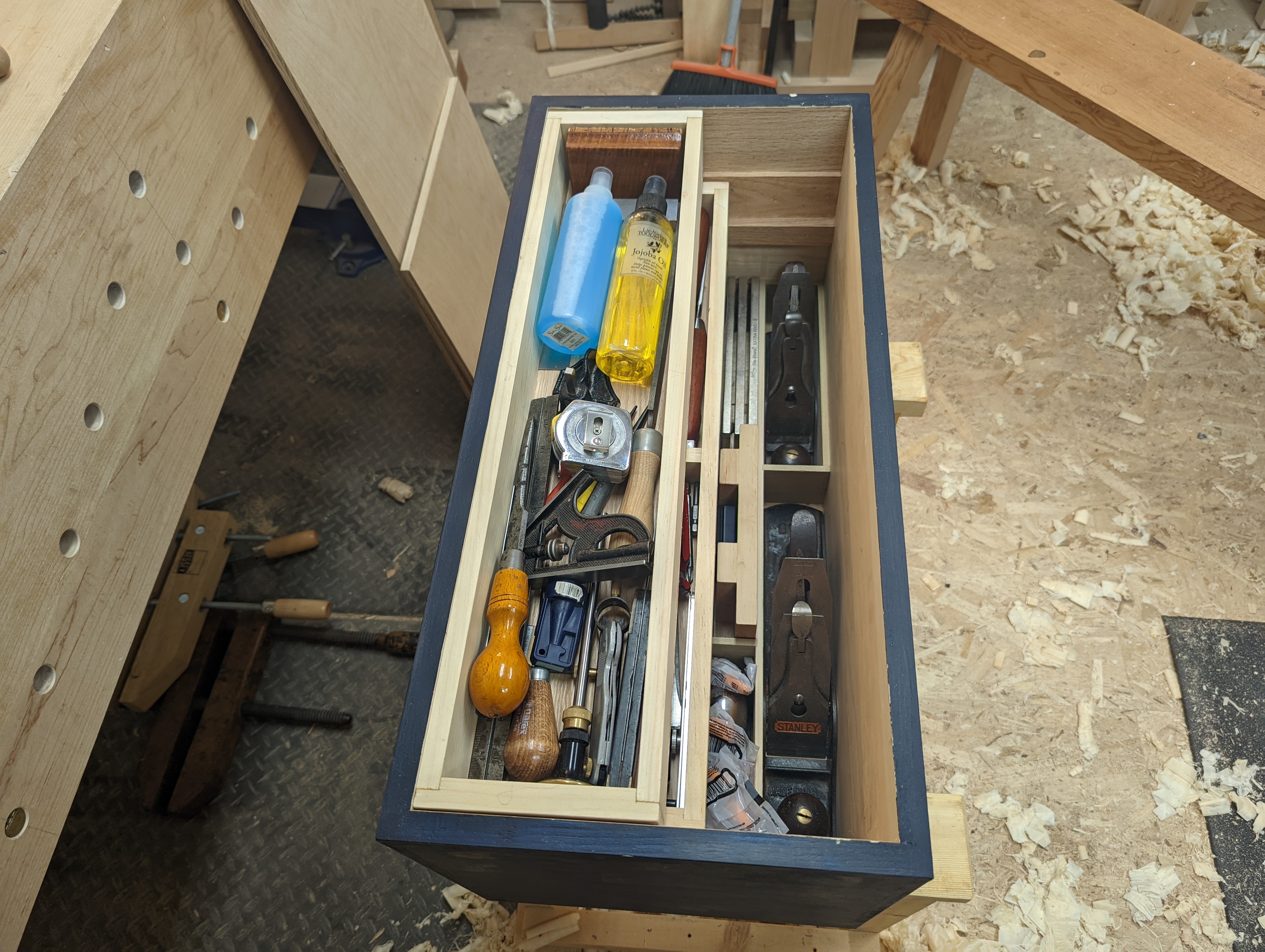
The year has started off somewhat weirdly. I was able to take a bit of time off; I even made a new traveling tool chest for my vacation. Which I am quite pleased with, although I wish it had been about 1″ deeper than it is. The upper tray, even at a full half of the total depth of the chest, is still a bit tight for a 12″ combination square. But I make due.

Everything fits, and that’s what’s most important.

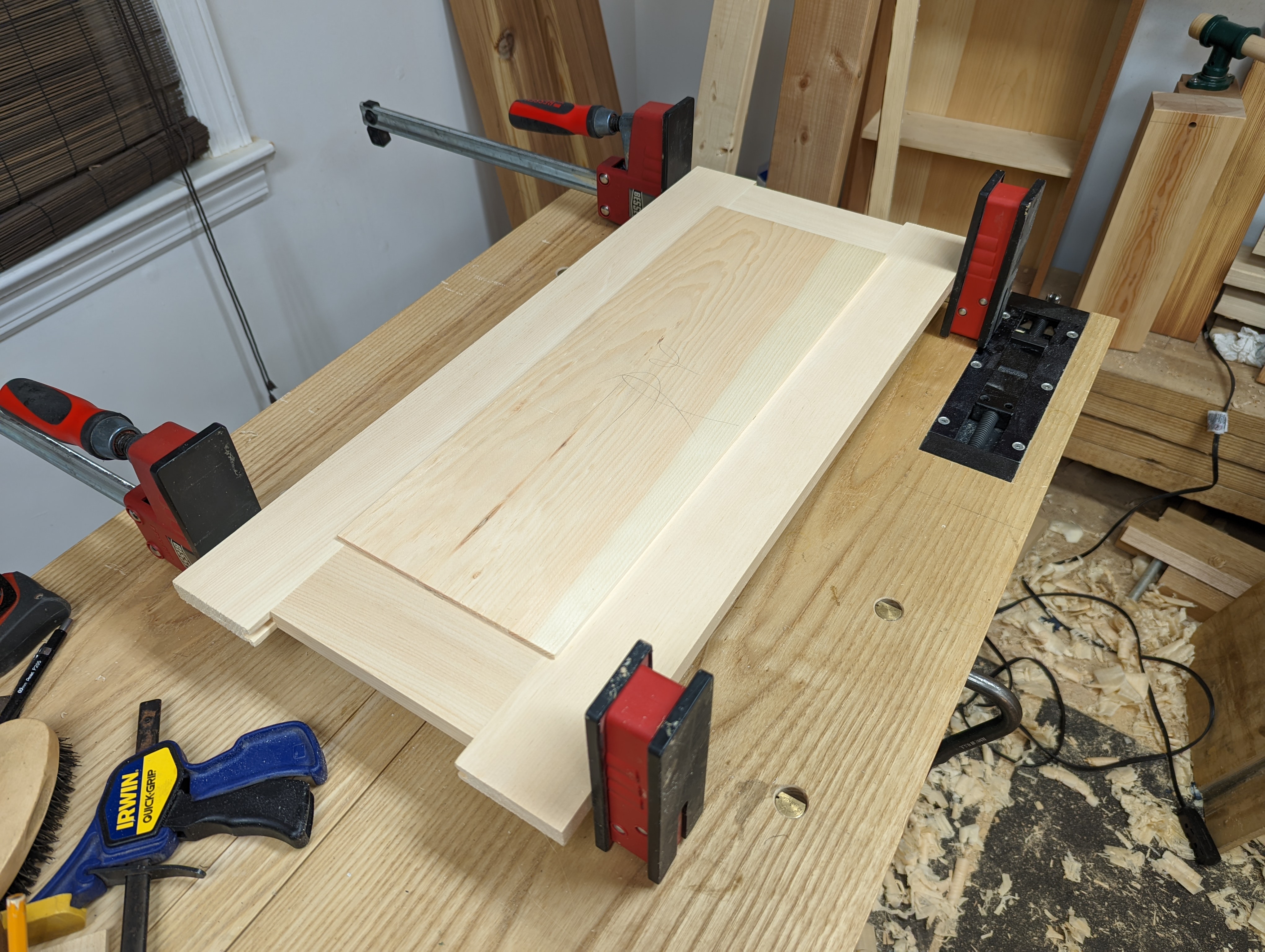
The case itself is pretty utilitarian; as are the tills. But the lid is definitely not. I went full groove-in-groove frame and panel with this one. I had never made a lid like this before. All my panels were in the past raised, and I made the choice to glue one long edge of the panel in place in the frame. I somehow mis-sized the piece and there was a bit too much side-to-side float for my taste.

Flat, square and stable.

When it came to picking tools for the actual vacation, I ended up stuffing it a bit to the gills. Glue, blue tape, a few clamps, an egg beater drill. None of these things fit naturally in the design so just get piled in. It does, however, stabilize the tills so nothing bangs around while driving. The chest itself took some heavy dings when I piled it and the travel workbench into the back of the truck (with the stock for other projects). But it held up well so far.

Does look a bit like a baby coffin.

Speaking of the travel workbench, I need to make a new top for that. The slab cupped again (not sure why; it’s been through two flattenings). The front edge sits about 1/8 off the legs. It doesn’t rock and I may just level where the slab sits on the frame, but it changed the peg hole geometry and it’s tough to get the slab off again once it’s in place. But the bench worked great. Not sure I prefer viseless woodworking, but it can be done.

But I really liked the 32″ height for rough work.

I’ll talk more about the vacation projects in a future post. Monster Hunter: Rise came out while I was gone so I got less done than I wanted, but still more than I expected.

JPG

Restorative Process

One of the first proper pieces of furniture I made when I switched to primarily handtool woodworking was a dining table. Or, at least, that’s what it was supposed to look like, because it really was more of a workbench. Made of solid ash, it had roughly 3″ square legs, 8/4 rails and a 5/4 top. Everything was drawbored together with 1/2 pegs.

For several years, I clamped my Milkman’s Workbench to it and that was my primary work area. In fact, you can see it in the banner of the website and I detailed the construction in my second ever post.

So many memories.

But many years have passed since then and my shop is now a 12×13 bedroom (instead of a dining nook). My mother claimed the old dining table for her house and my dining room has been empty (other than a console table that functions as a bar) for some time. But that’s about to change.

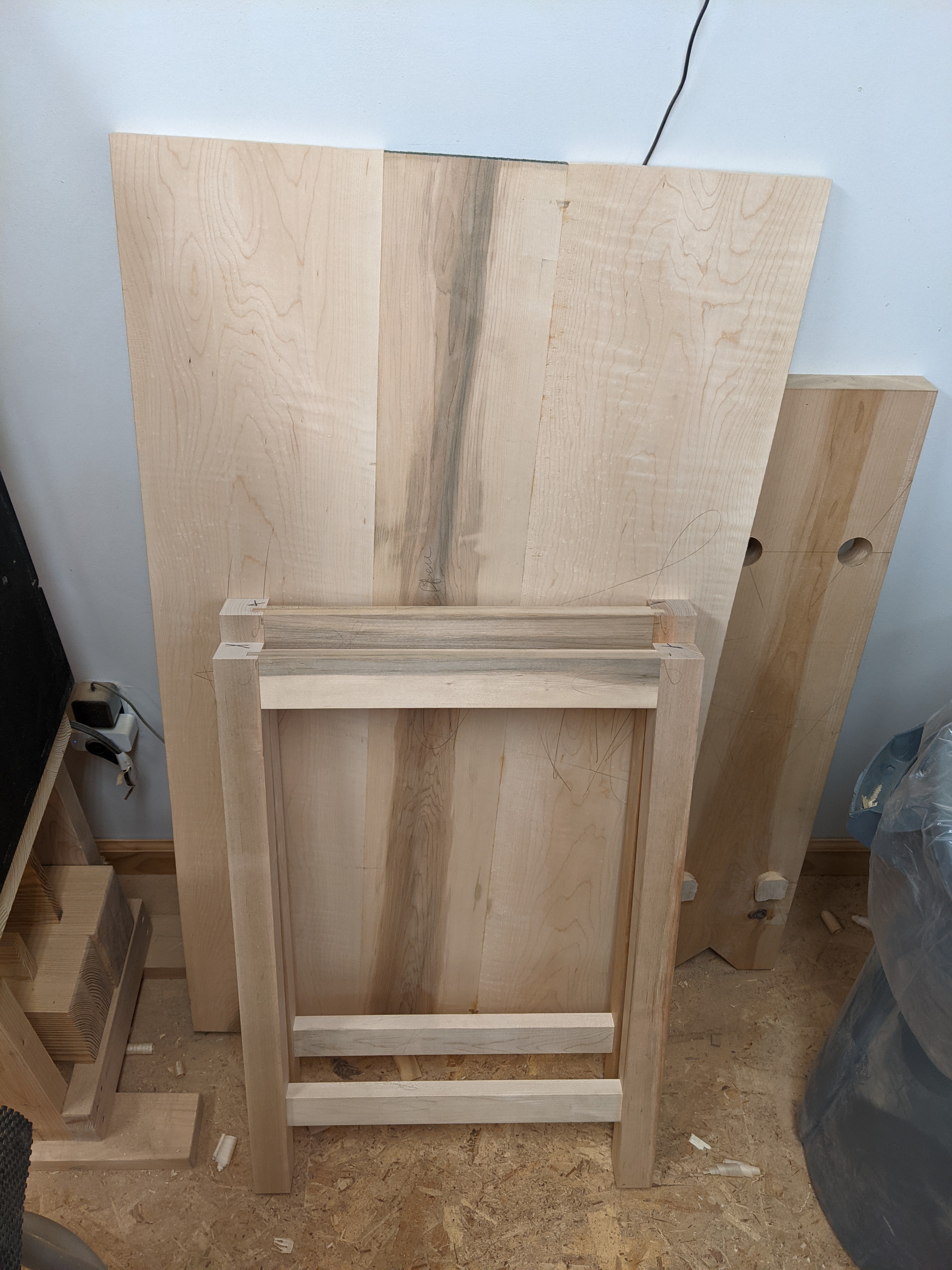
Dry assembly.

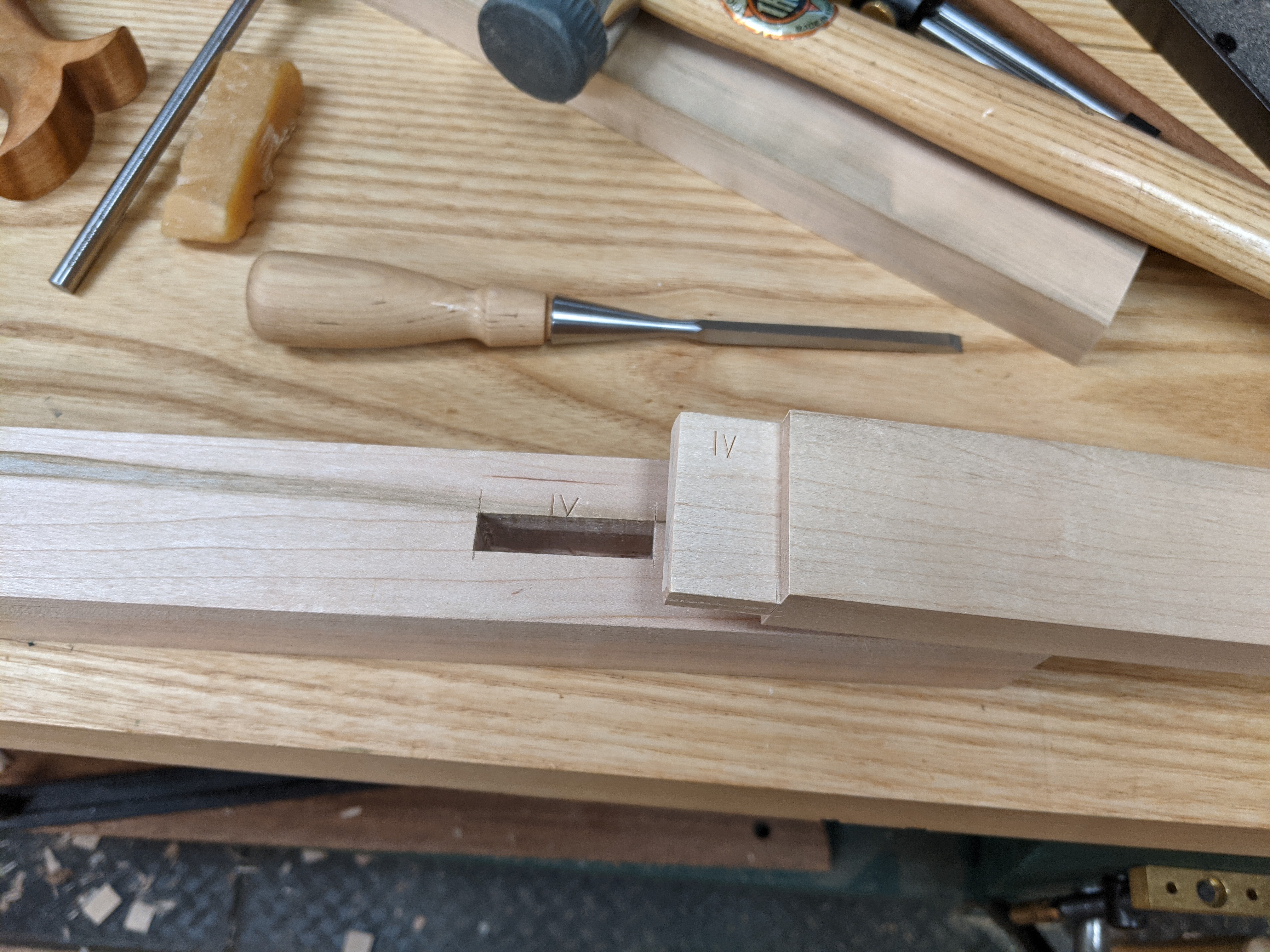
I’ve had a stack of paint grade soft maple for a while. Mostly 4/4 boards, but a little bit of 8/4 stock too (enough for some leg frames, at least). So I’m making a new dining table out of it, although much more delicate than the last. The legs are 1.75″ square and the top rails are barely 1′ x 3″ (and the bottom rails under 1″ x 2″). It will be solid, but far too spindly for woodworking on. There’s a number of mortises in this piece, so in addition to the usual cabinetmaker’s triangles, I’m also employing a timber framer’s marking system as backup.

I’ve never cut roman numerals with a chisel before.

As always, I tend to latch onto specific design elements that I find online (don’t @ me). For this, I’m going with the same stopped chamfers shown in this Restoration Hardware piece.

I don’t plan to permanently affix the top (not even a line of glue along one edge). Instead, the entire top will be affixed with wooden turnbuttons. Further contributing to the future of this piece merely as a dining table.

I mentioned this is paint grade soft maple and I mean it. It’s blotchy, streaked and, although curly in a few places, generally the grain is unruly throughout. I expect to paint the entire piece (probably in the same linen/coastal blue two tone as the console table bar). But as an initial matter, a couple coats of boiled linseed oil to see how the grain looks unpainted will do the trick.

We’ll see.

JPG

Perfection, In Potentia

Over the last year and change, I’ve been experimenting with the Moravian Workbench form popularized by Will Myers. I’ve watched the first three and a half hours of the instructional video probably 15 times. Every time, right up to when the top gets attached via blind-pegged dowels.

But up until now, I haven’t paid much attention to the leg vise assembly, because the previous benches I’ve made for others haven’t included leg vises. For the final version, though (the one I will keep), I’ve got to push through the rest of the video and figure out exactly how that part of the bench is made and works.

Pretty, right?

This particular version is 73″ long (i.e., 3″ shorter than the source material) and 24″ deep. But instead of a single slab and a tool tray, mine has two 12/4 ash slabs at 11.25″ wide each. The gap in the middle will eventually be bridged with a tool removable tool rack.

The legs and long stretchers are poplar. Along with the slabs, the short stretchers and the wedges are ash. Ash is my favorite wood, with poplar close behind. Both are cheap and readily available, making them perfect for workbenches. And, other than the slabs (which came from a single board) were already in my lumber pile.

Having made three of them now, I have some thoughts on the form and process of the main bench.

While the legs themselves are sawn from solid 16/4 poplar stock, the long stretchers are laminated from three 5/4 poplar boards. I did it this way in the douglas fir experimental version and found this easier than sawing and paring the tenons (like I did for the more accurate version I made recently).

My mortise chisels and paring chisels are all legacy Narex ones.

Also, I nixed dovetailing the lower stretcher and just mortised it in with drawbored pegs. I’ve always thought the dovetailed lower stretcher on the source version must have been added later, when it became clear the leg assemblies weren’t rigid enough without them. I may be biased, but why use a lapped dovetail for only this joint when you’re otherwise using square mortises? Because you done F’d up and needed to fix a design flaw. That, or the maker just got sick of mortises and changed it up. Which I also understand.

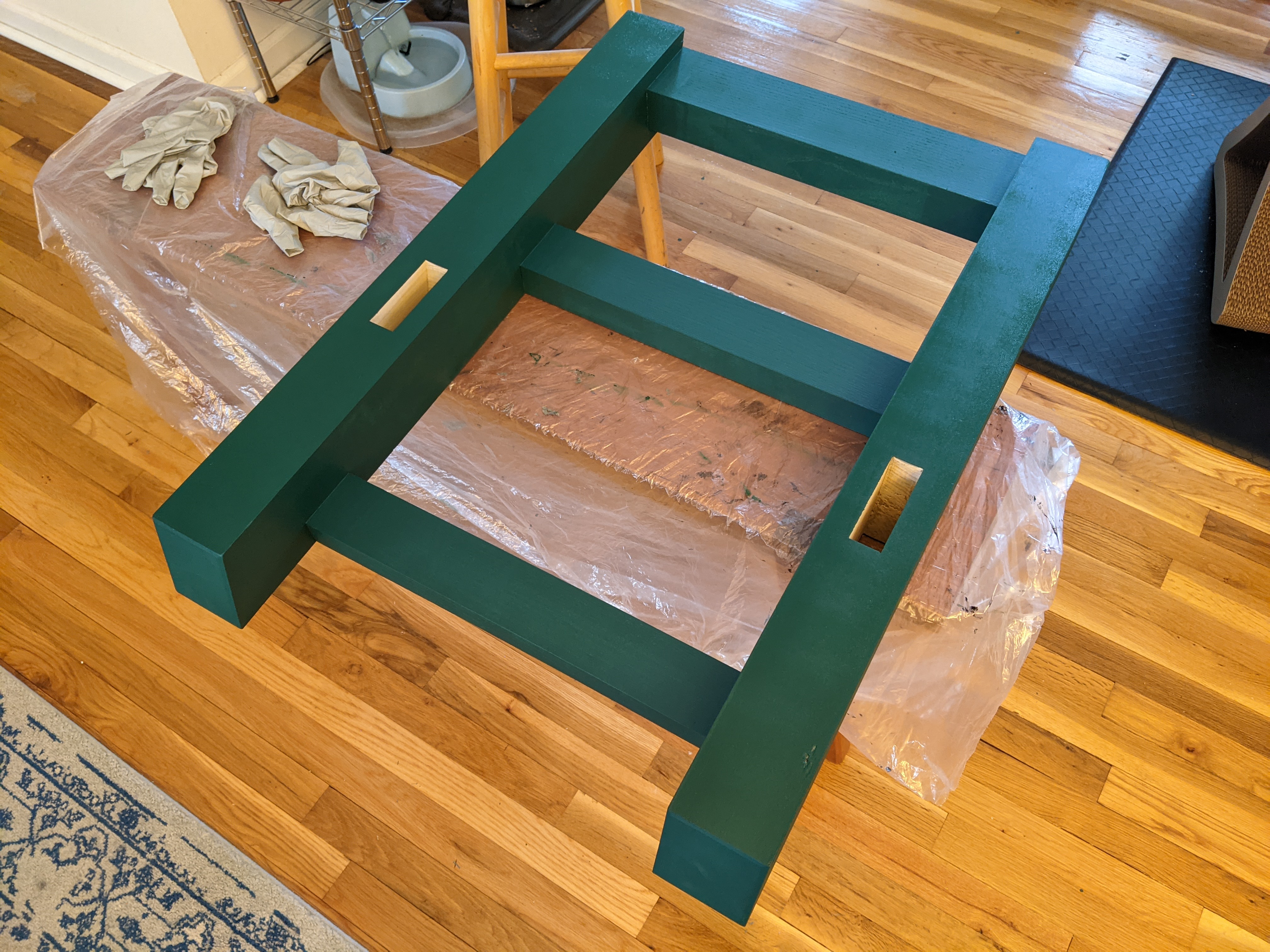
Oh, and I painted the undercarriage forest green. Which then made the tenons too thick and I had to widen the mortises. Sweet, sweet irony.

Small cherry Roman workbench FTW!

And, with that, it’s back to making the vise assembly. I’ve procrastinated long enough. And I have just the board for both the backer board and the chop. An 8/4 ash board that’s been acclimating to my shop for almost 4 years. It’s almost too perfect.

But every board, in the end, gets sawn up. No matter how perfect the board is.

JPG

Secret Plans

Tell me if this sounds familiar: a friend or relation knows you can make things (in my case, out of wood) and are otherwise handy at need. Instead of paying a professional, whose livelihood depends on finding jobs like this, they ask you, an amateur to make or fix or modify something. Being a good friend/relation/human being, you dutifully pack up your traveling tool box with what you think you’ll need and, before you go, ask the person to confirm they have a decent workbench to work on, or at least a sturdy table for you to clamp a portable workbench to. They of course respond “yes”.

Then you show up. Their “workbench” is a bit of screwed together 2×4 and plywood that sways like a willow in a hurricane from the lightest wracking force. Even worse, it’s a plastic, folding card table. Or their partner won’t let you clamp your portable workstation to their IKEA dining room table. You can’t work like this, so eventually you make portable workbench that doesn’t rely on clamping to another stable platform (like a staked, roman-style workbench). But those are a pain (literally and figuratively) to move around.

Do this enough times, and your conclusion will be “why don’t I just make all my friends and relatives workbenches, so I always have one handy when they ask me to help with something?”. And your conclusion is correct. I, myself, have been secretly filling my friends’ and relatives’ homes with proper workbenches for years.

I ran out of whole 2×4’s so I laminated in some “clamping gaps” with scraps.

The bench above is a pretty faithful representation of Will Myer’s “Moravian Workbench”, other than it’s entirety constructed from Douglas Fir 2×4’s (except the wedges, which are red oak, and the tray, which is poplar). And I omit the leg vise.

Pre-pandemic, the twenty 2×4’s needed to make this entire workbench would cost about US$80 in total. Add in an oak hobby board for the wedges and a bottle of PVA glue and you’re barely pushing $100 for the raw materials. Unfortunately, with the lumber prices being what they right now, the materials would currently cost almost twice as much.

But that’s okay. A good workbench at a friend or relative’s home is worth its weight in figurative gold.

JPG